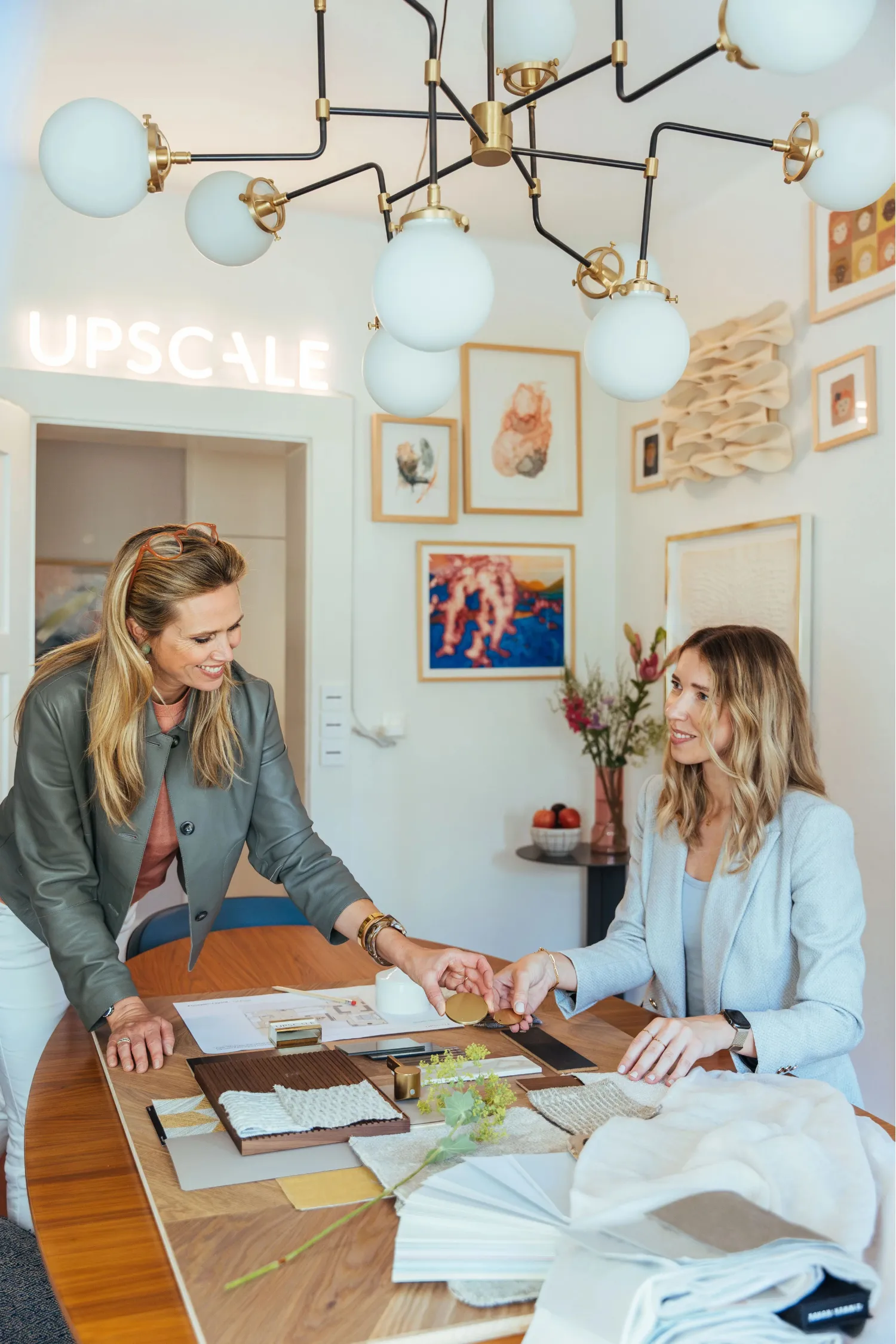
Brand identity in interior design means translating who your company is into what people see, touch and feel the moment they walk in: the layout, materials, colours, light, furniture and even the scent. Done well, your office, showroom or practice in Zürich tells your story before anyone says a word. This guide shows you how to get there, what to decide first, and which Swiss details to keep in mind along the way.
Upscale Interiors
upscale.ch
Make Your Zürich Space Feel Like You
Upscale Interiors creates tailored commercial spaces, with services including space planning, material selection, 3D visualizations and project management.
TL;DR
- A branded interior is a consistent system of layout, materials, colour, light and furniture, not a logo on a wall.
- Start from your values and your people, then choose a small palette of materials and colours you can repeat everywhere.
- Spaces outlive brand refreshes, so build in calm, timeless foundations and let accessories carry the trends.
- In Switzerland, daylight and good lighting are part of workplace health protection, so plan them together with your brand concept.
- Work with a designer who handles concept, sourcing and project management, so the idea survives the build.
What brand identity means inside a building
Most people think of brand identity as a logo, a typeface and a colour palette. In a physical space it is wider than that. It is the mood a visitor picks up at the reception desk, the way a meeting room feels at four in the afternoon, the sound of a door closing, the texture of a handrail.
The team at De Vorm puts it nicely: interior branding is about creating a space that speaks for itself, so well that people could walk in blindfolded and still know where they are, thanks to recognisable style, familiar smells and atmosphere. The same article quotes Studio O+A's design director Elizabeth Vereker, who places the core of brand identity between internal culture and external image. That is a useful way to think about it: the interior is where the two meet.
This is also what people mean when they search for corporate interior design. It is the discipline of shaping offices, reception areas, retail spaces, practices and hospitality venues so that they work properly and feel unmistakably like you. Function and identity are not rivals. A beautiful lobby that makes visitors struggle to find the lift is bad branding, and a perfectly efficient floor plan with no character is a missed opportunity.
Why it is worth the effort
Let's be honest about what the evidence says and what it doesn't. There is no single number that proves a branded interior lifts revenue. What research does show is that the quality of a workplace affects how people feel about it.
A ZHAW study of an activity-oriented pilot office at a Swiss financial services company found that employees rated the new space positively, especially for pride, appreciation and attractiveness. The researchers linked this to the choice of different work settings and the high-quality design. Pride and appreciation are exactly the feelings a strong brand wants to create, and they begin with the people who spend eight hours a day in your space.
For visitors, the effect is quicker. Clients, candidates and partners form an impression in seconds, and the room does a lot of the talking. If you want to understand why this works, our piece on why interior design is more than visual explains how light, colour and materials shape mood and behaviour.
How to express a brand through design
The design elements are the same ones every interior is made of. The skill lies in choosing them as a family rather than one by one.
Layout and flow
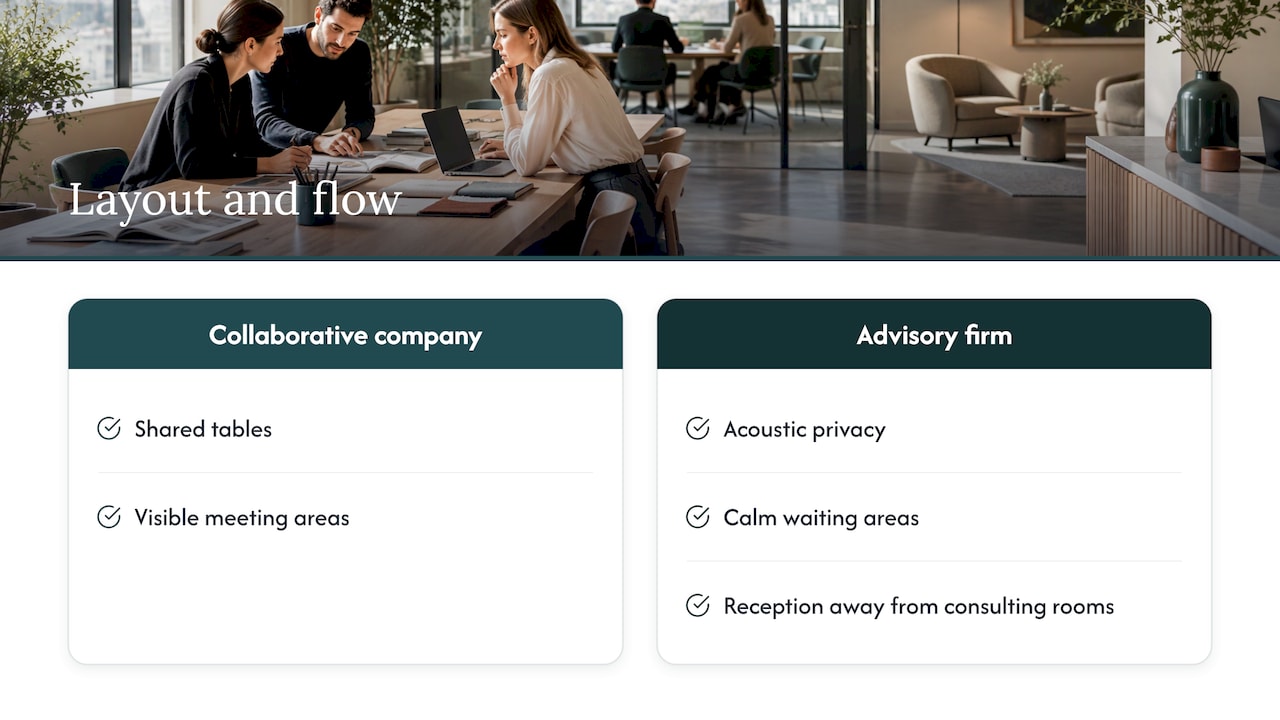
Your floor plan is your most honest brand statement. An open, collaborative company will naturally lean towards shared tables and visible meeting areas. A discreet advisory firm may need acoustic privacy, calm waiting areas and a generous distance between reception and consulting rooms. Ask yourself how you want people to move, meet and feel at each step of a visit.
Materials and texture
Materials communicate values faster than words. Natural oak and wool say warmth and craft. Stone, brass and lacquer say precision and prestige. Roche's guide to its built environment is a good example of this thinking at corporate scale. It describes spaces as messengers of the company's culture, built on three principles: ahead of time, fit for purpose and form at human scale, the last one meaning a timeless aesthetic, spartan elegance and authentic use of materials.

You don't need a pharma-sized budget to borrow the idea. Choose three or four materials that fit your story, and repeat them in different places: the reception counter, a meeting table top, a shelf, a door handle.
Colour
Your brand colours rarely need to appear at full volume. A Zürich example shows how it can be done. According to Office Snapshots, the Swisscom (Schweiz) offices in Zurich use furniture, lighting, colour and materials that follow one design language. The brand's red, blue and white are interpreted in restrained shades such as terracotta, ice blue, petrol and cream white, giving a calm, contemporary interior.
That is the lesson: translate your colours into shades that live comfortably on walls, upholstery and floors, and keep the pure brand hue for small, deliberate moments such as signage or a single feature wall.
Lighting
Light shapes how every other element is read. Warm, layered lighting makes a hospitality space feel generous, while crisp, even light supports concentration at a desk. Think in layers: ambient, task and accent. Use accent light to highlight what matters most, whether that is a product, a piece of art or your reception wall.
Furniture
Furniture is where brand and daily comfort meet. Bespoke pieces made to your dimensions and finishes can carry your identity in a way catalogue items can't, while carefully chosen design brands give a consistent, high-quality base. What matters is that chairs, tables and storage look like they belong together and are comfortable enough to be used all day.
Office, retail or practice: the same idea, different volume
Not every business should express its brand at the same intensity. According to Architektur-Technik.ch, flagship stores in retail are built to 100 percent of the corporate identity to create a continuous brand world. That makes sense when the space is itself the product.
An office has a different job. It has to carry the brand for visitors, but it is mostly a place where people do focused work, so comfort, acoustics and flexibility carry as much weight as style. A medical or therapy practice needs a calm, reassuring tone first, with the brand expressed through quiet details. If that is your case, our guide to practice interior design in Zürich goes deeper.
A useful rule of thumb: the more public and experiential the space, the louder the brand can be. The more it is used for daily work, the more the brand should show up as atmosphere and quality rather than decoration.
Designing for a brand that will change
Here is a tension every business faces. The same Architektur-Technik article notes that built spaces last longer than brands, which renew every three to five years. Your fit-out may stay for ten years or more, so tying it too closely to this year's logo or campaign is risky.
The answer is to separate the layers:
- The shell and foundations: floors, joinery, large furniture and lighting infrastructure. Keep these calm, durable and timeless.
- The mid layer: upholstery, rugs, curtains and lamps. Change these every few years to refresh the mood.
- The brand layer: signage, graphics, art and small accessories. Update these whenever the brand moves on.
This approach is closely related to the thinking behind timeless, adaptable interiors, where balancing function, flexibility and lasting appeal is what keeps a room feeling right as tastes shift. If you like to understand which trends are worth borrowing from, our overview of interior design styles can help you separate fleeting from lasting.
Swiss considerations to plan in from day one
A branded interior still has to be a good place to work. In Switzerland, the Ordinance 3 to the Labour Act (ArGV 3) covers health protection at work, and the SECO guidance on its lighting article says workrooms should have daylight and suitable artificial lighting that suit the type of work. In practice, this means your concept should never sacrifice daylight at workstations for a dramatic dark feature wall or heavy window treatments.
A few more practical points for Zürich projects:
- Lease and building rules: if you rent, check with your landlord what you may change, from flooring to wall finishes, and what must be restored at the end of the lease.
- Lead times: custom joinery and imported furniture take time, so decide early. Our article on the interior design project timeline shows the phases and what sets the schedule.
- Multilingual teams: Zürich offices often mix German, English, French and Italian speakers. Wayfinding and signage should be clear and simple for everyone.
- Compliance specifics: for fire safety, accessibility and permits, speak with your landlord, the building authority and the relevant specialist engineers before you finalise the design.
How to develop your branded interior in six steps
- Write down your brand in plain words. Three to five values or adjectives, such as precise, warm, curious. These become your design filter.
- Map your users. Who uses the space daily, who visits, and what do they need to do there?
- Define the practical brief. Number of workstations, meeting types, storage, acoustics, accessibility and budget.
- Build a concept board. Materials, colours, lighting moods and furniture, shown together so you can see whether they sit as a family.
- Visualise before you build. 3D visualisations help you and your team see the result and catch problems while changes are still cheap.
- Deliver with one point of control. Sourcing, drawings, delivery and installation work best when one team keeps an eye on the whole picture.
If you aren't sure about your own taste or the personality you want to project, our guide to finding your interior style is a friendly starting point, and it works well as a team exercise too.
Perspective
When a client comes to us with a brand, the first thing we ask is not "what colour is your logo?" but "how do you want people to feel when they arrive?" That one question changes the conversation.
A brand lives in a hundred small decisions: the weight of a door handle, the grain of a table, the way light falls on your reception wall. When these decisions are made by different people at different times, you get a space that is nice but forgettable. When one team holds the concept from the first sketch to the final installation, you get a space that feels like you.
This is why we combine architecture and interior design under one roof. We plan the space, choose the materials, source the furniture from our network of over 185 high-end brands, create 3D visualisations so you can see the idea before it exists, and manage the project through to delivery. With over 480 completed projects behind us, we've learned that the best brand interiors are rarely the loudest ones. They are the most consistent.
Our advice is simple: be brave about your values, and calm about your finishes. Let the foundations be timeless and let personality come from the details.
Giorgia D'Amico
Start with a design partner who sees the whole picture
Whether you are planning a new headquarters, refreshing a reception area or giving a practice a more personal feel, we can help you turn your brand into a space. Our office and commercial interior design service covers offices, real estate developments and rental spaces, and is quoted individually. If you'd like to talk through your ideas first, you can book a consultation at CHF 490 via our interior design packages. When you are ready to share your project, you can start a project with us.
FAQ
What is brand identity in interior design?
It is the way a company's personality, values and story are expressed through the physical features of a space: layout, materials, colour, lighting, furniture and atmosphere. The goal is that anyone who enters can sense who you are, even without seeing a logo.
How is corporate interior design different from ordinary office design?
Ordinary office design focuses on fitting people and desks into a floor plan. Corporate interior design adds a brand layer, so the space also communicates your culture and quality to staff and visitors while still working well day to day.
Do I have to use my brand colours everywhere?
No. Most successful interiors translate brand colours into softer shades for walls, textiles and furniture, and keep the pure colour for a few accent moments such as signage. This keeps the space calm and timeless while still recognisable.
How long should a branded interior last?
Brands tend to be refreshed more often than buildings. It is wise to keep floors, joinery and main furniture timeless and durable, and use accessories, art and graphics to update the look when your brand evolves.
Where do I start if I run a small business in Zürich?
Begin with a short list of brand values and a clear practical brief. A first conversation with a designer can then turn these into a concept, a realistic budget and a timeline, before you commit to a full project.
Sources
- Interior Branding: Why It Matters (De Vorm)
- Our spaces: Roche guide of the built environment, August 2024
- Swisscom (Schweiz) Offices, Zurich (Office Snapshots)
- Corporate Architecture: Innenarchitektur im Dienst der Marken (Architektur-Technik.ch)
- Unterstützung mobil-flexibler Arbeit (ZHAW)
Recommended
- Restaurant Interior Design in Zürich
- Practice Interior Design in Zürich
- Interior Trends 2024
- Reception Area Design in Zürich: Planning an Office Entrance