You can identify your interior style by running a short self-check on your favourite rooms, building a moodboard from what you keep returning to, and confirming the result with a style quiz. Success looks like a named style, or a few possibilities to test in a single room. You don't need a design degree, just honest first reactions.
TL;DR:
- Sort a broad set of room images into likes and dislikes, then track repeated colors, materials, shapes, and proportions before trimming the board.
- Test one change at a time, photograph the room before and after, and live with the result before buying more or replacing existing pieces.
- Try style cues with low commitment: clear a shelf for minimalism, add a woven basket for boho, or pair matching lamps with classic interiors.
Upscale Interiors
upscale.ch
Turn Your Style Into a Thoughtful Space
Explore Upscale Interiors’ personalized design services, from space planning and material selection to furniture sourcing and 3D visualizations.
Which quick self-check reveals your style in 90 seconds?
Grab a favourite room photo, or stand in your own living room, and answer these prompts without overthinking:
- Which room photo do you save most often, and what is the first thing you notice in it?
- Which three colours do you reach for again and again?
- Do you prefer low, rounded furniture or clean, straight lines?
- What is your go-to material or texture: wood, velvet, linen, metal, stone?
- Pattern: none, subtle or bold?
- How do you use your rooms: calm retreat, social hub or a bit of everything?
Write down your first instincts, then run the check on more photos. Repetition is the clue: if oak and linen keep showing up, that is your style talking, not a fluke. When you want a personalised profile, our online style quiz at Upscale turns these answers into a clear result.
What is a repeatable method for discovering your style?
Think of this as detective work on your own taste. A series of steps takes you from scattered inspiration to a name for your style and a shopping or briefing list:
- Collect images and real-world references (hotel lobbies, friends' homes, shop windows) without judging any of them.
- Document your first reactions: what you notice first and what you skip entirely.
- Cluster the recurring elements: palette, materials, scale and how much ornament you like.
- Build a moodboard and cut it down to the essentials.
- Run a one-room experiment: swap a lamp, add a rug or a few cushions, and see how it feels over time.
- Choose your next step: buy a statement piece, make small changes yourself, or brief a designer.
Pro Tip: Photograph the room before and after your experiment. Your eyes adapt quickly, and the comparison tells you whether the change really felt better.
How do common interior styles look in practice?
Use these cues to map your clusters to a name. Each comes with a small, low-risk test:
- Scandinavian: pale woods, white walls, soft textiles, lots of daylight. Test it with a sheepskin throw and a light oak stool.
- Modern: clean lines, neutral palette, little clutter. Try one sculptural floor lamp.
- Glam: mirrored surfaces, velvet, brass, dramatic lighting. Start with a velvet cushion set and a metallic side table.
- Mid-century: tapered legs, walnut tones, curved shapes. Swap in a single teak sideboard or armchair.
- Minimal: few objects, calm surfaces, hidden storage. Clear one shelf completely and live with it.
- Contemporary: current trends, mixed finishes, bold art. Add one oversized artwork.
- Classic: symmetry, panelling, rich fabrics, traditional proportions. Try a pair of matching table lamps.
- Boho: layered rugs, plants, handmade pieces. Add a woven basket and a patterned throw.
- Japandi: Japanese restraint meets Scandinavian warmth, with low furniture and natural materials. Try a ceramic vase with one branch.
- Transitional: classic shapes in a soft, neutral palette. Blend a traditional chair with a streamlined sofa.
For deeper definitions, this style breakdown maps each look to its defining features.
How do you build a moodboard that tells the truth?
A moodboard only works if it is honest, so gather widely. Pull images from Pinterest, your phone's saved photos and magazines, and gather a generous selection. Then split them into "like" and "dislike" piles, a trick also recommended in House & Garden's advice for people who feel they have no style. The dislikes matter as much as the likes, because they reveal what you want to avoid.
Next, narrow the likes to recurring colours, textures and silhouettes. Read the result: a dominant palette, repeated materials, a consistent scale, a certain level of ornament. Here is a session plan:
- Gather images without filtering.
- Sort into like and dislike.
- Circle repeats in colour, material and shape.
- Trim the selection to its essentials and write a few words that describe it.
Pro Tip: If one image doesn't fit with the others , but you can't let it go, keep it. Often it is the clue to what makes your style personal.
Curious why certain images keep returning? Our article on how your childhood home shapes your style preferences explores exactly that.
Why do your preferences feel the way they do?
Your taste is rarely random. Housing psychologist Elke Reitmayer explains that features like open-plan living and floor-to-ceiling windows can create a "being on stage" effect, so a style that suits you often includes privacy and passive zones, not just openness. A practitioner interviewed by Hello Zurich adds that the "caveman instinct" makes us feel safer when we can oversee a space, which is why where you put a bed or desk matters.
A considered colour concept creates relationships between users, activities and architecture.
Colour matters too: a whitepaper on colour in architecture argues that balanced contrasts and careful proportion avoid both overstimulation and monotony. That is why your three favourite colours from the quick check deserve attention.
Inka Aniol reminds us that homes shape and reflect identity, so choose the colours, shapes and materials that make you feel good rather than following convention. Your self-check and moodboard are simply a way to surface those needs: security, calm, company.

How can you adapt your style to the furniture you already own?
Almost nobody starts from a blank room, and you don't need to. Begin by sorting your existing pieces into three groups: keep, adapt and replace. A solid wooden table that doesn't match your new Scandinavian leanings can be lightened with pale linen runners and slimmer chairs. A dark leather sofa can sit happily in a Japandi room if you soften it with textured throws and keep the surroundings calm.
Unify with colour and material rather than buying everything new. Repainting a mismatched cabinet in your palette, swapping handles for brass or matte black, or reupholstering a favourite chair can pull odd pieces into one story. Repeat materials around the room so the choices feel intentional.
Work with your constraints, too. Rented walls, awkward alcoves and small footprints are design briefs, not obstacles: use lighting, rugs and art to carry style where you can't change structure. For rooms that must do double duty, our ideas for multi-purpose room design show how to test a style in one space first. Resist the urge to replace everything at once. Change one thing, live with it, then decide.
A designer's note on refining taste into a plan
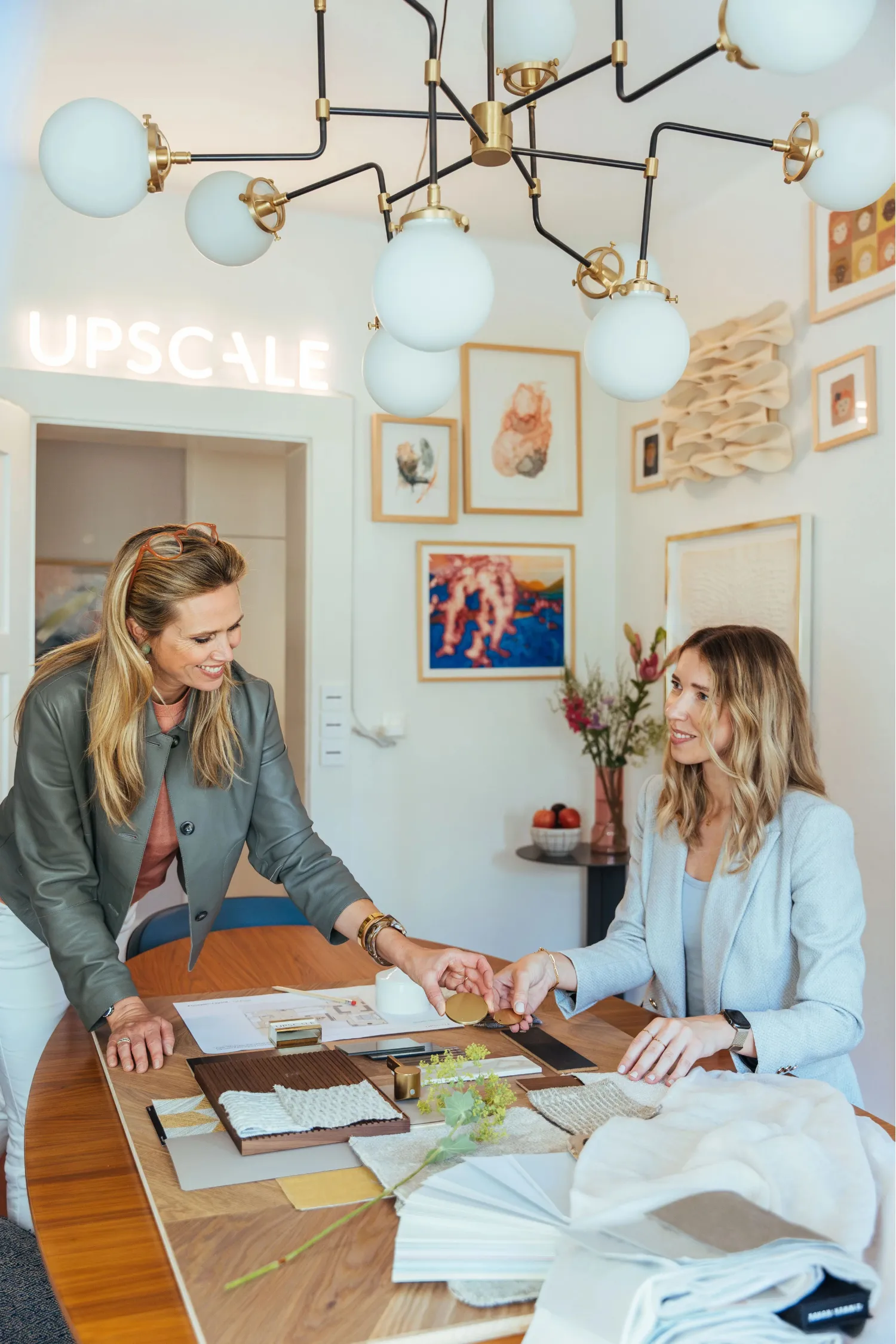
When we work with clients, the workflow is always the same: listen, build a moodboard, prioritise needs, run small tests, then scale up. Your quick check and moodboard are the same first steps we take, and our online style quiz and portfolio are the tools we use to make a vague "I just like it" concrete. Style also evolves, so treat your first result as a starting point, not a verdict. Iterating is the plan, not a sign you got it wrong.
— Giorgia D'Amico
How can we help you put your style into practice?
Once you know your direction, we can take it from there. Start with the style quiz, book a consultation, or pick the online package that fits your situation:
- Single Area Online Package: ideal for testing your style in one room before committing. Our Single Area Online Package is priced at 970 CHF one-off. See the published package price.
- Full Home Online Package: best when you want a complete refresh with a cohesive plan. Our Full Home Online Package is priced at 3390 CHF one-off. See the published package price.
- Individual Offer - Interior Design: targeted advice shaped around your brief, with the price available on request. See the Individual Offer for details.
Our interior design packages page also covers the 490 CHF consultation. You save time, get professional sourcing and finish with clarity instead of a folder of unanswered questions. Take the quiz today and book your consultation when you're ready.
FAQ
What is the 3-5-7 rule in decorating?
It is a styling guideline that groups objects in odd numbers because those groupings can look more natural than even ones. Treat it as a starting point for shelves and tables, not a strict law.
Can ChatGPT do interior design?
AI tools can help you brainstorm styles, palettes and layouts, which is useful for building a moodboard. They can't see your room, measure it or source pieces, so we recommend pairing them with a quiz result or a professional's plan.
What are the main types of interior design styles?
Common ones include Scandinavian, modern, glam, mid-century, minimal, contemporary, classic, boho, Japandi and transitional. A style guide lists their defining features if you want to compare them side by side.
How do I know if my moodboard shows my real style?
Look for repeats: the same colours, materials and shapes appearing across many images. If a pattern holds across many saved photos, it may reflect a genuine preference rather than a passing trend.
Sources
- Gesundes Wohnen - wie uns Räume beeinflussen
- Authentisch wohnen, glücklich leben | basel RUNDSCHAU
- «Beim Einrichten werden wir zu Höhlenmenschen»
Recommended
- How Your Childhood Home Shapes Your Style Preferences
- Interior Design Quiz: Unlock Your Unique Style and Discover It