.svg)

Luxury bedroom design trends in Zug for 2026 center on one clear shift: warmer, more tactile rooms replace the cool, stark minimalism that dominated the last decade. Expect tone-on-tone color palettes, textured plaster walls, layered circadian lighting, bespoke upholstered beds, and smart blackout systems working together rather than as isolated upgrades. Here are the ten trends worth knowing before you brief a designer:
- Warmer, tone-on-tone color palettes
- Textured walls (limewash, grasscloth, timber paneling)
- Full-height, layered curtains with real blackout depth
- Layered and tunable circadian lighting
- Bespoke beds as the room’s architectural anchor
- Softer, rounded furniture mixed with curated vintage
- Relaxed, seasonally layered bedding in Belgian linen and wool
- Built-in and hidden storage
- Smart home control for shades and lighting scenes
- Materials chosen for longevity, not just looks
If you’re weighing a refresh against a full-suite rebuild, Upscale Interiors can walk you through the numbers on a first call.
Key Takeaways
The most effective luxury bedrooms in 2026 pair warm, textured materials and layered circadian lighting with a bespoke bed as the room’s architectural anchor.
What Are the Top Luxury Bedroom Trends for 2026?
The ten trends above aren’t a random collection of Pinterest boards. They’re a response to how affluent homeowners actually want to feel at the end of the day: cocooned, warm, and quietly in control of their environment. Here’s what each one looks like in practice, and where it fits in a Zug home.
1. Warmer, tone-on-tone palettes. Cool grays and stark whites are giving way to caramel, clay, and soft sand tones layered in close shades rather than sharp contrast. This creates depth without visual noise, which matters in a room meant for winding down. A bedroom wrapped in three shades of the same warm neutral, wall, bedding, and upholstery, reads calmer than one built on contrast.
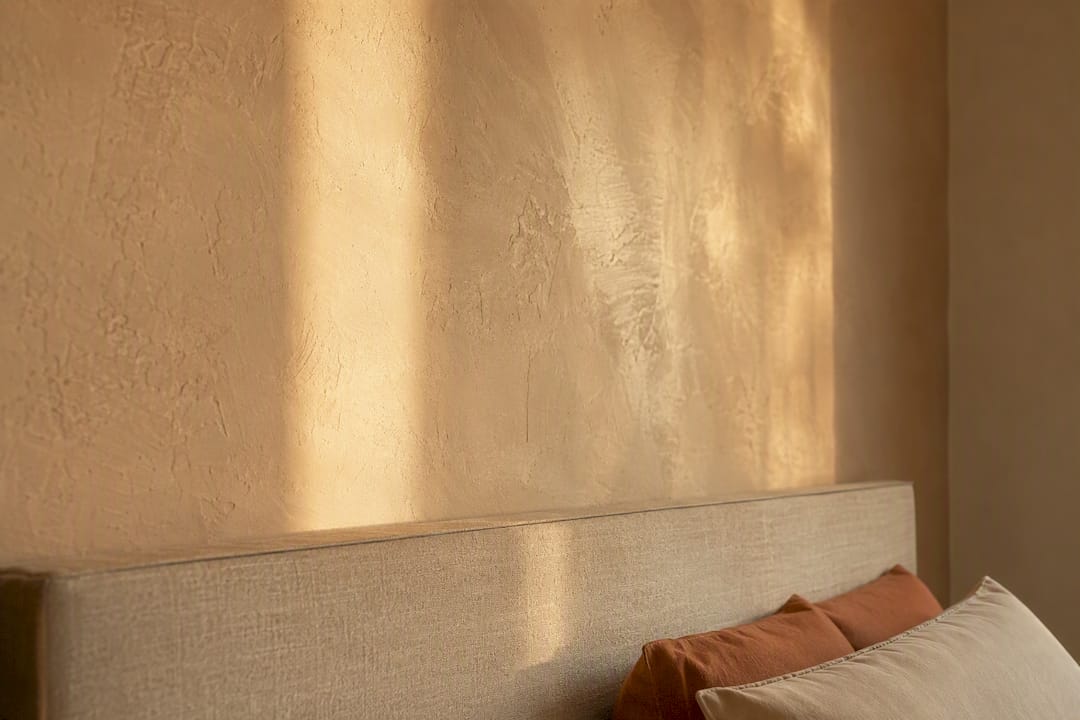
2. Textured walls. Limewash, plaster, grasscloth, and timber paneling all shift how a wall reads under changing light throughout the day, which is exactly why they suit bedrooms where soft, moving light matters more than a flat, printable finish. A hand-troweled plaster wall behind the headboard catches morning light differently than it does at dusk, giving the room a living quality that paint can’t match.
3. Full-height, layered curtains. Floor-to-ceiling drapery mounted close to the ceiling line, paired with a true blackout layer, does double duty: it makes ceilings feel taller and gives you total control over light. Designers increasingly size windows and drapery to let the outside world in during the day while protecting sleep at night, a balance that matters even more in Zug, where lake and mountain views are part of the appeal of the address itself.
4. Layered, tunable lighting. No single overhead fixture. Instead, ambient, task, and accent sources work together, with tunable LEDs shifting color temperature from warm evening tones to cooler, alertness-friendly light in the morning.
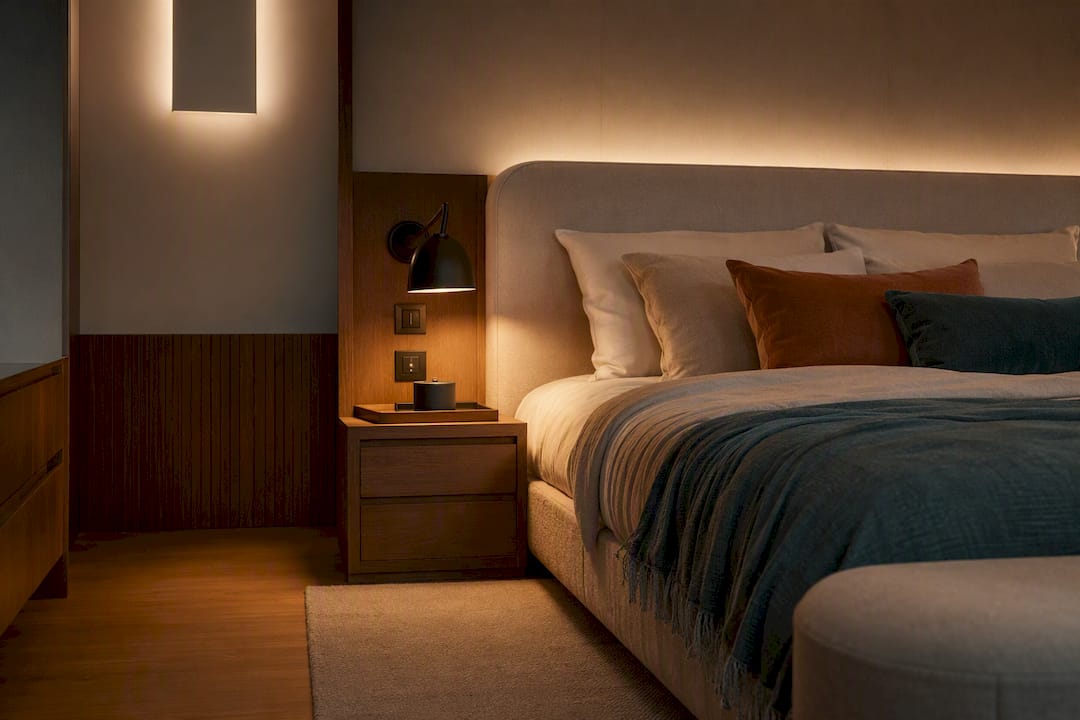
5. The bespoke bed as anchor. An upholstered, curved, or low-platform bed built to the room’s exact proportions functions the way a piece of architecture does, everything else in the room organizes around it. This is where a partner like Poltrona Frau or Nilson Beds earns its place, since a custom headboard scaled to your ceiling height looks intentional in a way an off-the-shelf frame rarely does.
6. Softer, rounded furniture. Sharp edges and rigid lines are softening into curved nightstands, rounded bench seating, and organic silhouettes, often mixed with one or two vintage finds for a collected, non-showroom feel.
7. Relaxed, layered bedding. Belgian linen, washed cotton, and wool blankets replace tightly tucked, hotel-style bedding. The goal is a bed that looks inviting rather than staged.
8. Built-in and hidden storage. Concealed wardrobes and bench storage keep the room’s calm palette uninterrupted by daily clutter.
9. Smart home integration. Motorized shades, scheduled lighting scenes, and app-based blackout control are now treated as standard in high-end bedrooms because they directly support sleep quality and privacy rather than as novelty add-ons.
10. Materials built to last. Solid timber, natural-fiber rugs, and reupholsterable frames outperform trend-driven pieces over a decade of ownership, a point Swiss buyers are taking seriously as Italian furniture and warm minimalism reshape local taste toward fewer, better pieces.
Pro Tip: If your bedroom has a lake or mountain view, don’t default to sheer curtains for daytime privacy. Size a double track, sheer plus blackout, so you keep the view by day and full darkness by night without swapping hardware.
Pro Tip: Match headboard height to ceiling height, not to a standard catalog size. A 2.4-meter ceiling can carry a much taller upholstered headboard than most people assume, and it makes the whole room feel more considered.
Which Materials and Finishes Define a Luxury Bedroom?
The 2026 material palette leans tactile: natural timber, limewash or plaster, grasscloth, silk wallcovering, hand-knotted wool rugs, aged bronze hardware, and Belgian linen. The strongest luxury bedrooms of the year place weight on materials that touch the body directly, linen sheets, cashmere throws, wool rugs, over anything purely decorative.
Placement matters as much as selection. The bed wall is where a textured finish like limewash or grasscloth earns its keep, since it’s the visual anchor of the room and benefits from the depth these wall texturing techniques provide under shifting light. Window walls call for heavier, structured fabrics that hold a fold well. Floors do best in natural fiber, a hand-knotted rug from Nanimarquina or Ligne Pure softens the room underfoot and anchors the furniture layout. Built-ins and millwork are where warm timber or a painted matte finish keeps storage from reading as utilitarian.
For seating and the bed frame itself, Poltrona Frau, Rolf Benz, and Nilson Beds all bring the kind of craftsmanship that ages well rather than dating quickly. Artemide and Bover cover the lighting layer with fixtures built for longevity, not just a moment on a mood board.
Sourcing at this level shouldn’t be a guessing game. Upscale Interiors supplies 3D visualizations alongside physical material sample kits so you can see and touch the exact plaster tone or linen weave before anything is ordered, which matters when a single wrong fabric order can set a project back weeks.
How Does Layered Lighting Improve Sleep and Mood?
A luxury bedroom needs three lighting layers working together: ambient, task, and accent. Here’s a quick spec checklist to bring to your electrician or lighting consultant:
- Tunable LEDs in the 2200K to 5000K range for warm evenings and brighter mornings
- Dimmers and pre-set scenes for reading, winding down, and waking
- Bedside task lighting sized for reading without spilling light across the room
- Picture or wall-wash lighting to highlight textured walls or art
- Low-wattage ambient sources for the hour before sleep
On the smart integration side, prioritize motorized blackout shades, scheduled lighting scenes tied to your wake time, and discrete blind control for privacy without visible switches. Fixtures from Artemide, Bover, and Lumina all handle this layered approach well, and Upscale Interiors typically coordinates directly with electrical and lighting consultants so scenes, dimmers, and shade controls arrive already programmed rather than left for you to figure out.
Layered light control paired with blackout is now considered essential in high-end bedrooms precisely because it protects both sleep and privacy at once. The practical takeaway: pair a genuine blackout layer with a morning lighting scene that mimics filtered daylight, rather than relying on one or the other.
How Should You Place the Bed and Plan Furniture Layout?
Bed placement decisions come down to balancing view against light control. A bedroom facing Lake Zug wants generous glazing and a bed positioned to catch that view, paired with a serious blackout system. A bedroom facing an internal courtyard has more freedom to prioritize wall space for a statement headboard or art.
A few proportion rules that hold up in practice:
- Headboard height should be proportionate to ceiling height rather than a standard catalog size
- Nightstands need at least 45 to 60 centimeters of clearance on each side for comfortable movement
- Circulation paths around the bed should be wide enough for comfortable movement
- A seating or dressing zone works best tucked away from the main door-to-bed sightline, so it doesn’t interrupt traffic flow
Consider a secondary zone, a reading chair, a bench, or a small dressing area, positioned so it doesn’t compete with the bed as the room’s focal point. This is where mixing a bespoke piece with Poltrona Frau or Rolf Benz seating and one or two vintage finds creates that collected, lived-in look rather than a showroom feel. Explore more on mixing furniture styles when planning which pieces to keep, replace, or reupholster.
Pro Tip: If your bedroom is deep enough for a seating zone, angle it slightly away from the bed’s direct sightline. It reads as a separate room-within-a-room rather than an afterthought crowded into a corner.
What Storage and Bedding Choices Keep a Luxury Bedroom Livable?
Storage is where luxury bedrooms either stay calm or slowly fill with clutter. Aim for:
- Built-in wardrobes with warm wood or painted matte fronts that disappear into the wall plane
- Bench storage at the foot of the bed for out-of-season textiles
- Nightstand drawers sized for daily essentials, not just decorative objects
- Concealed dressing storage separated from the main sleeping zone where floor plan allows
For bedding, a simple seasonal recipe works well: a base sheet set in Belgian linen, a mid-layer of washed linen or a wool blanket, a lighter quilt swapped in for summer, and one or two curated throws for texture. Layer two to three pillow sizes rather than a uniform row for a relaxed, not staged, look.
Underfoot, a hand-knotted rug from Nanimarquina or Ligne Pure should extend at least 60 centimeters beyond the bed’s edges on each side. One practical note: choose textiles with removable, professionally launderable covers. A gorgeous linen duvet cover you can’t clean easily becomes a liability within a year.
Pro Tip: Specify removable covers on any upholstered headboard, not just the bedding. It’s the difference between a bed that still looks new in five years and one you’re already planning to replace.
How Do You Choose Materials That Last?
Durability and sustainability aren’t separate conversations from luxury, they’re what luxury actually means once the newness wears off. Look for repairability, clear material provenance, and natural materials that age with character rather than visible wear.
A practical checklist: FSC or PEFC certified timber, natural-fiber rugs over synthetic ones, low-VOC finishes on any painted or lacquered surface, and furniture with meaningful warranties, both Nilson Beds and Poltrona Frau build frames meant to be reupholstered rather than replaced. Timeless luxury bedrooms consistently lean on restraint and craftsmanship over trend pieces, which is exactly what protects resale value in a market like Zug’s.
Budget for maintenance the same way you’d budget for the initial purchase: a reupholster cycle every seven to ten years on primary seating keeps a bespoke piece looking sharp indefinitely, rather than heading to landfill at the first sign of wear.
What Does a Luxury Bedroom Project Cost and How Long Does It Take?
Costs vary widely depending on scope, but three general bands help frame the conversation. A luxury refresh, new bedding, lighting layer, paint or wallcovering, and furniture styling, is the fastest and least disruptive option. A bespoke overhaul adds a custom bed, built-in storage, and a full lighting redesign. A full-suite rebuild involves structural changes, custom millwork throughout, and integrated smart home systems from the ground up.
Custom millwork, structural changes, integrated lighting systems, and imported artisanal materials all push both cost and timeline upward. For occupied homes, phasing the work, starting with lighting and textiles before moving to millwork and structural changes, keeps daily disruption manageable, which is how Upscale Interiors typically approaches projects in lived-in Zug homes.
How Do You Brief a Luxury Interior Designer?
Come to your first meeting with room dimensions, window heights, and a note on the views you want to protect or block. Add your lifestyle priorities, sleep quality, dressing needs, whether the room needs to double as a workspace, along with a few reference images and a rough budget range.
Ask any designer you’re considering about their process, how samples get delivered, what warranties apply to custom pieces, which brands they typically source from, and whether they provide on-site supervision during installation. Red flags worth taking seriously: no visible portfolio of completed projects, vague timelines that won’t commit to stages, or a bespoke quote that seems unusually low.
Pro Tip: Ask to see a physical sample kit before committing. A designer who can put fabric and finish swatches in your hands, not just a screen, is showing you they take material selection seriously.
Upscale Interiors brings 3D visualization capability, a physical sample kit, and portfolio examples to every first meeting, so you’re deciding based on what the room will actually look and feel like.
How Does Upscale Interiors Turn These Trends Into a Finished Bedroom?
Every project follows the same structure: brief, concept, 3D visuals, material sampling, procurement, installation, and handover. Each stage produces something tangible you keep, floor plans, technical drawings, photorealistic renders, and physical sample kits you can hold before a single order is placed.
Upscale Interiors sources from a network that includes Artemide, Poltrona Frau, Nanimarquina, Nilson Beds, Rolf Benz, Ligne Pure, and Bover, each chosen for a specific role, seating, bedding, lighting, or rugs, rather than as a generic catalog. For Swiss installations, certified trades handle electrical and structural work, coordinated so lighting, millwork, and drapery all land on schedule instead of arriving in the wrong order.
Zug’s setting, with its lake frontage and mix of historic and contemporary residences, means projects like the Lake Pavilion show how wood paneling and indoor-outdoor continuity translate into calm, high-end living spaces nearby. If you want to see this process in motion for your own home, book a call with Upscale Interiors’s Zug team.
What Should You Expect for Timeline and Budget on a Bedroom Project?
Beyond the general bands above, a few specifics matter for planning purposes. A bespoke overhaul in a Zug home typically requires several months from first brief to final handover, with procurement and fabrication consuming the bulk of that window since custom millwork and imported materials, hand-knotted rugs, specific timber species, don’t ship overnight.
Budget conversations should happen early and honestly. The three bands, refresh, bespoke overhaul, and full-suite rebuild, scale not just with square footage but with how much custom fabrication is involved. A room with an off-the-shelf bed and new lighting costs a fraction of one with a fully custom upholstered headboard, built-in wardrobes, and a rewired lighting and shade system. Structural changes, moving a wall, enlarging a window, add both cost and time because they require permits and coordination with certified trades before any design work can proceed.
The honest advice here: get a scope conversation locked in before falling in love with a specific material or fixture. It’s far easier to adjust a mood board than to renegotiate a budget mid-project.
Who Are the Premium Designers Working on Luxury Bedrooms in Zug?
Zug’s compact size and proximity to Zurich mean the market for high-end residential design draws from both local specialists and firms serving the broader Zurich metropolitan area. The town’s setting along the lake, with a mix of established estates and newer developments, shapes what premium clients expect: discretion, technical precision, and a finished product that respects both the architecture and the view.
Upscale Interiors operates a dedicated Zug service presence, working directly with homeowners on bespoke bedroom projects from initial concept through installation. The firm’s approach centers on personalized style discovery, including an online style quiz for clients still refining their aesthetic, paired with access to more than 150 European furniture brands and full project management for local installations.
What distinguishes a genuinely premium local designer isn’t just a polished portfolio. It’s the ability to coordinate certified trades for electrical and structural work, manage imported material timelines realistically, and supervise installation on-site rather than handing off drawings and disappearing. When comparing designers for a Zug bedroom project, ask specifically how they’ve handled lakeside properties or homes with historic constraints, since these bring logistical demands a generic residential portfolio might not reveal.
Why Warmth and Texture Define Bedrooms That Actually Last
I keep coming back to the same observation: the bedrooms that still feel luxurious five years on aren’t the ones that photographed best on day one. They’re the ones built on a material hierarchy, linen against skin, timber underfoot, plaster catching light, paired with genuine light control rather than a single dramatic feature. If you’re weighing where to spend, spend on what touches the body and what controls the light. Everything else is decoration. Hire a local premium designer who understands that distinction, and the room will hold up long after the trend cycle moves on.
How Can Upscale Interiors Help Bring These Trends Into Your Bedroom?
Reading a trend list is one thing. Getting the plaster finish, headboard proportions, and lighting scenes to actually work together in your specific room is another, and it’s where most homeowners either overspend on the wrong pieces or stall out entirely. Upscale Interiors handles the full arc: initial brief, concept development, photorealistic 3D visuals, physical material sample delivery, and complete project management through installation, so you’re never guessing what a limewash wall or a custom Nilson Beds frame will actually look like in your space before committing.
Start with an interior design consultation to walk through your room’s proportions and priorities, or go straight to booking a call with the Zug team. Most first meetings cover your initial brief and a look at sample materials, so you leave with a concrete next step, not just inspiration.
Sources
- Bedroom Trends 2026 Favor Warmer, Softer Interiors
- Italian Furniture Trends in Switzerland 2026
- Luxury Master Bedroom: Features That Redefine Comfort and Elegance
- Luxury Bedroom Interior Design: 14 Timeless Ideas
Recommended
- Interior trends 2024 | Upscale Interiors
- Zug Interior Design
- Luxury Living Room Design Ideas for Sophisticated Homes | Upscale Interiors
- Luxuriöse Wohnzimmer-Designideen für anspruchsvolle Zuhause | Upscale Interiors