.svg)

Luxury living room interior design is defined by exceptional material quality, stylistic coherence, and a connection to the city’s natural surroundings — not by how much you spend. A study of 1,200 homes found that style coherence and material quality are the strongest predictors of a luxurious feel, outranking budget every time. For Zürich homeowners, this means your living room can feel genuinely sophisticated when every element earns its place. The ideas below translate that principle into practical, beautiful choices tailored to the way people actually live in this city.
1. Luxury living room interior design ideas start with the sofa
The sofa is the single most important decision in any luxury living room. Research shows the sofa represents up to 40% of a living room’s total visual impression, which means getting it right sets the tone for everything else. Quality upholstery in velvet, bouclé, or full-grain leather signals refinement immediately. Think of brands like Minotti, Flexform, or B&B Italia — their proportions are designed to anchor a room, not just fill it.
Zürich living rooms tend toward generous floor plans, so scale matters. A sofa that’s too small reads as an afterthought, while one that’s correctly proportioned creates a sense of intention and calm. Choose a piece with clean lines and a low profile if your ceilings are high, or a deeper, more enveloping form for cozier, intimate spaces.
2. Build your investment hierarchy around three key pieces
Luxury design does not require spending equally on everything. The investment hierarchy approach directs the majority of your budget toward the sofa, the rug, and the primary lighting fixture. These three elements do the heaviest visual lifting in any living room. Secondary pieces like side tables, shelving, and decorative accessories can be more budget-conscious without undermining the overall quality.
This approach is particularly smart in Zurich’s market, where bespoke furniture and custom rugs from Swiss ateliers or Italian manufacturers carry long-term value.
3. Choose natural materials that age with grace
Natural materials like marble, brass, velvet, and silk provide tactile richness that synthetic alternatives simply cannot replicate. Italian Calcatta marble on a coffee table, solid oak flooring, or a hand-knotted wool rug from a maker like Jan Kath all communicate quality through touch and texture, not just appearance. These materials also develop character over time, which is exactly what sophisticated home interiors are about.
Sustainability is increasingly part of the luxury conversation in Switzerland. Reclaimed wood, natural stone, and organic textiles are gaining ground as premium choices that carry both aesthetic and ethical weight. You do not have to choose between beautiful and responsible. The two are converging fast in 2026 designer living room trends.
- Italian marble (Calacatta, Statuario) for coffee tables and fireplace surrounds
- Solid hardwood or engineered oak for flooring
- Velvet and bouclé upholstery for sofas and accent chairs
- Hand-knotted wool or silk rugs for grounding the seating area
- Brass or unlacquered bronze for hardware and lighting details
4. Connect your living room to Zurich’s natural environment
Zürich’s greatest design asset is right outside your window. Successful luxury projects in Zürich integrate indoor and outdoor spaces through floor-to-ceiling glazing and seamless material transitions.
You can apply the same thinking at any scale. If your apartment or villa has a view of Lake Zürich or the Uetliberg, treat that view as the room’s primary artwork. Keep window treatments minimal or use sheer linen panels that filter light without blocking the scene. Choose interior materials that echo what’s outside: warm stone, natural wood, and muted greens or slate blues that mirror the water and hills.
- Use floor-to-ceiling windows or sliding glass doors to frame outdoor views
- Select stone and wood finishes that transition naturally from inside to outside
- Incorporate Japandi-influenced warm minimalism for a calm, grounded atmosphere
- Bring in living plants or dried botanicals to reinforce the biophilic connection
- Keep color palettes anchored in nature: warm whites, stone grays, forest greens
5. Use textiles to define space and soften acoustics
Open-plan living rooms with high ceilings are a signature of Zurich villas and modern apartments, and they come with a real acoustic challenge. Textured textiles and rugs act as acoustic dampeners while simultaneously defining functional zones within a larger space.
Think of your rug as a room within a room. It should be large enough that all key seating pieces sit at least partially on it, creating a unified conversation zone. Layer curtains, cushions, throws, and upholstered panels to add warmth and absorb sound without cluttering the visual field. A common mistake is choosing a rug that’s too small, which fragments the space and makes even expensive furniture look disconnected.
6. Layer your lighting for mood and material depth
Lighting is the element most homeowners underinvest in, and it’s the one that makes the biggest difference after dark. Layered lighting combining ambient, task, and accent sources creates mood shifts and highlights the textures of your materials in ways that a single overhead fixture never can. Warm-toned bulbs under 3000K are the standard recommendation for creating an inviting atmosphere that transitions gracefully from afternoon to evening.
In practice, this means combining a statement chandelier or pendant for ambient light, recessed or cove lighting for general illumination, and targeted picture lights or floor lamps for accent and task purposes. Brands like Flos, Vibia, and Artemide offer fixtures that function as sculptural focal points in their own right. Dimmer switches on every circuit are non-negotiable in a luxury living room.
Pro Tip: Install your lighting controls as a single smart system from brands like Lutron or Casambi. Being able to shift from bright afternoon reading light to a warm, low evening glow with one tap makes your living room feel genuinely wow.
7. Apply the 3-5-7 rule to decorative styling
Decorative styling is where many beautifully furnished rooms fall apart. The 3-5-7 grouping rule is a professional technique that creates natural, balanced visual groupings on shelves, coffee tables, and console surfaces. Odd-numbered arrangements feel more organic and less rigid than even-numbered ones, which is why designers consistently reach for this principle. A grouping of three objects at varying heights reads as intentional; a grouping of four reads as symmetrical and slightly flat.
Apply this to your coffee table by combining a sculptural object, a stack of art books, and a small vessel or candle. On a shelf, group five items of varying scale and material. The key is contrast: mix matte with gloss, organic with geometric, tall with low. Bespoke or artisanal pieces from Swiss ceramicists, local galleries, or makers like Valeria Nascimento add a layer of uniqueness that mass-produced accessories simply cannot match.
8. Select a single statement focal point per room
Luxury today is about refined confidence and emotional resonance rather than filling every surface. Every sophisticated living room needs one clear focal point: a fireplace surround in honed limestone, an oversized artwork by a recognized artist, or a dramatic light fixture that commands attention the moment you enter. Everything else in the room should support that focal point, not compete with it.
In Zürich homes, the fireplace remains a powerful anchor, especially in older villas and renovated townhouses. If your space lacks a natural focal point, a large-format canvas or a custom built-in shelving unit with integrated lighting can serve the same purpose. The rule is simple: decide what you want people to notice first, then design the rest of the room to lead the eye there.
9. Keep color palettes restrained and intentional
Sophisticated home interiors in Zürich consistently favor restrained color palettes over bold, trend-driven choices. A base of warm white, stone, or soft greige on walls and large surfaces allows your materials and furniture to carry the visual weight. Introduce color through textiles, artwork, and accessories in a controlled way, using no more than two or three accent tones across the entire room.
Warm neutrals like cashmere, sand, and pale oak work particularly well in Zürich’s light conditions, where natural light shifts dramatically between seasons. If you want a richer palette, consider deep forest green, dusty rose, or charcoal as accent colors that feel grounded rather than trendy. Checking out interior trends for 2024 and beyond gives you a solid reference point for what’s holding its value in the design world right now.
Key takeaways
Luxury living room design in Zürich succeeds when material quality, correct proportion, and connection to the local environment work together as a unified whole.
How Upscale can help you design your dream living room in Zurich
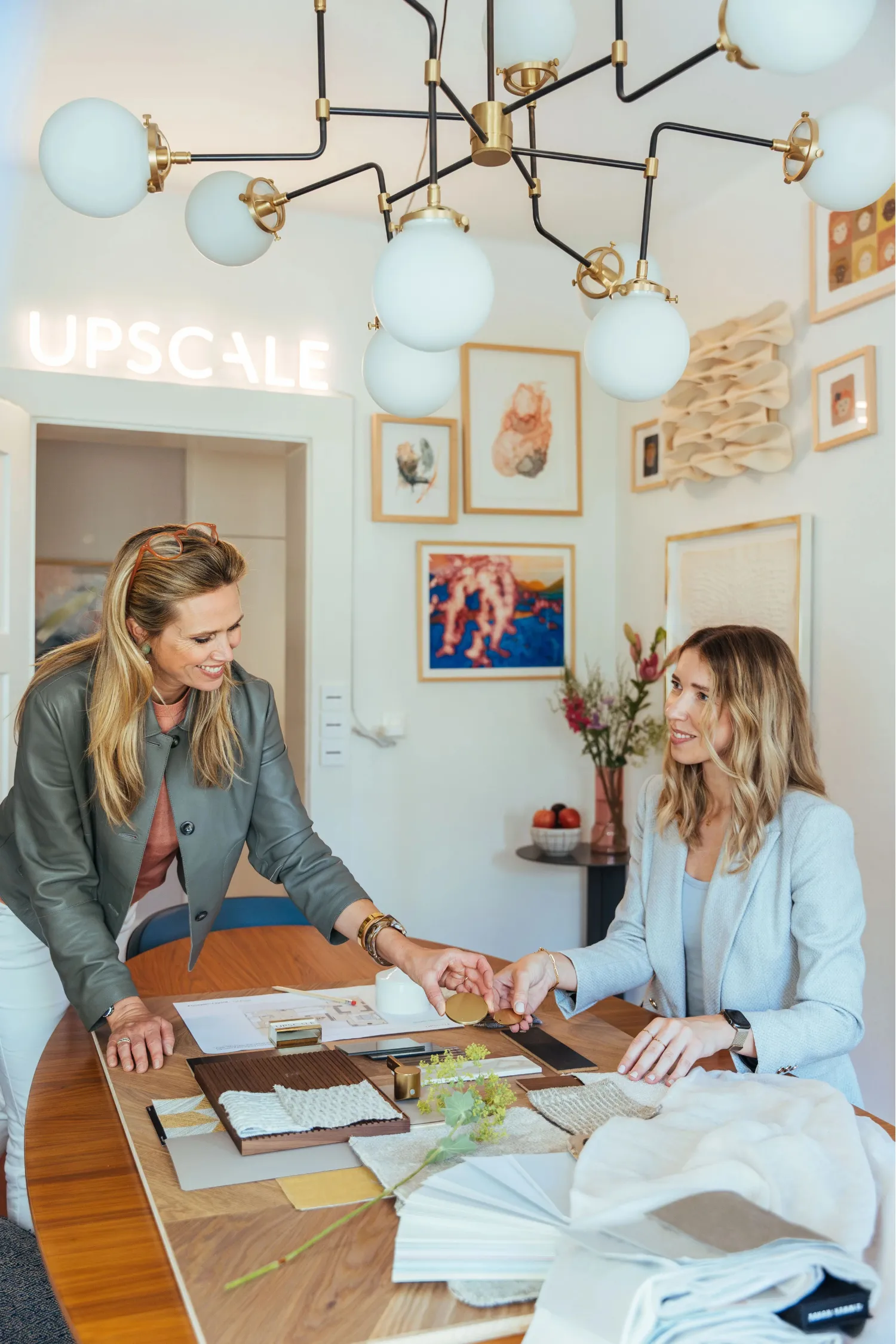
Designing a luxury living room that truly reflects your lifestyle takes more than inspiration. It takes someone who knows how to translate your vision into a space that works beautifully every day. Upscale specializes in bespoke interior design services for sophisticated homes across Zürich, from material selection and furniture sourcing to full project management and 3D visualizations. Whether you’re starting from scratch or refining an existing space, the team at Upscale brings the expertise to get every proportion, texture, and lighting layer exactly right. Explore interior design in Zürich and book a consultation to get started.
FAQ
What defines luxury in a living room interior?
Luxury is defined by material quality, correct proportion, and restraint rather than price alone. Style coherence and high-density natural materials are the strongest predictors of a luxurious feel.
What is the most important furniture piece in a luxury living room?
The sofa is the critical visual anchor, accounting for up to 40% of a living room’s overall impression. Investing in quality upholstery and correct scale here delivers the highest return on your design budget.
How do I make a Zurich living room feel connected to its surroundings?
Use floor-to-ceiling windows to frame views of Lake Zürich or the surrounding hills, and choose interior materials like natural stone and warm wood that echo the landscape outside.
What lighting temperature works best for a luxury living room?
Warm-toned bulbs under 3000K create the most inviting atmosphere and bring out the richness of natural materials. Layer ambient, accent, and task sources on dimmers for full day-to-night flexibility.
How many decorative objects should I group together on a surface?
Use odd-numbered groupings of three, five, or seven objects for a natural, balanced look. Vary the heights, scales, and materials within each grouping to add visual rhythm without clutter.
Recommended
- Interior Design Zurich | Swiss Interior Designers – Upscale
- Upscale Interiors Designers | Carina
- Interior trends 2024 | Upscale Interiors
- Modern Design Inspirations | Upscale Interior