.svg)

Your executive office does more than house a desk and a chair. It tells a story about your leadership, your company, and how seriously you take the people who walk into that room. Yet executive office interior design is still widely misunderstood as a luxury exercise, something reserved for Fortune 500 CEOs with unlimited budgets. The reality is far more practical. At its core, this discipline combines space planning, furniture, lighting, acoustics, and technology to create environments that support high-stakes decision-making, protect confidentiality, and project authority, all at once.
Key Takeaways
What is executive office interior design, really?
Executive office interior design is the deliberate process of shaping a workspace to serve the unique demands of senior leadership. It goes well beyond choosing a leather chair or a statement desk. The goal is to create a controlled environment where confidential, high-stakes work can happen without distraction, where guests feel the weight of the room’s authority, and where the executive themselves can actually think clearly.
Think of it as a system rather than a style. Every decision, from the angle of the desk to the color of the walls to the way sound travels across the room, feeds into a single outcome: a space that works as hard as the person in it. The elements of office interior design in an executive context are deliberately chosen to balance prestige with genuine operational efficiency.
What separates this from general office design is the specificity of purpose. A standard open-plan workspace optimizes for collaboration and headcount. An executive suite optimizes for focus, privacy, and perception. Those are very different briefs, and they require very different solutions.
The five core elements to get right
Getting executive office interior design right means mastering five interconnected components:
- Space planning and desk placement. Where your desk sits in the room sends an immediate psychological signal. Positioning it in the “command position,” with a clear view of the door and a solid wall behind you, creates a sense of control and stability. Poor placement undermines authority before you say a word.
- Ergonomic seating and built-in storage. Ergonomic chairs are non-negotiable for anyone spending eight-plus hours at a desk, but executive-grade seating also needs to look the part during client meetings. Built-in cabinetry eliminates visual clutter, which keeps the space feeling calm and intentional.
- Professional lighting. Natural light improves mood and reduces fatigue. Task lighting supports focused work. Layered lighting design that combines ambient, task, and accent sources keeps the space versatile from a morning video call to a late-evening client meeting.
- Acoustic privacy. Sound-absorbing elements and concealed tech are what distinguish a properly designed executive office from an expensive-looking room that leaks every conversation. Acoustic panels, heavy textiles, and soundproofing materials protect sensitive discussions.
- Technology integration. Concealed cabling, integrated AV tools, and smart controls are the modern baseline for executive environments. When technology is visible as a tangle of wires and adapters, it undermines every aesthetic decision you’ve made around it.
Pro Tip: When planning technology placement, decide on your equipment list before selecting your desk. The desk should fit your workflow, not the other way around. This single sequence change prevents most of the clutter problems executives complain about later.
Trends shaping modern executive office design
The corner office as a symbol of isolation is fading. Modern executive designs are shifting toward adaptable, collaboration-friendly layouts that preserve prestige without creating a fortress mentality. Today’s senior leaders host impromptu team sessions, video conferences, and one-on-ones, all within the same space. The design needs to support every one of those scenarios without a furniture shuffle.
Several clear trends are defining where executive interiors are heading:
- Flexible zoning. Rather than one large desk dominating the entire room, well-designed executive suites now include a dedicated work zone, a small meeting area with comfortable seating, and sometimes a quiet decompression corner. Each zone serves a distinct purpose.
- Biophilic design. Incorporating natural materials, plants, and views of the outdoors reduces stress and improves concentration. This is not just an aesthetic preference; it reflects a broader understanding of how environment affects cognitive performance.
- Sustainability as a design criterion. High-end clients are increasingly asking for responsibly sourced wood, recycled metals, and low-VOC finishes. Luxury and sustainability are no longer opposites in executive interior design.
- Comfort alongside authority. The rigid, formal executive office of decades past has softened. Comfortable lounge seating within an executive space signals confidence, not informality. It tells visitors that the leader is secure enough to offer ease.
The shift is significant for office managers and business professionals planning a redesign. You don’t have to choose between a space that feels powerful and one that feels human. The best office interior design planning delivers both.
How design shapes performance and brand perception
There’s a reason why people walk out of certain offices feeling energized and walk out of others feeling vaguely unsettled. Workspace design influences concentration, morale, collaboration, and brand perception, and thoughtful layouts actively reduce distractions while improving the flow of work. This is not soft science. It’s measurable.

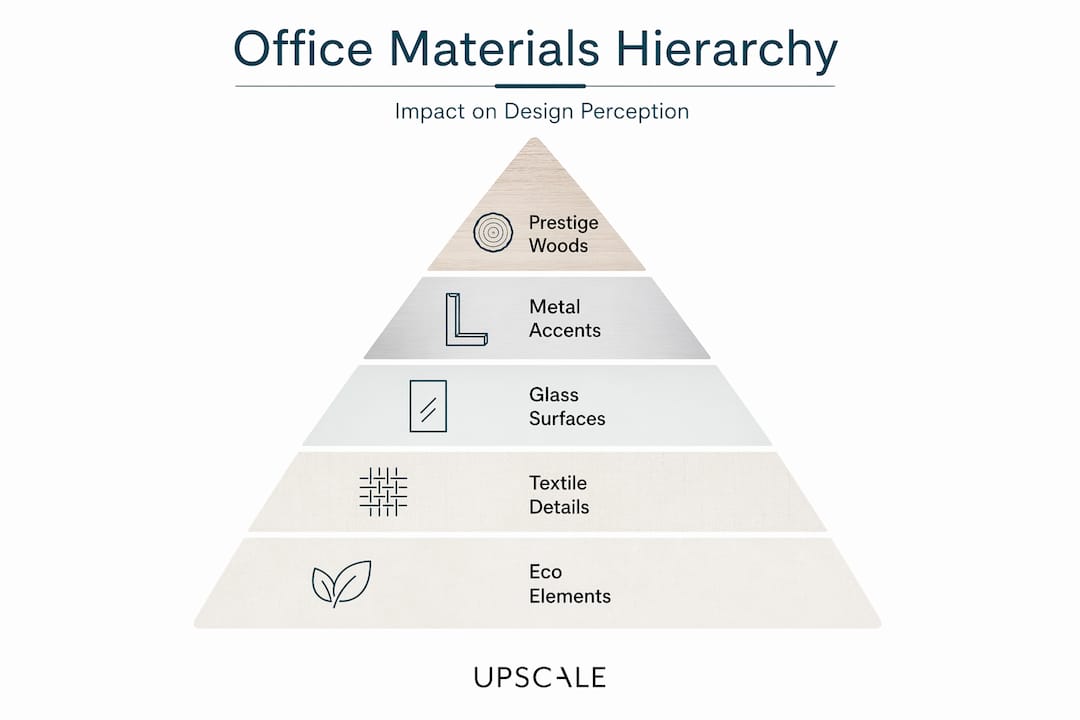
The psychological effect of material choices is particularly underestimated. Dark walnut wood communicates stability and permanence. White marble reads as precision and refinement. Warm metallics suggest ambition without aggression. Every material in an executive office contributes to an overall message that visitors absorb before anyone speaks.
Research into office redesigns shows that psychosocial factors before a redesign significantly affect reported productivity outcomes. In other words, how people feel about the change matters as much as the physical result. This is a critical insight for office managers overseeing an executive space upgrade.
“The executive office is not just where the leader works. It’s where the organization’s culture becomes visible.”
How to design an executive office step by step
Knowing what to aim for is one thing. Getting there without wasting budget on the wrong decisions is another. Here’s how to approach an executive office interior design project with clarity:
- Map your workflow first. Before touching a mood board, spend a week noting how you actually use your office. How many in-person meetings do you host? Do you use multiple monitors? Do you need a space to review physical documents? Your real patterns should drive every decision that follows.
- Plan your zones before your furniture. Zoning an executive suite into functional areas for work, meetings, and private decompression dramatically improves daily workflow. Draw the zones on paper before you buy a single item.
- Match furniture to equipment, not the other way around. A common mistake is selecting statement furniture that doesn’t accommodate actual executive equipment, like dual monitors, docking stations, and document trays. The result is clutter that undermines the entire design intention.
- Design your lighting in layers. Control natural light with adjustable window treatments. Add task lighting at the desk with a high-quality directional lamp. Use ambient lighting to set the tone of the room as a whole. Explore executive office lighting strategies that account for video calls, where lighting direction affects how you appear on screen.
- Conceal technology systematically. Integrating acoustics, lighting, and technology as a unified design system is what separates professional results from DIY attempts. Built-in cable management, flush-mounted power outlets, and recessed AV panels make the difference.
Pro Tip: If you’re working with a designer, ask them to create a 3D visualization before any furniture is ordered. Seeing the space at scale prevents expensive surprises and helps you feel confident in decisions before committing.
Luxury and personal branding in executive interiors
The materials you choose in an executive office are a form of communication. They tell clients, colleagues, and visitors something about your standards, your taste, and by extension, your organization. This is where luxury office design ideas become genuinely strategic rather than merely decorative.
The balance between opulence and approachability matters more than most people realize. A room that feels untouchable keeps visitors on guard rather than at ease, which works against most leadership goals. The best executive spaces feel aspirational without feeling cold. They incorporate personal elements, whether that’s a curated art collection, a meaningful material from the executive’s home country, or a color palette drawn from the company’s brand identity, to make the space feel lived-in and intentional.
Sustainability is no longer a concession in upscale interiors. Responsibly sourced materials and energy-efficient lighting are increasingly seen as markers of sophisticated taste rather than compromise.
My honest take on executive office design
I’ve seen dozens of executive office redesigns, and the ones that disappoint share a common thread. The brief focused almost entirely on appearance. A beautiful space was created, photographs were taken, and then six months later the executive had quietly covered the designer desk with a makeshift monitor stand and a cable multiplier, because the original setup didn’t actually fit their workday.
What I’ve learned is that the best results come when psychological impact and functionality are treated as equal priorities, not as aesthetics versus practicality. The physical design and the psychosocial environment in which it lands both matter. An executive who doesn’t feel ownership over the redesign process is unlikely to use the space the way it was intended.
My contrarian view: too many executive office budgets are weighted toward surface-level luxury when the real return on investment lives in acoustics, lighting quality, and zoning. A room with perfectly controlled sound, natural light, and a clear desk is worth more in daily productivity than a marble feature wall that impresses visitors but does nothing for the person working there eight hours a day. Get the fundamentals right first, then let the luxury be the reward.
Ready to design your executive office?
At Upscale Interiors, we specialize in exactly this kind of thoughtful, high-caliber work. We combine genuine design expertise with a deep understanding of how executive environments need to function, not just how they need to look. Whether you’re starting from a blank floor plan or upgrading an existing space, our team brings space planning, material sourcing, 3D visualization, and full project management under one roof. If you want a space that genuinely reflects your leadership and supports the way you actually work, explore our executive office design services or take a look at our office design packages to find the right fit for your project.
FAQ
What does executive office interior design include?
Executive office interior design covers space planning, furniture selection, lighting, acoustic privacy, and technology integration. The goal is to support focused, high-stakes work while projecting leadership authority.
What are the main benefits of executive office design?
A well-designed executive office reduces distractions, improves workflow, protects confidential conversations, and reinforces brand credibility with clients and colleagues.
How long does it take to design an executive office?
Timelines vary by scope, but a full executive office redesign with custom furniture and professional project management typically takes between eight and sixteen weeks from consultation to completion.
What is the biggest mistake in executive office design?
Choosing statement furniture without considering actual equipment and workflow needs. This leads to clutter and inefficiency that undermine the intended command-center effect.
Do I need a professional designer for an executive office?
If the space represents your leadership brand and hosts important meetings, professional help pays for itself. A designer brings spatial planning expertise, access to premium suppliers, and the ability to integrate acoustics, lighting, and technology as a cohesive system rather than separate purchases.
Recommended
- Office Interior Design: Optimal Planning for your Office!
- Commercial Interior Design | Upscale Interiors
- Interior Design Consultation | Upscale Interiors
- Online Interior Design: Customised room concepts | Upscale