.svg)

Hiring a Swiss interior designer is one of the most exciting decisions you can make for your home or commercial space. But when expectations don’t align from the start, even the most talented professional can’t save a project. Research shows that 70% of project issues stem from poor communication, budget misalignment, and unclear roles between client and designer. Knowing how to work with a Swiss interior designer before you even walk into that first meeting puts you miles ahead. This guide walks you through every phase, from preparation to final sign-off, so your project feels less stressful and more wow.
Key takeaways
What to prepare before meeting a Swiss interior designer
The single biggest thing you can do to set your project up for success happens before you ever shake hands with a designer. Most clients walk into the first meeting with a rough idea and a hopeful heart. The ones who walk in prepared? Their projects run smoother, finish on time, and land closer to the vision they had in their heads.
Here is what you should have ready before that first conversation:
- Your primary objectives. Are you prioritizing functionality for a growing family, creating an Instagrammable space for resale, or designing a corporate office in Zug that impresses clients the moment they walk through the door? Be specific. “I want it to look nice” is not a brief. “I want a warm, modern living room that works for two kids and a dog” is.
- A realistic, honest budget. Budget transparency is the single most important factor in a successful collaboration. Share your actual number, not an artificially low one. Also build in a 10 to 15 percent contingency for surprises, because there are always surprises.
- Your lifestyle details. Do you work from home? Do you host dinner parties regularly? Are you planning to expand your family in the next few years? Clients who share lifestyle details help designers create truly functional, personalized interiors rather than beautiful spaces that don’t quite fit the way you live.
- Visual inspiration. Gather images from Pinterest, design magazines, or Instagram. You don’t need a curated mood board, but having 10 to 15 reference images gives your designer a shortcut into your taste that words rarely achieve alone.
- Existing elements that stay. If you have a beloved antique armoire or a kitchen island you’re keeping, say so upfront. Designing around existing pieces is a specific skill, and your designer needs that information from day one.
Pro Tip: Before your first meeting, pull together a simple chic interior checklist covering your must-haves, nice-to-haves, and absolute deal-breakers. This gives your designer a clear picture without overwhelming the conversation.
If you’re based in Zurich and unsure where to start, Upscale’s Zurich design hub offers local expertise that can help you prepare for exactly this kind of first meeting.
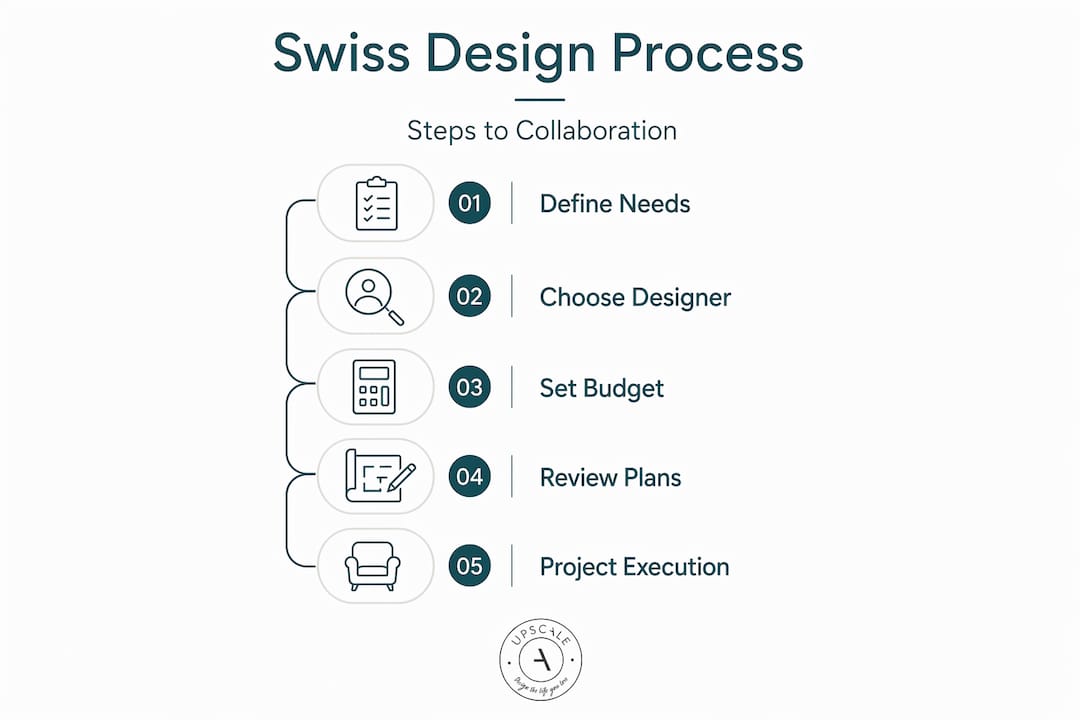
How to build a great working relationship with your designer
Once the project kicks off, the quality of your collaboration determines almost everything. Swiss interior design combines modern aesthetics with practical function, which means your designer is balancing creativity with real-world constraints. Your job is to make that balance easier, not harder.
Here are the most effective ways to build a partnership that works:
- Communicate openly and on time. When your designer sends a proposal or asks for a decision, respond within a reasonable window. Delays on your end create delays across the entire project. Timely, specific decisions keep the schedule on track more than almost anything else.
- Trust their expertise without going dark. There is a meaningful difference between trusting your designer and being completely disengaged. Clients who micromanage slow projects down and often push designers toward safe, uninspiring choices. But you should absolutely ask “why” when a recommendation surprises you. That conversation builds your confidence and often surfaces a design insight you wouldn’t have expected.
- Clarify how decisions get made. Who has final say on material selections? How many revision rounds are included in your contract? What happens if you change your mind after approval? Get these answers in writing before work begins, not during it.
- Pick a communication channel and stick to it. Whether it’s email, WhatsApp, or project management software, using one consistent channel reduces confusion and creates a paper trail for decisions. Schedule regular check-ins, even brief ones, so you’re never caught off guard by progress.
- Respect professional boundaries. Swiss interior designers are highly trained professionals, many with specialized expertise in regional markets from Geneva to St. Gallen. Respecting their timelines, honoring payment terms, and treating the relationship as a genuine partnership (not a transaction) produces better outcomes for everyone.
- Ask about pricing structure early. Commission-based pricing can sometimes create conflicts of interest, where a designer steers you toward pricier items that benefit their margin. Flat-fee or hourly pricing structures tend to keep recommendations focused on what’s actually right for your space and budget.
Pro Tip: If you’re working on a residential project in Geneva or a commercial space in Lucerne, ask your designer early on whether they have local supplier networks in those cities. Designers with strong local connections often access better pricing, faster delivery, and materials that suit the regional architectural character.
Executing the project the right way
Knowing the process inside out before it starts saves you from the most common and expensive mistakes. Interior design follows a specific sequence, and deviating from it costs money.

The correct order is always: spatial layout first, then lighting, then furniture and furnishings, and finally decorative finishes. Skipping the layout phase and jumping to furniture shopping is one of the most common client mistakes, and research shows that 70% of redesign regrets are traced back to buying pieces before traffic flow and spatial planning were finalized.
What good feedback actually looks like
Vague feedback stalls projects. “I don’t love it” gives your designer nothing to work with. “The sofa feels too bulky for the room and the color doesn’t connect with the rug we selected” gives them a direction. Specific, honest, and constructive feedback keeps revision rounds short and the relationship warm.
For broader residential projects in cities like Basel or Lausanne, expect that sourcing timelines for quality materials can run longer than you might anticipate. Factor that into your expectations from the beginning rather than treating it as a setback midway through.
One more principle worth keeping in mind: the 80/20 rule in interior design suggests that 80% of your space should reflect one dominant style, with 20% reserved for accent elements that add personality. When you’re reviewing concepts and something feels off, ask yourself whether the balance between dominant and accent has shifted. It’s a quick gut-check that often points directly to the issue.
How to verify your project before final sign-off
The finish line is in sight and the space looks incredible. Before you celebrate, take a breath and do a proper walkthrough with clear eyes. This final verification step protects your investment and closes the project on solid ground.
Here is what to check before you sign off:
- Does the space match your original brief? Pull out the objectives you defined at the start. Does the finished room serve the lifestyle needs you described? A beautiful living room that has nowhere to put your kids’ school bags hasn’t quite solved the problem.
- Are workmanship and materials up to standard? Check joins, finishes, hardware installation, paint edges, and any built-in cabinetry. Quality issues are always easier to address before a designer’s team leaves the site.
- Does the lighting work the way you need it to? Test every circuit, every dimmer, and every task light at different times of day. Lighting transforms a space, and a gap here is felt daily.
- Are there any outstanding supplier or delivery items? Confirm everything that was ordered has arrived and that nothing is backordered without a resolution plan.
- Share your feedback and a testimonial. A genuine review helps great designers grow their practice, especially in close-knit markets like Klosters or Zollikon where reputation travels fast.
Flexibility and patience throughout the project, right up to the sign-off stage, lead to stronger collaborations and better results. The best client-designer relationships don’t end at handover. They become the foundation for future rooms, future properties, and future projects.
My honest take on working with Swiss interior designers
I’ve seen a lot of these collaborations play out, and the ones that go sideways almost always share one thing in common: the client came in with a fixed picture in their head and treated every deviation as a failure. That’s not collaboration. That’s commissioning.
The clients who end up genuinely thrilled with their spaces are the ones who come prepared, communicate honestly, and then let the designer do what they were hired to do. They share their budget without flinching. They give clear feedback without dictating every choice. They ask “why” when something surprises them rather than immediately pushing back.
What I’ve also learned is that budget honesty feels uncomfortable but pays off every time. I’ve watched clients lowball their budgets hoping to “leave room for negotiation,” and the result is always a proposal that misses the mark because the designer was working with incomplete information. Tell your designer your real number. The conversation that follows is almost always more useful than the one you were trying to avoid.
My contrarian take? Micromanagement is actually a form of self-protection that backfires. It feels like staying in control, but it actually reduces the quality of the outcome. Designers make bolder, more confident choices when they feel trusted. The spaces that make you say “wow” are usually the ones where the client gave the designer a little room to breathe.
Ready to start your Swiss design project?
If this guide has given you the confidence to take that next step, Upscale is ready to make the process genuinely enjoyable. Upscale’s designers work across Switzerland, including Zurich, Geneva, Lucerne, and Klosters, delivering bespoke residential and commercial interiors tailored to your lifestyle and goals. Whether you’re looking at a full home redesign, an office interior project, or a focused single area package, the team brings local expertise, a wide network of premium furniture brands, and a client-centered process that reflects everything covered in this guide. The easiest way to begin is to book a call with a designer and see what’s possible for your space.
FAQ
What are the most common mistakes when hiring a Swiss interior designer?
The most common mistakes include not setting a realistic budget upfront, buying furniture before the layout is finalized, and giving vague feedback during revisions. Clear communication and preparation prevent most of these issues.
What questions should I ask an interior designer before starting?
Ask about their pricing structure (flat-fee vs. commission), how many revision rounds are included, who has final decision-making authority, and whether they have local supplier networks in your city.
How does working with Swiss designers differ from other countries?
Swiss interior design blends modern aesthetics with strong functionality, and Swiss designers tend to have deep local networks and high professional standards. Projects in cities like Zurich or Geneva often reflect regional architectural character in material and style choices.
How do I give useful feedback to my interior designer?
Be specific about what is and isn’t working. Instead of “I don’t love this,” name the element, explain why it doesn’t feel right, and suggest the direction you’d prefer. Specific feedback shortens revision cycles and keeps the project moving.
How long does a typical interior design project in Switzerland take?
Timelines vary by project scope, but most residential projects run between three and nine months when accounting for concept development, approvals, sourcing, and installation. Supplier delivery windows in Switzerland can extend timelines, so building flexibility into your schedule from the start helps.
Recommended
- Upscale Interiors Designers | Carina
- Interior Design Zurich | Swiss Interior Designers – Upscale
- Geneva Interior Design | Swiss Interior Designers – Upscale
- Upscale Interiors Designers | Polina