The restaurant interiors that feel right in 2026 are warm, natural and a little personal. They use honest materials, layered lighting, flexible zones and colours borrowed from the place itself. Zürich shows all of this well, from a grand hotel dining room to a relaxed lakeside restaurant. Below you'll find what is shaping gastronomy design, with real local examples and practical ideas you can adapt, whether you run a restaurant, a café or a bar, or just love a good table.
Upscale Interiors
Shape a Restaurant Space with Purpose
Upscale Interiors designs tailored commercial spaces, with space planning, material selection and project management for projects in Switzerland and Europe.
TL;DR
- Authenticity leads: reclaimed and natural materials, sensory detail and longevity are replacing fast, photo-first décor.
- Zürich venues draw their palette and motifs from the lake, the gardens and the Alps instead of a generic "restaurant look".
- Zones, movable elements and layered lighting let one room serve a quiet lunch, a loud Friday and a private party.
- Durable textures matter as much as beauty: a restaurant is a daily-use space.
- A design plan drawn up before you buy furniture saves money and keeps the concept consistent.
What is defining restaurant interiors in 2026
If one idea runs through the 2026 forecasts, it is authenticity. A 2026 trend review from the hospitality trade describes a move towards sensory design and sustainability, with adaptable spaces and reclaimed furniture supporting longevity rather than fast trends. It is written from a South African perspective, but the direction matches what we see in Swiss projects.
In practice, five themes keep coming back:
- Nature and place. Colours, motifs and materials that come from the surroundings.
- Tactile, honest materials. Stone, solid wood, linen, mohair and bronze, rather than glossy imitations.
- Layered, adjustable light. Different moods for different hours.
- Flexible zones. A room that can change with the day and the party size.
- Durability and sustainability. Finishes that look better with use and last for years.
The sections below take each in turn, using venues in and around Zürich.
Colours and motifs drawn from the landscape
The most convincing Zürich interiors don't borrow a trend. They borrow the view.
At Chez Fritz in Kilchberg, redesigned by interior architect Ina Rinderknecht, the palette comes straight from Lake Zurich: muted greens, mineral shades and soft natural tones. The room combines light limestone floors, emerald-shimmering quartzite tables, warm woods, patterned Dedar fabrics and bronze accents. Each texture is described as robust enough for daily use while still carrying elegance, which is exactly the balance a busy restaurant needs.
The Marguita restaurant in the Baur au Lac, designed by Martin Brudnizki, goes botanical. According to the opening announcement, the interior is inspired by regional flora and fauna and the surrounding gardens. It features hand-painted plant motifs such as olive branches and Edelweiss, a floral mosaic floor that continues the theme, and Swiss wood-craft furniture with chairs upholstered in linen or mohair depending on the season.
What can you take from this, even on a smaller budget?
- Choose a base palette of three or four colours that echo something real nearby: the lake, a park, the old town stone.
- Repeat one motif in several places, such as a painted detail, a textile pattern and a floor inlay, rather than ten different ideas.
- Keep one accent metal, for example bronze, across handles, lamp bases and trims.
This is the kind of storytelling that makes guests say "wow" without a single neon sign.
Natural materials and a more tactile table
Guests now touch the space as much as they look at it. The seat, the tabletop, the napkin and the curtain are all part of the meal.
The Novotel Zürich Airport Messe shows how this works even in a large, practical venue. After a full renovation it presents a look combining light wood, earthy green and grey tones with orange and rosé accents, plus plants and green wall installations running from the bar and restaurant to the conference rooms and terrace. The lesson: a consistent material and colour language can connect very different rooms.
A useful way to plan materials is to split them into three groups:
For refreshing walls, doors or built-in furniture without a full rebuild, surface films are one option. This overview of 2026 interior design trends is a handy starting point for ideas on textures and finishes.
Light that changes with the evening
Lighting is the cheapest way to change how a restaurant feels and the easiest to get wrong. A single bright overhead setting makes lunch fine and dinner flat.
The 2026 approach is layered: ambient light for the room, warm pools of light over each table, and accent light for texture, art or plants. Add dimming and, where the budget allows, scenes that shift from lunch to dinner to late evening. A restaurant that is calm at 12:30 and intimate at 20:00 earns more from the same square metres.
A few practical rules we follow:
- Keep the light on faces warm and soft, and the light on food slightly brighter.
- Put every layer on its own dimmer circuit.
- Use mirrors or reflective stone sparingly to move daylight deeper into the room.
- Plan the wiring during the design phase, not after the furniture arrives.
Flexible layouts and distinct zones
One dining room rarely serves one kind of guest. You may have couples, a business lunch, a birthday table and a bar crowd in the same evening.
Flexible layouts use movable screens, acoustic curtains and modular pods to adapt spaces for private dining and different party sizes. The same source argues that venues should move towards modular furniture so a room can change smoothly between different dining requirements through the day.
How to apply it:
- Create three zones: a bar or lounge edge, a main dining area and one semi-private corner.
- Use soft dividers: heavy curtains, shelving or planting rather than permanent walls, so you can rearrange them.
- Mix table sizes: a few tables that can be pushed together, plus fixed banquettes for stability.
- Plan the paths: guests, staff and deliveries should never cross at the busiest point.
Acoustics deserve a line of their own. A beautiful room that is too loud to talk in loses repeat guests. Curtains, upholstered banquettes, wood-wool or fabric panels and rugs all help, and they can look wonderful at the same time.
Plants, greenery and the outdoors indoors
Greenery remains a defining feature, but it has matured. Instead of a single palm in the corner, designers use plants to structure space, soften noise and connect the dining room to a terrace or garden.
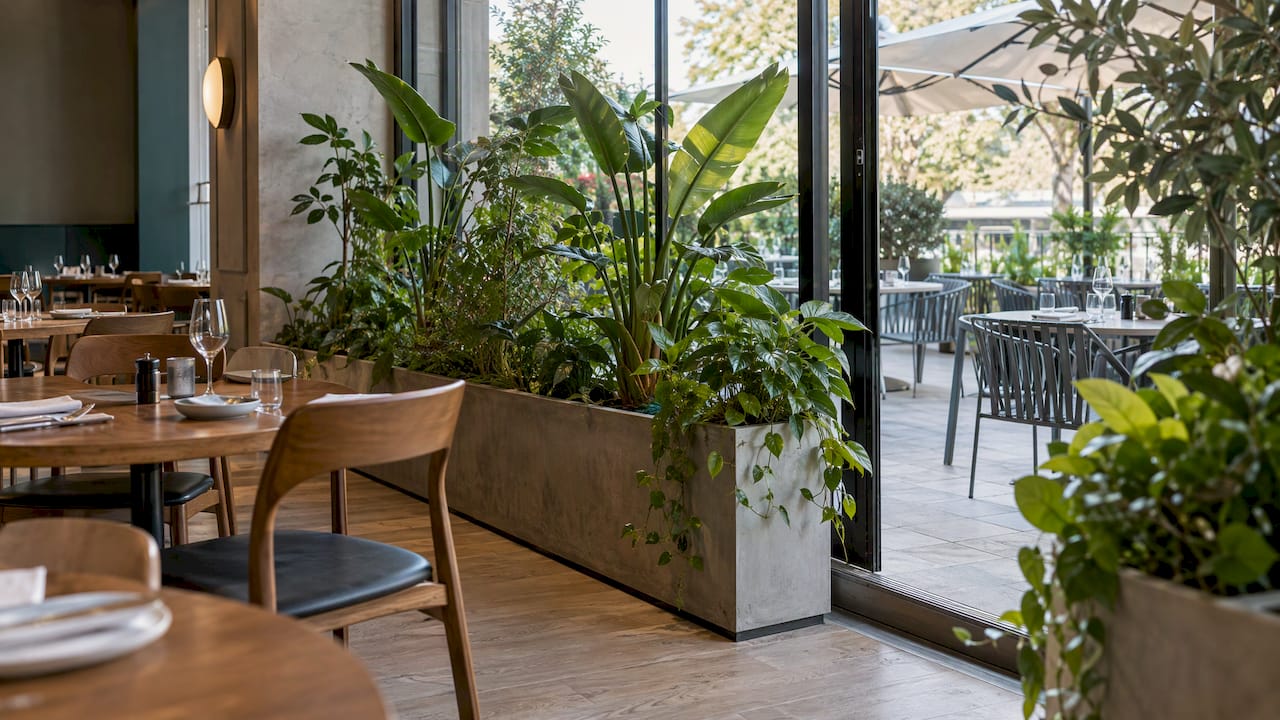
The Novotel example above uses green wall installations across several areas. At the Baur au Lac, the gardens inspire the hand-painted and mosaic motifs rather than appearing only as pots. Both approaches treat nature as part of the architecture.
Practical points before you commit:
- Check light levels. Real plants need daylight or suitable grow lighting, and restaurants are often dim by design.
- Think about maintenance. A living wall needs a service plan and someone responsible for it.
- Consider preserved or high-quality artificial greenery for darker corners, and keep real plants where they will thrive.
- Let the indoor planting echo what the guest sees outside, so the terrace and dining room feel like one place.
Built to last: durable and sustainable choices
Sustainability in gastronomy design is mostly about longevity. A chair that survives ten busy years is greener than a trendy one replaced after two. Reclaimed timber, solid wood, natural stone and repairable upholstery all fit this logic, and the 2026 trend review points the same way, with reclaimed furniture supporting longevity.
A short checklist for durable interiors:
- Ask for wear and cleaning information on every fabric and surface before you order.
- Choose timeless shapes in the main furniture and keep trend colours for cushions, curtains and tableware, which are cheap to change.
- Specify finishes that patina gracefully, such as oiled wood, bronze and natural stone.
- Plan storage and service stations so staff are not forced to improvise around the design.
The Chez Fritz note about textures that are robust for daily use while still elegant is a good summary of the brief for any restaurant.
Our perspective
Restaurant design fails when it is treated as decoration at the end. The best rooms start with the guest's journey: how they arrive, where they wait, how they hear each other, how the light feels at nine in the evening. Only then do we pick the stone, the wood and the fabric.
We work as both interior designers and interior architects, so we can think about the plan, the technical drawings, the 3D visualisation and the furniture together. With more than 480 completed projects and access to a network of over 185 furniture brands, we like to give each space its own character, rather than repeating a formula. For a restaurant or bar, that means one coherent story told through materials, light and layout, with the practical side managed for you.
Our advice is simple. Decide your concept first, choose a tight palette, invest in lighting and acoustics, and keep the trendiest elements easy to swap. That way the room still feels fresh in five years.
Giorgia D'Amico
Planning your own project with Upscale
If you are planning a restaurant, café, bar or hotel dining space in Zürich, or a home dining room inspired by what you've seen above, we'd love to help. Our commercial interior design services cover office design, real estate project developments and rental services, and our team in Zürich interior design works with local spaces every day.
For private clients, the fixed-price interior design packages are a simple way to start. A Consultation costs CHF 490, a Single Area Package CHF 970 and a Full Home Package CHF 3,390, all as one-off prices published on our site. If your project is bigger, you can request an individual offer and we'll shape the scope with you. Not sure what style suits you? Our online style quiz is a friendly first step.
Bringing the trends home
Many of these ideas translate neatly into a private dining room or open-plan kitchen: a palette taken from your view, warm layered light, a flexible table setup and textiles that survive family life. We cover related thinking in our interior trends article, and our magazine shows how local landscape shapes design in places such as Andermatt.
A simple order of work that suits both a restaurant and a home:
- Define the mood in three words.
- Draw the layout and the zones.
- Choose the main materials and the palette.
- Plan the lighting scenes.
- Select furniture and textiles.
- Add the swappable, trend-led details last.
Following this order keeps the budget under control and gives the finished space a clear identity.
FAQ
Which restaurant interior design trends matter most in 2026?
Authenticity, sensory materials, adaptable layouts and longevity stand out. Reclaimed and natural materials, warm layered lighting and palettes taken from the surroundings are the clearest signs of the direction.
How do I make a restaurant feel cosy without making it dark?
Use warm, dimmable light at table height, soft fabrics such as linen or mohair, and natural wood or stone. Keep ceilings and walls in lighter tones so the room stays open while the lighting does the work of creating intimacy.
How can one dining room suit both quiet lunches and lively evenings?
Combine dimmable lighting scenes with movable elements such as curtains, screens and modular tables. These let you change the mood and the seating plan without rebuilding anything, and they help with private events too.
Do I need a designer for a small café or bar?
A designer helps most at the start, when the layout, lighting and materials are decided together. A single consultation can give you a clear concept and a plan, and you can then carry out the work in stages.
Sources
- Restaurant Design Trends for 2026 Focus on Authenticity
- Riviera-Gefühl am Zürichsee, Chez Fritz in Kilchberg
- Baur au Lac opens Restaurant Marguita
- Neues Kapitel für das Novotel Zürich Airport Messe
- 12 Hotel Restaurant Interior Design Trends to Watch in 2026
- 5 Interior Design Trends to Watch in 2026
Recommended