.svg)

Few Swiss cities carry the weight of twelve centuries of culture as gracefully as St. Gallen. This compact northeastern city holds a UNESCO World Heritage site, an extraordinary Baroque library that genuinely stops people in their tracks, and a streetscape filled with painted oriel windows that would make any design lover’s heart race. Whether you’re planning a visit or considering a move, St. Gallen rewards you with layers of architectural beauty, a calmer pace than Zurich, and a creative energy that’s quietly influencing interior design trends across Switzerland.
Key takeaways
The Abbey District of St. Gallen: A UNESCO gem
The Abbey District is the heart and soul of the city. Its history stretches back to 719 AD, when the Irish monk Gallus established a hermitage on the site. That small retreat grew into one of the most important centers of learning in medieval Europe, and 1,300 years of history are still very much alive in the buildings you can explore today. The Abbey District earned UNESCO status in 1983, recognizing its Carolingian monastery legacy as globally significant.
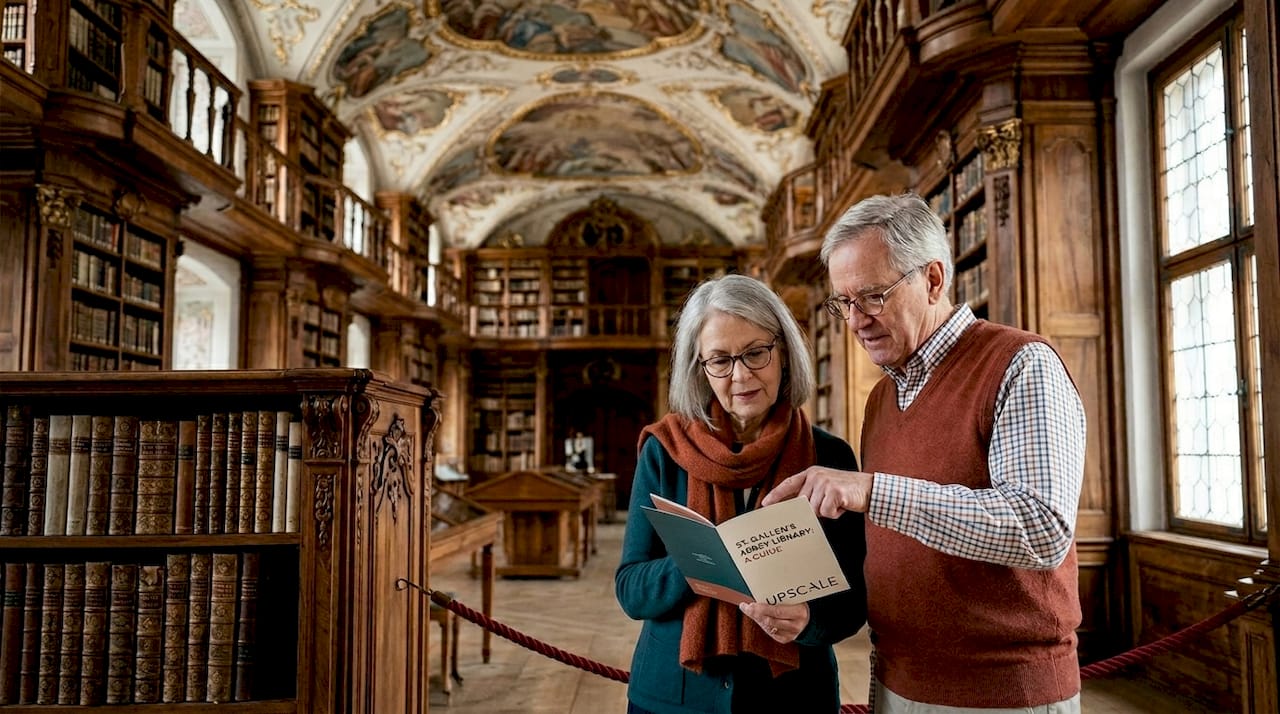
The centerpiece is the Abbey Library, the Stiftsbibliothek, and it genuinely earns its reputation as one of the most beautiful Baroque interiors in the world. Floor-to-ceiling walnut shelving, intricate stucco ceilings, and galleries packed with illuminated manuscripts create a space that feels otherworldly. What makes it even more impressive is that the Baroque hall lighting was custom-designed to protect artifacts while delivering uniform illumination, balancing conservation with the visitor’s visual experience perfectly.
Visiting requires a bit of planning. Tourism interest has surged remarkably in recent years. By October 2025, the Abbey District museums had already sold over 176,500 tickets, closing in on 194,000 by year end. That popularity translates to real access limits you need to know about.
Here’s a quick reference for your visit:
- You’ll be asked to put on felt “pilgrim slippers” over your shoes. Only 100 pairs are available, which naturally limits the number of people inside at any one time. It’s a quirky conservation rule that actually works beautifully.
- The manuscripts on display change regularly, so repeat visits genuinely offer something new each time.
- Photography is now permitted inside the library, a change that happened about two years ago and has contributed directly to the spike in visitor numbers.
- Guided tours are available but limited in frequency due to the capacity constraints.
Pro Tip: Arrive when doors open. The atmosphere in the Baroque hall before the crowds arrive is something else entirely, and you’ll have space to actually absorb the detail in the ceiling frescoes.
Old town architecture and those iconic windows
Walking through St. Gallen’s old town feels like wandering through a living design textbook. The medieval street layout is compact and walkable, with lanes that curve just enough to keep surprising you. What stops most visitors are the oriel windows. With 111 painted oriel windows decorating the building facades, each one distinct in style and color, the city has an artistic energy that’s almost impossible to photograph in full.
These windows are not decorative afterthoughts. They evolved from a practical need to maximize light in narrow streets, and over time craftspeople turned them into canvases for their skills. Some are carved from dark walnut-stained wood, others are painted in ochre or deep green, and many feature intricate figural scenes. No two are identical.
Here’s how to get the most out of exploring the architectural highlights on foot:
- Start at Marktplatz and walk east along Schmiedgasse. This stretch has the highest concentration of restored oriel windows and lets you cover the core district in about 40 minutes.
- Look up at the second and third floors. The ground-level shopfronts are modern retail, but the upper stories reveal centuries of original stonework and woodwork.
- Cross into Gallusstrasse to see the Cathedral of St. Gallen up close. Its twin towers and Baroque facade represent one of the most coherent examples of late Baroque architecture in the German-speaking world.
- Compare window styles as you walk. Earlier windows tend toward simpler geometric forms while later Renaissance and Baroque examples display more figurative ornamentation.
- End at Spisergasse for a quieter stretch where several building facades have been meticulously restored, showing both original coloring and structural detail.
How do the architectural styles compare across the city center?
What’s genuinely exciting for anyone interested in modern design inspirations is how these historical layers translate directly into contemporary interiors. The color palettes, material textures, and proportions you see on St. Gallen’s streets are showing up in high-end Swiss home design right now.
Interior design lessons from St. Gallen’s heritage
Living in or near St. Gallen shapes how you think about your home. The city offers something rare: a daily dose of beautifully proportioned spaces, warm natural materials, and color relationships that have survived centuries because they simply work.
The influence shows up in several distinctive ways in local and regionally inspired interiors:
- Warm wood tones. The walnut and oak used throughout the Abbey Library and old town buildings set a benchmark. In St. Gallen homes, warm mid-tone woods appear in flooring, cabinetry, and furniture in a way that feels grounded rather than trendy.
- Stucco-inspired texturing. The Baroque plasterwork in the Abbey has sparked renewed interest in textured wall finishes in residential spaces. Adding texture to your home through limewash paint, troweled plaster, or paneling replicates that depth without requiring a Baroque building permit.
- Color drawn from the Alps. The views from St. Gallen toward the Appenzell hills and Lake Constance inspire a palette of deep greens, soft grays, warm creams, and occasional bold ochre accents. These colors feel natural indoors because they reflect the outdoor environment residents see daily.
- Natural light as a design tool. Those oriel windows were built to capture light from multiple angles. Modern St. Gallen interiors take a similar approach, prioritizing window placement, reflective surfaces, and indirect lighting to keep living spaces feeling open. Thoughtful bedroom lighting design follows the same logic as the Abbey Library’s carefully angled illumination system.
- Quality over quantity in materials. Swiss craftsmanship values durability and precision, and that shows in how local residents approach furnishing their homes. One exceptional piece of joinery or a single well-chosen fabric does more work than a room full of decorative clutter.
Pro Tip: If you’re decorating a Swiss home and want to draw on the St. Gallen aesthetic, start with your walls and floor tones first. Get those warm and textured, and the furniture choices become much easier to get right.
The real lesson from St. Gallen’s design heritage is that restraint and richness can coexist. The Abbey Library is elaborate and detailed, yet it never feels chaotic. That balance is worth studying.

Planning your visit or move to St. Gallen
Getting there is straightforward. From the main railway station, Bus 11 takes 5 to 10 minutes to reach the Stiftsbezirk stop right at the Abbey Library entrance. Alternatively, it’s a pleasant 20-minute walk from the station through the old town, which is actually the better option if you want to take in the architecture on arrival.
Practical visitor details worth knowing:
- Tourist information centers operate Monday to Friday, 9:00 to 12:00 and 13:30 to 17:00, and are closed on weekends and public holidays. Plan accordingly.
- Adult Abbey Library admission runs CHF 18, which is very reasonable given what you’re seeing.
- Overall living and visiting costs run 25 to 35% lower than in Zurich or Geneva, which matters whether you’re budgeting for a weekend trip or weighing a relocation.
- Spring and early autumn offer the best weather for old town walks, with mild temperatures and good light for appreciating facade colors and window details.
- The University of St. Gallen (HSG) brings a consistent flow of international students and academics, giving the city a lively intellectual atmosphere that makes it feel younger and more dynamic than its medieval core might suggest.
For quality of life, residents benefit from excellent public transport, a city-center hospital, a strong sports culture including football, and a calendar of cultural events anchored by the annual open-air festival. The city genuinely rewards long-term residents as much as short-term visitors.
My honest take on St. Gallen as a design destination
I’ve had the chance to look closely at many Swiss cities through the lens of interior architecture, and St. Gallen continues to surprise me. Most people treat it as a day trip from Zurich and miss the point entirely.
What I’ve found is that the real design lesson here isn’t about copying Baroque motifs. It’s about understanding why those spaces work. The Abbey Library feels extraordinary because every element, the light, the scale, the material warmth, works together toward a single experience. That’s exactly what great interior design does in a home. The conservation-driven lighting approach used in the Baroque hall is, in my view, one of the most instructive examples of how to balance aesthetics and function. It’s not about the technology. It’s about understanding what the space needs emotionally.
What I find equally compelling is how St. Gallen has managed to modernize without erasing itself. The old town is lived-in and functional, not frozen as a museum piece. Residents shop in those oriel-windowed buildings. Kids walk past the Cathedral on their way to school. That’s rare, and it creates a very specific kind of creative confidence in the people who live there. They’ve inherited a high standard of visual quality and it shapes their expectations. In my experience, that mindset produces the most interesting residential interiors anywhere.
If you’re a design enthusiast choosing between Swiss destinations, give St. Gallen more than an afternoon.
— Giorgia
Bring St. Gallen’s style into your own home
St. Gallen’s architectural richness is genuinely inspiring, and you don’t need to live in a medieval building to bring some of that warmth and character into your space. At Upscale, we work with clients across Switzerland to translate exactly this kind of regional heritage into beautiful, livable interiors. Whether that means warm walnut tones, textured plaster walls, or a lighting plan that makes your rooms feel as considered as the Abbey Library, our team has the experience to make it happen.
If you’re curious about how to get started, explore our interior design services to see how a personalized consultation works. You can also dive into classic interior design for ideas on bringing timeless, Baroque-influenced elegance into any room. Your home deserves the same thoughtfulness that St. Gallen’s builders put into their city.
FAQ
What is St. Gallen known for?
St. Gallen is best known for its UNESCO-listed Abbey District, the stunning Baroque Abbey Library, and its old town decorated with over 111 painted oriel windows. It’s also a lively university city with a strong cultural calendar.
How do I get to the Abbey Library from the train station?
Bus 11 from St. Gallen railway station reaches the Stiftsbezirk stop in 5 to 10 minutes. Walking through the old town takes about 20 minutes and is a great way to see the architecture en route.
Is St. Gallen expensive to visit?
Compared to Zurich or Geneva, St. Gallen is notably more affordable, with costs running roughly 25 to 35% lower. Abbey Library admission is CHF 18 for adults, CHF 12 for students, and free for children 16 and under.
What are the best things to do in St. Gallen for architecture lovers?
Walking the old town to spot the oriel windows, visiting the Abbey Library and Cathedral, and exploring the layered medieval, Renaissance, and Baroque facades along Schmiedgasse and Gallusstrasse are all top priorities.
When is the best time to visit St. Gallen?
Spring and early autumn offer the most pleasant conditions for exploring on foot, with mild weather and soft light that shows off the old town’s colors and facade details beautifully.
Recommended
- Modern Design Inspirations | Upscale Interior
- Klosters Interior Design | Upscale Interiors
- Geneva Interior Design | Swiss Interior Designers – Upscale
- Interior Design Pop-Up Event in Zurich | Upscale Interior