.svg)

Custom wine cellar design is defined as the bespoke planning, engineering, and finishing of a dedicated wine storage space built to match both the homeowner’s collection and the architecture of the residence. In Gstaad, where luxury home features set a global standard, this discipline has moved far beyond a simple rack in the basement. Demand for custom wine cellars in luxury residential projects grew by 18% in 2025. That number tells you something important: discerning homeowners now treat the wine cellar as a signature architectural statement, not an afterthought. Brands like Genuwine and design studios specializing in bespoke residential interiors are shaping what luxury wine cellar design looks like in 2026, and the results are genuinely spectacular.
How custom wine cellar design is elevating luxury homes in gstaad
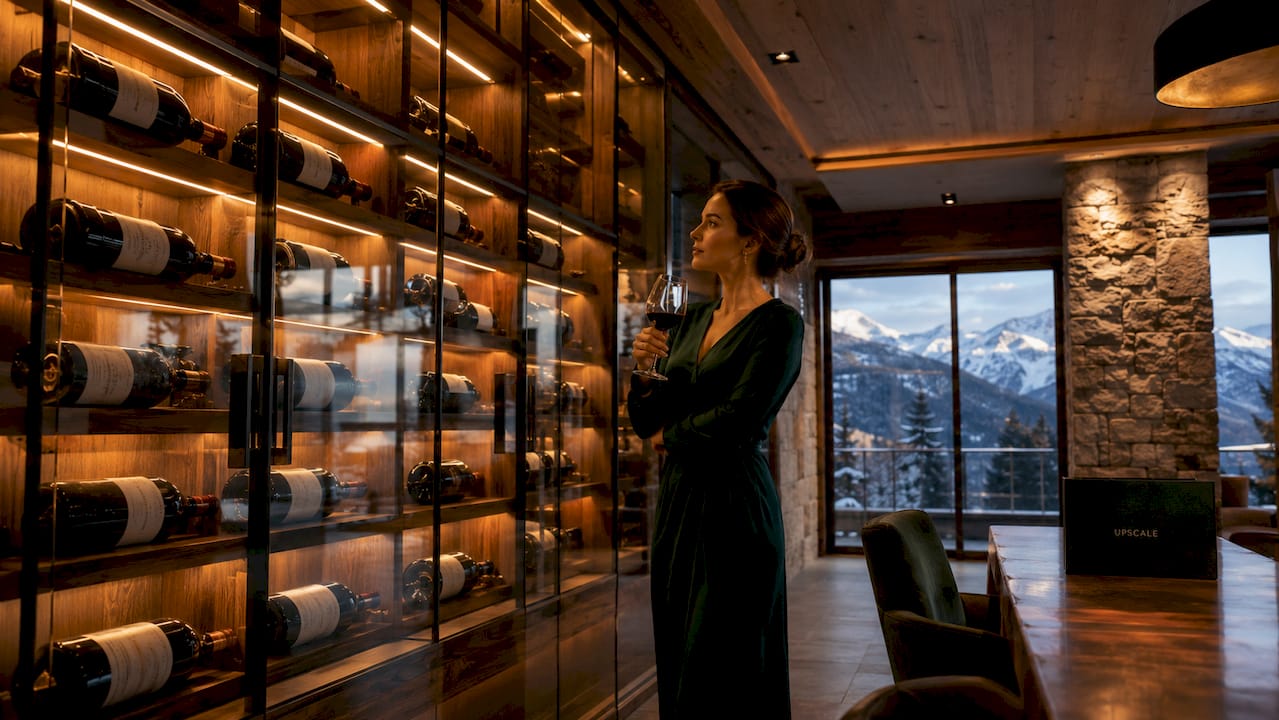
The shift happening in Gstaad is not just cosmetic. Custom wine cellars now function as temperature-controlled galleries that showcase a collection’s beauty while protecting every bottle inside. Modern luxury cellars move beyond storage to become the visual and experiential heart of a home’s entertaining spaces. When you walk into a Gstaad chalet and see a floor-to-ceiling glass enclosure glowing with warm light, you are looking at the intersection of interior architecture and lifestyle investment. That is the real story behind the growing appetite for designing wine cellars for homes at this level of the market.
What key design features define luxury custom wine cellars?
The best custom wine cellar ideas share a handful of defining characteristics that separate them from off-the-shelf solutions. Here is what you will find in the most impressive cellars across Gstaad’s luxury residences:
- Frameless glass enclosures create visual drama and allow the collection to be admired from adjacent living spaces without opening a door.
- Walnut paneling, stone floors, and polished concrete deliver the tactile richness that defines high-end interiors. Luxury natural materials like these contribute both durability and a timeless feel.
- Label-forward racking positions bottles so labels face outward, turning storage into display. Combined with low-iron glass, this approach transforms a cellar into a temperature-controlled gallery.
- Zoning for different wine categories separates age-worthy bottles, display pieces, and ready-to-drink selections into distinct areas. Well-planned zoning adds depth and functionality to the entire environment.
- Architectural harmony with the home’s broader interior design style, whether that is Alpine modern, classic European, or contemporary minimalist.
The material palette matters enormously. Walnut brings warmth. Stone grounds the space. Polished concrete adds an urban edge that contrasts beautifully with the mountain setting of Gstaad. Mixing these materials thoughtfully is what separates a great cellar from a generic one.
Pro Tip: Ask your designer to specify low-iron glass for any display panels. Standard glass has a greenish tint that dulls the visual impact of your labels and bottles. Low-iron glass is optically clear and makes the whole cellar feel more alive.
How does climate control technology protect your wine collection?
Climate control is the backbone of any serious wine cellar. Get it wrong and your collection suffers regardless of how beautiful the space looks. The ideal storage conditions are a temperature of 55–58°F with relative humidity between 60–70%. Those numbers protect corks from drying out and prevent oxidation, which is the silent destroyer of fine wine.
Here is how the best luxury cellars in Gstaad achieve those conditions consistently:
- Ducted split-system cooling is the preferred configuration for high-end homes. Architects favor ducted systems because they allow silent, hidden installations that support minimalist glass designs without visible mechanical equipment.
- Stable microclimates require proper insulation in walls, floors, and ceilings. Even a small thermal bridge can create temperature fluctuations that degrade wine over time.
- Home automation integration lets you monitor temperature and humidity remotely through a smartphone app, giving you peace of mind whether you are in Gstaad or traveling.
- Energy-efficient silent operation is a priority in luxury residences where mechanical noise is simply not acceptable in living spaces.
- Annual system servicing keeps filters clean and refrigerant levels correct, which directly extends the lifespan of your cooling unit.
The choice between a self-contained through-wall unit and a ducted split system is one of the most consequential decisions in the planning process. Through-wall units are cheaper and easier to install, but they are noisier and limit your design options. In a Gstaad luxury home, the ducted split system is almost always the right call.
Pro Tip: Install a secondary temperature and humidity sensor from a brand like Govee or SensorPush that reports independently of your cooling system. If the system fails, you will know before your collection is damaged.
Which design styles are shaping gstaad’s luxury wine cellars?
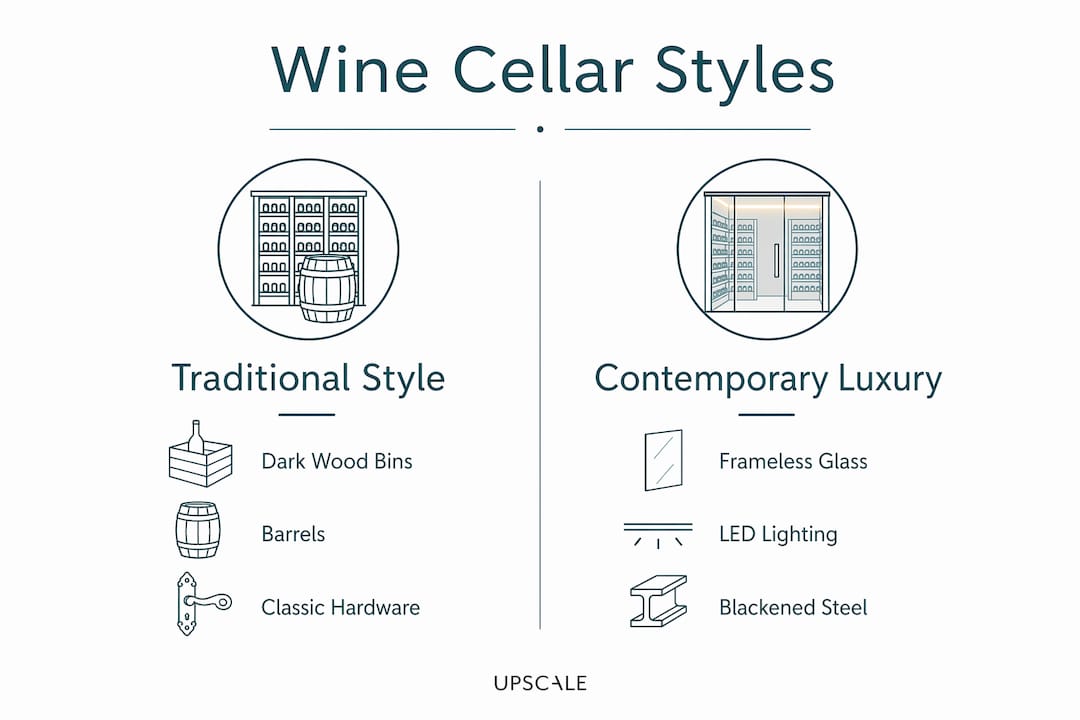
The aesthetic direction of luxury wine cellars has shifted significantly over the past five years. The heavy wood bins and wrought iron of traditional cellars are giving way to something more architectural and gallery-like. Here is a clear comparison of where the market has been and where it is going:
Glass-enclosed wine cellars now function as elegant room dividers in open-concept homes, merging the collection with the living space in a way that feels natural and intentional. This trend fits Gstaad’s architectural character perfectly, where chalets increasingly feature open-plan great rooms that benefit from a dramatic focal point.
Lighting deserves its own conversation. Specialized LED lighting placed strategically avoids heat and UV exposure while enhancing label visibility for a luxurious presentation. Lighting design for wine cellars is a specialized discipline, and getting it right requires someone who understands both the preservation requirements and the visual drama you want to create. For inspiration on how lighting transforms a space, the principles behind glass luminaire design apply directly to cellar environments.
Vaulted ceilings, pivot doors in blackened steel, and statement hardware are the finishing details that make a cellar feel truly bespoke. These elements connect the cellar to the broader modern design inspirations shaping luxury interiors across Switzerland right now.
What should gstaad homeowners know before building a custom cellar?
Planning a custom wine cellar is a rewarding process when you go in with clear priorities. Here are the practical considerations that matter most:
- Location is critical. Basements and transitional spaces between kitchens and dining rooms are the best choices. They balance temperature stability with visibility and guest access.
- Plan for growth. A cellar sized for your current collection will feel cramped within a few years. Build in at least 20–30% extra capacity from the start.
- Hire a specialist. A professional design consultation from a firm experienced in luxury residential projects will save you from costly mistakes in both materials and mechanical systems.
- Budget realistically. In the Gstaad luxury market, a properly designed and built custom cellar represents a meaningful investment, but it also adds measurable value to the property.
- Avoid common pitfalls. The most frequent mistakes are using materials that off-gas (certain paints and sealants can taint wine), underspecifying insulation, and choosing a cooling unit that is too small for the space.
Pro Tip: Before finalizing your cellar location, have a thermal assessment done on the proposed space. In Alpine homes, exterior walls can have significant temperature variation between seasons. Knowing this upfront shapes your insulation specification and cooling system sizing.
The planning phase is also the right time to think about how the cellar connects to your home’s broader design story. A cellar that feels like a natural extension of your living room or dining area creates a far more satisfying experience than one that feels bolted on as an afterthought.
Key takeaways
Custom wine cellar design in Gstaad luxury homes succeeds when advanced climate control, bespoke materials, and architectural integration are planned together from the start.
Why the best cellars in gstaad are built around experience, not just storage
I have worked on luxury residential interiors across Switzerland for years, and wine cellars are one of the spaces where I see the biggest gap between what homeowners initially ask for and what they ultimately love. Most people come in focused on capacity: how many bottles, what racking configuration, what cooling system. Those things matter, but they are not what makes a cellar truly special.
The cellars that become the most talked-about features in a home are the ones designed around the experience of being in them. That means thinking about how the light hits the bottles at different times of day, how the door feels when you open it, and whether the space invites you to linger or just grab a bottle and leave. The technical requirements are a floor, not a ceiling.
I also think the integration question is underrated. A cellar that reads as a natural part of the home’s architecture, rather than a room within a room, creates a completely different emotional response. In Gstaad, where the architecture already has a strong character, the best cellars I have seen are the ones that honor that character while adding something unexpected. A pivot door in blackened steel inside a traditional chalet. A glass wall that frames the Alps through a window beyond. These moments of contrast are what make a space memorable.
The technology side is moving fast too. Home automation integration means you can monitor your cellar from anywhere, which removes a genuine source of anxiety for serious collectors. But I would caution against letting the technology drive the design. The best systems are the ones you never notice because they work perfectly and stay out of sight.
If you are planning a cellar in Gstaad, my honest advice is to start with the experience you want to create and work backward to the technical requirements. That sequence produces far better results than starting with a spec sheet.
How Upscale can help you design your dream wine cellar
Upscale specializes in bespoke residential interiors across Switzerland, and wine cellar design is one of the spaces where the team’s expertise in material selection, spatial planning, and architectural integration makes a real difference. Whether you are starting from a blank basement or reimagining an existing space, Upscale brings the creative vision and project management experience to make it happen without the stress. You can explore luxury interior design services tailored to Gstaad residences, or connect directly with designer Valerie, who brings deep expertise in bespoke luxury interiors. The first step is a conversation. Book a consultation call and bring your ideas, your collection size, and your vision for the space.
FAQ
What is the ideal temperature for a luxury wine cellar?
The ideal wine storage temperature is 55–58°F with relative humidity between 60–70%. These conditions protect corks and prevent oxidation in long-term storage.
How much space does a custom wine cellar require?
A functional custom cellar can start at around 50 square feet, but most luxury residential projects in Gstaad allocate 100–300 square feet to allow for zoning, display areas, and future collection growth.
Can a wine cellar work as a room divider in an open-plan home?
Yes. Glass-enclosed wine rooms are specifically designed to function as elegant room dividers, creating a signature focal point while merging the collection with the living space.
What cooling system is best for a luxury wine cellar?
Ducted split-system cooling is the preferred choice for high-end homes because it operates silently and allows the mechanical components to be hidden, supporting minimalist and glass-forward cellar designs.
Does a custom wine cellar add value to a gstaad property?
A well-designed custom cellar adds measurable value in the Gstaad luxury market, where buyers expect distinctive architectural features and are willing to pay a premium for spaces that combine function with genuine design quality.
Recommended
- Klosters Interior Design | Upscale Interiors
- Geneva Interior Design | Swiss Interior Designers – Upscale
- How to set a bespoke interior design budget in Switzerland