.svg)

A custom library and reading room is defined as a purpose-built residential space where built-in cabinetry, layered lighting, and curated seating work together to create a functional and beautiful sanctuary. For homeowners in Hergiswil, these spaces offer something genuinely special: the chance to blend Swiss architectural sensibility with deeply personal collections and cozy reading nook inspiration that fits your home’s unique character. Floor-to-ceiling built-in cabinetry is the gold standard for home libraries in 2026, and the best custom library and reading room design ideas for homes in Hergiswil start right there.
1. What are the top custom shelving options for home libraries in Hergiswil?
Floor-to-ceiling built-in shelving is the single most impactful choice you can make for a home library. It maximizes storage, adds architectural permanence, and delivers a level of craftsmanship that freestanding units simply cannot replicate. In Hergiswil homes, where rooms often feature clean lines and quality finishes, built-ins feel native to the space rather than added on.
The best shelving systems combine fixed lower cabinetry with adjustable upper shelves. Fixed lower cabinets hide less attractive items like binders, files, and media. Adjustable upper shelves let your collection grow and change without forcing you to rebuild anything.
Material choices matter a great deal in Swiss interiors. Warm-toned woods like walnut, oak, and cherry suit Hergiswil homes beautifully. Matte lacquer finishes in deep greens, navy, or warm whites are popular for a polished yet livable look. Pairing wood tones with metal hardware adds subtle contrast without overwhelming the room.
- Floor-to-ceiling built-ins create architectural impact and maximize every centimeter of wall space.
- Fixed lower cabinets provide closed storage for items you want out of sight.
- Adjustable upper shelves accommodate books, art objects, and collections of varying sizes.
- Mixed shelf heights prevent the rigid, uniform look that makes shelves feel institutional rather than personal.
- Quality wood finishes connect the library to the broader material palette of your home.
Pro Tip: When planning your shelving, leave at least one section with extra-tall shelf spacing. Oversized art books, vinyl records, and framed photos need room to breathe, and that variation makes the whole wall feel curated rather than crammed.
For guidance on bespoke fitted shelving, it helps to review how professional designers approach proportion and spacing before committing to a layout.
2. How to design comfortable reading nooks in small or unconventional spaces
Not every Hergiswil home has a dedicated room for reading. That is actually fine. Repurposing window bays, attic alcoves, or hallways creates effective reading nooks within spaces that would otherwise go unused. A tucked-away corner can become the most beloved spot in your home.
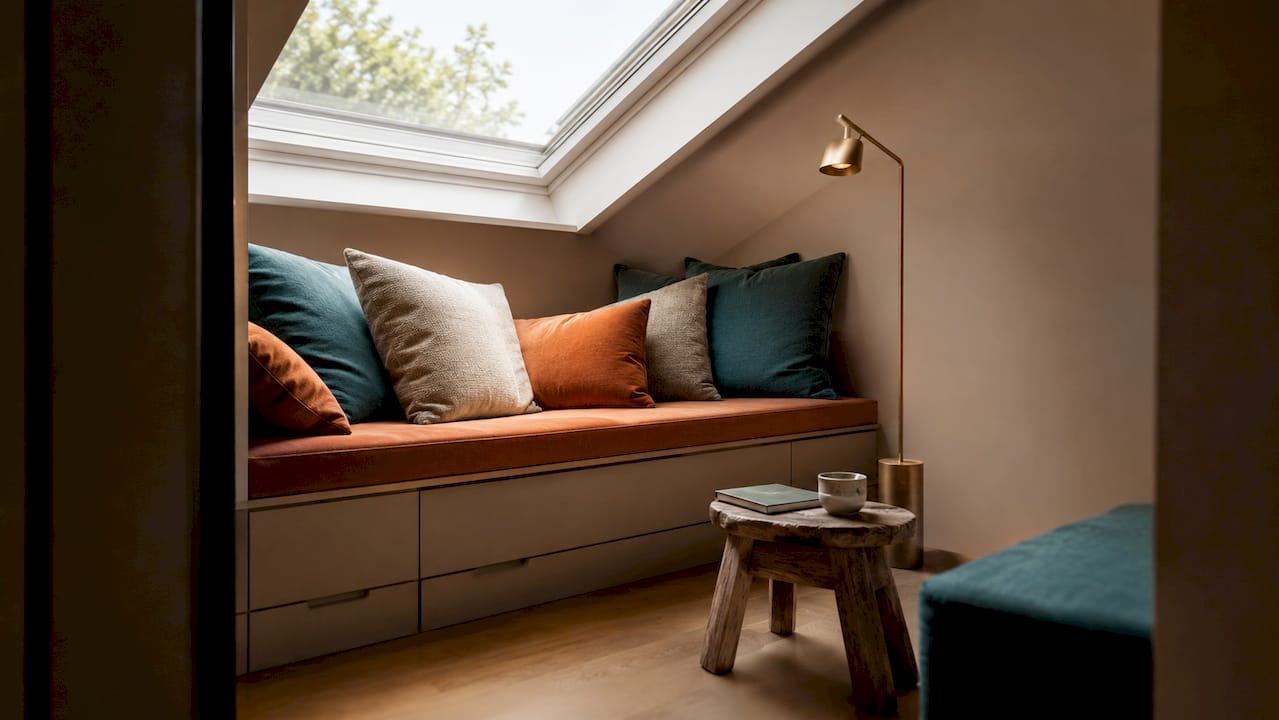
A practical standard for reading nook shelving is a 6-foot-wide footprint around the seating area. This gives you enough storage on either side without making the nook feel like a cave. Built-in benches with storage underneath double the function of the space beautifully.
Layering is the key to making a nook feel genuinely cozy rather than just functional. Start with a cushioned bench or window seat, then add a throw blanket, a couple of textured pillows, and a small side table for your coffee. Warm ambient lighting overhead and a focused reading lamp complete the picture.
- Window bay seats with built-in storage underneath are the most space-efficient reading nook option.
- Attic alcoves offer natural enclosure and a sense of privacy that flat-wall nooks cannot match.
- Hallway nooks work well in wider corridors, especially when framed with shallow shelving on both sides.
- Built-in benches with lift-up lids provide hidden storage for blankets, pillows, and books.
For ideas on transforming awkward spaces into purposeful reading areas, the approach is always the same: measure carefully, plan seating first, and build shelving around it.
You can also find creative room divider ideas that help define a reading nook within an open-plan room without requiring structural changes.
3. What lighting strategies enhance custom libraries and reading rooms?
Layered lighting is the single most important technical decision in a reading room. Multiple light sources prevent harsh shadows, create warmth, and let you shift the mood from bright and focused to soft and atmospheric. A library lit by a single overhead fixture feels flat and uninviting.
The three layers to plan are ambient, task, and accent lighting. Ambient light fills the room evenly. Task lighting focuses on your reading chair or desk. Accent lighting highlights your shelves and collections after dark, which is genuinely beautiful and worth planning for.
- Ambient lighting: Recessed ceiling fixtures or a central pendant provide general illumination. Choose a warm color temperature (around 2700K–3000K) for a cozy feel.
- Task lighting: A well-positioned floor lamp or adjustable wall sconce next to your reading chair prevents eye strain during long sessions.
- Accent lighting: LED strip lights inside shelving bays or small picture lights above art objects make your collection glow.
- Dimmable controls: Dimmable, low-UV fixtures protect your books from fading and let you adjust brightness for day and evening use.
- Natural light placement: North-facing windows provide soft, consistent light that avoids glare and heat gain, making them ideal for book conservation and reader comfort.
Pro Tip: Install UV-filtering window film or light-filtering blinds on any south or west-facing windows in your library. Direct sunlight fades book spines and dust jackets faster than almost anything else.
For a deeper look at layered lighting design and how to apply it room by room, Upscale’s magazine covers the principles in practical detail. You can also explore study lighting strategies specifically tailored to reading and focused work.
4. Which design elements improve acoustics and overall ambiance in reading rooms?
Quiet is not an accident. Wall and ceiling insulation combined with solid-core doors significantly reduces noise intrusion and creates the kind of sanctuary that makes you actually want to spend time there. These features work best when planned during initial construction rather than retrofitted later.
Soft furnishings do more acoustic work than most homeowners realize. A large wool rug, heavy curtains, and upholstered seating all absorb sound and reduce echo. A room with hard floors and bare walls will always feel louder and less inviting, no matter how beautiful the shelving is.
“The best reading rooms feel separated from the rest of the house. Not isolated, but quieter. That sense of calm comes from deliberate material choices: thick rugs, lined curtains, upholstered chairs, and doors that actually seal. Acoustics and atmosphere are the same conversation.”
- Solid-core doors block significantly more sound than hollow-core alternatives.
- Wall insulation between the library and adjacent rooms reduces noise transmission at the source.
- Large area rugs absorb footstep noise and mid-frequency sound reflections.
- Heavy curtains or drapes add both acoustic mass and a sense of warmth to the room.
- Upholstered seating contributes to sound absorption while making the space more comfortable.
Modern reading spaces prioritize a lived-in comfort with layered textiles and natural light over formal, traditional looks. That shift in design thinking means your Hergiswil library can feel warm and personal rather than stiff and ceremonial.
5. How to personalize your custom library to reflect your lifestyle and collections
A library that feels truly yours is built around curation, not accumulation. Curated shelving with mixed heights and the incorporation of art and personal objects creates a tailored, inviting look that rigid uniform shelving never achieves. The goal is a space that tells your story.
Books should dominate the shelves. Designers consistently stress that books must remain the primary element to preserve the intellectual character of the room. Mixing in a few art objects, framed photos, or small sculptures adds personality without tipping into clutter.
Many Hergiswil homeowners also want their library to serve double duty as a home office or media room. Integrating a home office into a library works well when you dedicate one section of the built-ins to a desk alcove with concealed cable management and task lighting. The library aesthetic stays intact while the function expands.
- Mix books with art and objects at a ratio that keeps books dominant and decor secondary.
- Vary shelf heights to accommodate oversized volumes, framed photos, and sculptural pieces.
- Include a dedicated desk alcove if you want the room to serve as a home office.
- Use natural materials like linen, wool, and solid wood to connect the space to Swiss interior traditions.
- Incorporate ergonomic seating such as a well-proportioned armchair or small sofa that supports long reading and working sessions.
Regional style influences in Hergiswil tend toward clean lines, quality materials, and restrained color palettes. A library that leans into those preferences will feel cohesive with the rest of your home rather than like a themed room dropped in from somewhere else.
Key Takeaways
The most effective custom library and reading room design combines floor-to-ceiling built-in shelving, layered lighting, and deliberate acoustic planning to create a space that is both architecturally impactful and genuinely comfortable for daily use.
Why I always say: plan the library before you finalize the floor plan
The homeowners I see most satisfied with their libraries are the ones who brought the idea to the table before construction began. Integrating a library at the initial construction stage prevents costly retrofitting and allows full architectural integration. Deep custom millwork needs access during framing. That is not a detail you can easily work around later.
What surprises people most is how much the acoustic planning matters. Everyone focuses on the shelves and the lighting, which are both important. But the homeowners who end up truly loving their library are the ones who also got the door right, added insulation to the shared walls, and chose flooring that absorbs rather than reflects sound. Those decisions are invisible once the room is finished, but you feel them every time you sit down to read.
The other thing I have noticed is that the most beautiful libraries are rarely the most formal ones. The spaces that feel genuinely wow are the ones where the homeowner’s personality shows up: a collection of vintage travel books, a reading chair that is slightly too big for the room but impossibly comfortable, a shelf dedicated entirely to cookbooks next to a window with a lake view. Hergiswil homes have that potential in abundance. The architecture is already there. The design just needs to meet it.
Bring your Hergiswil library vision to life with Upscale
Upscale works with homeowners across Switzerland to design bespoke libraries and reading rooms that fit the architecture, the lifestyle, and the collection. Whether you have a dedicated room or a clever corner to work with, the process starts with a single focused consultation. Upscale’s single area design package covers space planning, material selection, custom cabinetry design, and full project management for exactly this kind of project. You get a tailored result without having to coordinate every detail yourself. Reach out to Upscale’s team for a personalized quote and see what your Hergiswil home library could look like.
FAQ
What is the best shelving system for a home library?
Floor-to-ceiling built-in cabinetry is the gold standard. The best systems combine fixed lower cabinets with adjustable upper shelves to accommodate collections of varying sizes.
How wide should a reading nook be?
A 6-foot-wide shelf footprint around the seating area balances storage with comfort. This works well in window bays, attic alcoves, and wider hallways.
What type of lighting works best in a reading room?
Layered lighting with ambient, task, and accent sources is the most effective approach. Use dimmable, low-UV fixtures to protect books and adjust brightness for day and evening use.
When should I plan a custom library in a new build?
Plan the library before construction begins. Deep custom millwork and acoustic insulation require access during framing, and retrofitting these features later is significantly more expensive.
How do I make a reading room quieter?
Install solid-core doors, add wall and ceiling insulation, and use soft furnishings like wool rugs, lined curtains, and upholstered seating. These elements work together to absorb sound and reduce noise intrusion.
Recommended
- Wollerau Interior Design
- Upscale Interiors Designers | Carina
- Modern Design Inspirations | Upscale Interior
- Modern Glam Apartment Lucerne | Lucerne, Switzerland | Upscale Interiors AG