.svg)

Custom dressing room design ideas for luxury homes in Zollikon center on one principle: a dressing room should feel as considered as the rest of the house. In Zollikon, where architectural quality sets a high bar, a walk-in closet or bespoke dressing space is no longer just storage. It’s a private room that reflects your lifestyle, your wardrobe, and your taste. Upscale Interiors works with homeowners across the Zürich lakeside area to create dressing rooms that are genuinely personal, beautifully finished, and built to last.
1. What are the essential features of a luxury dressing room?
A luxury dressing room is defined by architectural harmony, material quality, and storage that works as hard as it looks good. These three pillars separate a truly bespoke space from a well-organized closet. Getting all three right requires planning from the start, not as an afterthought.
The baseline features that distinguish high-end dressing rooms include:
- Architectural integration: The room’s joinery, ceiling height, and finishes should echo the rest of the home. Dressing rooms that integrate architecture, lighting, and finishes into a single vision feel cohesive rather than added on.
- Custom joinery: Built-in cabinetry fitted to your exact ceiling height eliminates wasted space and creates a tailored look that off-the-shelf units cannot match.
- Layered lighting: A three-level approach combining ambient, task, and accent light gives you flexibility for every time of day.
- High-end surface finishes: Satin lacquer, leather drawer pulls, and hand-applied veneers signal quality the moment you walk in.
- Flexible storage zones: A mix of hanging rails, open shelves, and enclosed drawers accommodates every category of clothing without visual chaos.
Pro Tip: Book a design consultation before you finalize your floor plan. Changing the position of a door or window at the planning stage costs nothing. Changing it after construction costs a lot.
Luxury dressing rooms also require a clear brief. Before any designer draws a line, you should know how many garments you own, how you dress each morning, and whether you share the space. That information shapes every decision that follows.
2. How to integrate personalized custom closet solutions
Personalizing your storage starts with an honest audit of what you own. Most homeowners underestimate their wardrobe volume by about a third, which leads to systems that feel cramped within a year. Measure your hanging items, folded pieces, shoes, and accessories before you commit to any layout.
- Assess your wardrobe by category. Count long hanging items, short hanging items, folded knitwear, shoes, bags, and jewelry separately. Each category needs a different storage solution.
- Choose your storage philosophy. Open shelving keeps frequently worn pieces visible and accessible. Enclosed cabinets protect delicate fabrics from dust. Mixing open and closed zones gives you both visibility and protection in one layout.
- Consider hydraulic clothing lifts. For rooms with high ceilings, hydraulic lifts and illuminated shelves bring upper-level storage within easy reach without a step stool. This is a practical detail that makes a real difference in daily use.
- Plan for accessories. Jewelry drawers with velvet inserts, watch winders, and dedicated bag shelves prevent the small items from taking over the main hanging space.
- Build in flexibility. Modular systems with adjustable shelf heights let you reconfigure as your wardrobe evolves. A fixed system that works perfectly today may not suit you in five years.
- Think about maintenance. Glass-fronted cabinets look beautiful but show fingerprints. Solid doors with push-to-open mechanisms are cleaner in daily use and just as elegant.
The goal is a system where everything has a place and every place is easy to reach. When storage works intuitively, the room stays tidy with minimal effort.
3. Which lighting strategies best enhance dressing room usability?
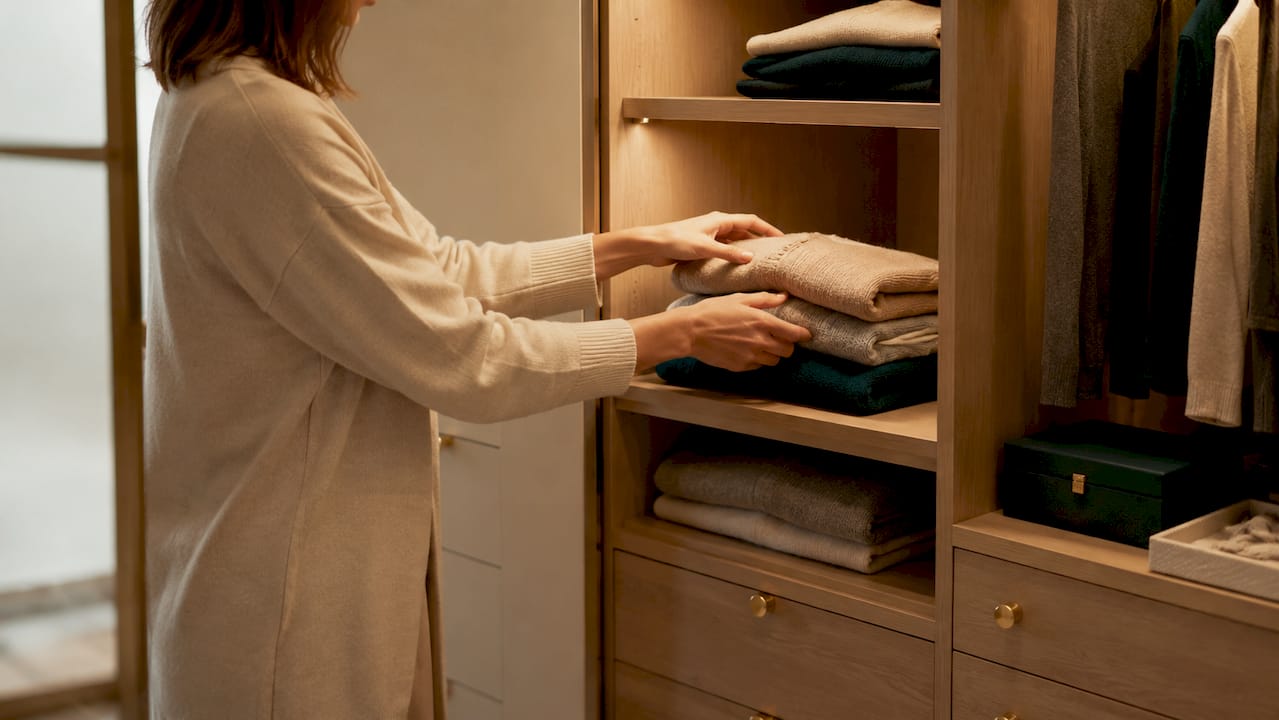
Lighting is the most underestimated element in dressing room design. Poor lighting means you leave the house in colors that don’t match, or you apply makeup that looks wrong in natural daylight. Getting it right is a technical decision as much as an aesthetic one.
The three-level lighting approach works as follows:
- Ambient lighting provides overall illumination. Recessed ceiling fixtures or a central pendant give the room its base layer of light.
- Task lighting targets specific zones. LED strips inside wardrobes, mirror-mounted lights for makeup, and under-shelf lighting for shoe storage all count as task light.
- Accent lighting adds atmosphere. Backlit shelves, picture lights over art, and toe-kick lighting create depth and warmth after dark.
Color temperature matters enormously in a dressing space. A 2700–3000K color temperature renders skin tones accurately and shows fabric colors as they appear in daylight. Cooler temperatures above 4000K make whites look blue and can distort your perception of color when dressing.
Smart lighting systems, including Philips Hue and Ikea Tradfri, integrate with home automation to create preset scenes. A “morning routine” scene at full brightness and a “evening” scene at 30% warmth can be triggered by voice or schedule without touching a switch.
Pro Tip: Install a full-length mirror with integrated side lighting at eye level. This replicates the lighting conditions of a retail fitting room and gives you the most accurate view of an outfit before you leave home.
Dimmers are non-negotiable in a luxury dressing room. They cost very little to add during installation and give you complete control over the room’s mood at any hour.
4. What materials and finishes create a timeless dressing room?
Material selection determines whether a dressing room feels genuinely luxurious or just expensive. The best choices combine visual warmth with durability, so the space looks as good in ten years as it does on day one.
Natural wood veneers like walnut and oak paired with brass or matte metal accents create a refined atmosphere that reads as genuinely luxurious rather than trend-driven. These combinations have remained relevant in high-end interiors for decades because they reference craft traditions without feeling dated.
Sustainability is a real consideration for Zollikon homeowners who care about sourcing. FSC-certified wood and Öko-Tex certified textiles confirm that materials meet environmental and health standards. These certifications also protect long-term material quality, since certified suppliers maintain consistent production standards.
Surface texture adds a layer of sensory richness that photographs rarely capture. Running your hand along a hand-lacquered drawer front or a leather-wrapped handle communicates quality in a way that visual design alone cannot. That tactile dimension is what separates a truly bespoke space from a well-styled one.
5. How to design elegant dressing room layouts that work every day
Layout is where elegance and function either come together or fall apart. A beautiful room that forces you to shuffle sideways between rails or crouch under a low shelf will frustrate you every morning. Good layout design prevents that entirely.
The key layout principles for a luxury dressing room are:
- Minimum 90 cm circulation paths. Clear pathways of at least 90 cm between facing storage units allow comfortable movement and full door opening without obstruction.
- Zoning by activity. Separate your hanging zone, folded storage zone, and makeup or grooming area. Each zone has different lighting and surface needs, and mixing them creates visual clutter.
- Symmetry as a design tool. Matching units on opposite walls create a sense of calm and order. Symmetry also makes the room feel larger than it is, which matters in tighter floor plans.
- A central island or bench. A padded bench or a low island with drawers gives you a surface for laying out outfits and a place to sit while putting on shoes. It also anchors the room visually.
- Decorative accents without clutter. A single piece of art, a vase, or a sculptural object adds personality. For inspiration on placing art without disrupting the room’s calm, styling art walls thoughtfully keeps the space feeling curated rather than busy.
The best dressing room layouts feel effortless to use. When the zones are clear and the paths are wide, you move through the space without thinking about it. That ease is the real luxury.
Key takeaways
A bespoke dressing room in a Zollikon luxury home requires architectural integration, layered lighting, and storage tailored to your exact wardrobe to deliver lasting elegance and daily function.
What I’ve learned designing dressing rooms for discerning homeowners
Working on luxury residential projects across the Zürich lakeside area, I’ve noticed one pattern that surprises most homeowners: the technical decisions matter more than the decorative ones. Clients often arrive with beautiful mood boards and a clear sense of the aesthetic they want. What they haven’t thought through is the lighting plan, the circulation width, or how the joinery connects to the existing architecture. Those are the decisions that determine whether the finished room actually feels luxurious or just looks like it should.
The other thing I’ve come to believe strongly is that expert designers treat dressing rooms as an extension of the home’s character, not a separate project. When the dressing room shares the same material palette, the same lighting temperature, and the same proportional logic as the bedroom and hallway, the whole floor feels intentional. When it doesn’t, even the most expensive finishes feel disconnected.
My honest recommendation for Zollikon homeowners is this: resist the urge to finalize your storage layout before you’ve resolved the lighting. Most people do it the other way around, and they end up with beautiful cabinetry that’s poorly lit. Lighting shapes how every material reads, how every color appears, and how the room feels at 7 AM on a gray morning. Get that right first, and everything else becomes easier to decide. Working with a designer who specializes in residential luxury spaces makes that sequencing much more natural.
— Giorgia D’Amico
How Upscale Interiors brings your dressing room vision to life
Upscale Interiors works with Zollikon homeowners to design dressing rooms that are genuinely personal, from the first consultation through to final installation. The Single Area Package is built for exactly this kind of focused project. It covers space planning, material selection, custom joinery coordination, and full project management for a single room. You get a dedicated designer, 3D visualizations before anything is built, and access to Upscale Interiors’ network of high-end Swiss and European suppliers. If you’re ready to turn your dressing room into a space that genuinely reflects your home and your lifestyle, the team at Upscale Interiors Zürich is the right place to start.
FAQ
What makes a dressing room “luxury” rather than just large?
A luxury dressing room is defined by the quality of its materials, the precision of its joinery, and how well it integrates with the home’s architecture. Size matters less than the level of detail and personalization.
How much space do I need for a walk-in dressing room in Zollikon?
A functional walk-in dressing room requires a minimum of around 4–5 square meters, with at least 90 cm of clear circulation space between facing storage units for comfortable daily use.
What lighting color temperature works best in a dressing room?
A color temperature of 2700–3000K renders fabric colors and skin tones most accurately, making it the best choice for dressing areas and makeup zones.
Should I choose open or closed storage for a luxury dressing room?
A mix of both works best. Open shelves suit frequently worn items and keep them visible, while enclosed cabinets protect delicate pieces from dust and light exposure.
How do I start a custom dressing room project with Upscale Interiors?
You can book a consultation directly through the Upscale Interiors website. The team covers everything from initial space planning to material sourcing and final installation, with full project management included.
Recommended
- Interior Design Zurich | Swiss Interior Designers – Upscale
- Upscale Interiors Designers | Carina
- Klosters Interior Design | Upscale Interiors