Bespoke furniture creates timeless interiors by solving the three things off-the-shelf pieces cannot: proportion, material integrity, and integration with the architecture around it. Commissioned correctly, a piece is built to the exact dimensions of your room, in materials chosen to age well rather than simply look good on day one. That combination of scale, substance, and fit is what protects a home's value long after this season's trends have quietly disappeared. The next sections walk through the process, the budgets, and what this looks like room by room.
TL;DR:
- Customized furniture ensures proper proportion and fit, avoiding visual friction caused by off-the-shelf pieces that are designed for average rooms.
- Materials like dense hardwoods, full-grain leathers, and high-grade fabrics resist wear and improve with age, supporting longevity and timelessness.
- Using precise proportion systems, neutral tones that patina well, and designing for adaptability helps prevent furniture from feeling outdated in a few years.
- Commissioning involves several phases, including material sampling and technical drawings, with budgets typically ranging from CHF 50,000 to CHF 500,000 for high-end projects.
- Sourcing responsibly from FSC-certified, reclaimed, or locally sourced materials supports sustainable design and enhances the long-term durability of bespoke pieces.
Upscale Interiors
upscale.ch
Shape Your Home Around You
Upscale Interiors creates tailored residential interiors through space planning, material selection, furniture sourcing, and 3D visualizations.
How can bespoke furniture create timeless interiors in Zollikon?
Ask any designer why a beautifully furnished room can still feel wrong within five years, and the answer usually comes back to scale, not style. Mass-produced furniture is built to fit an average room, which means it rarely fits yours properly. A sofa that's six centimetres too deep for your bay window, or a sideboard that leaves an awkward gap by the door, creates the kind of visual friction that ages a room faster than any colour trend.
Bespoke furniture is built around the space itself, which is why Upscale Interiors' work with luxury homeowners consistently starts with room proportions and lifestyle patterns rather than a catalogue. Getting the scale right the first time removes the temptation to "fix" a piece later with a rug, a throw, or a rearrangement that never quite works.
Beyond proportion, several factors determine whether a piece still earns its place in a decade:
- Material selection – dense hardwoods, full-grain leathers, and high-grade upholstery fabrics resist wear rather than simply hide it under a cushion.
- Repairable joinery – pieces built with proper mortise-and-tenon or dovetail construction can be re-glued and refinished rather than replaced.
- Craftsmanship and ongoing care – a well-made piece rewards proper maintenance, extending its working life well beyond a factory equivalent.
- A single coherent palette – bespoke commissions reduce visual clutter because every piece is chosen to work with, not against, its neighbours.
The practical mechanics behind furniture that never dates
Timelessness isn't an accident of good taste. It's the result of specific design decisions made early, before a single plank of wood is cut. Practitioners who specialise in integrated furniture describe the process as a dialogue between volume, light, and material, and that dialogue shows up most clearly in fitted joinery such as built-in bookcases, window seats, and wall panelling that sit flush with the architecture rather than floating awkwardly in front of it.
A few working rules keep bespoke commissions from drifting into passing fashion:
- Use proportion systems, not guesswork. The 3-5-7 rule (grouping objects and heights in odd numbers for visual balance) and the 70/30 rule (roughly 70% of a room in a dominant tone, 30% in contrast) both translate directly into furniture sizing and layout.
- Choose palettes that patina rather than fade. Neutral stone, oiled oak, and natural leather all improve with age instead of simply looking tired.
- Design for adaptability. Removable sofa covers, modular tabletops, and interchangeable cabinet fronts let you refresh a room's mood without replacing its bones.
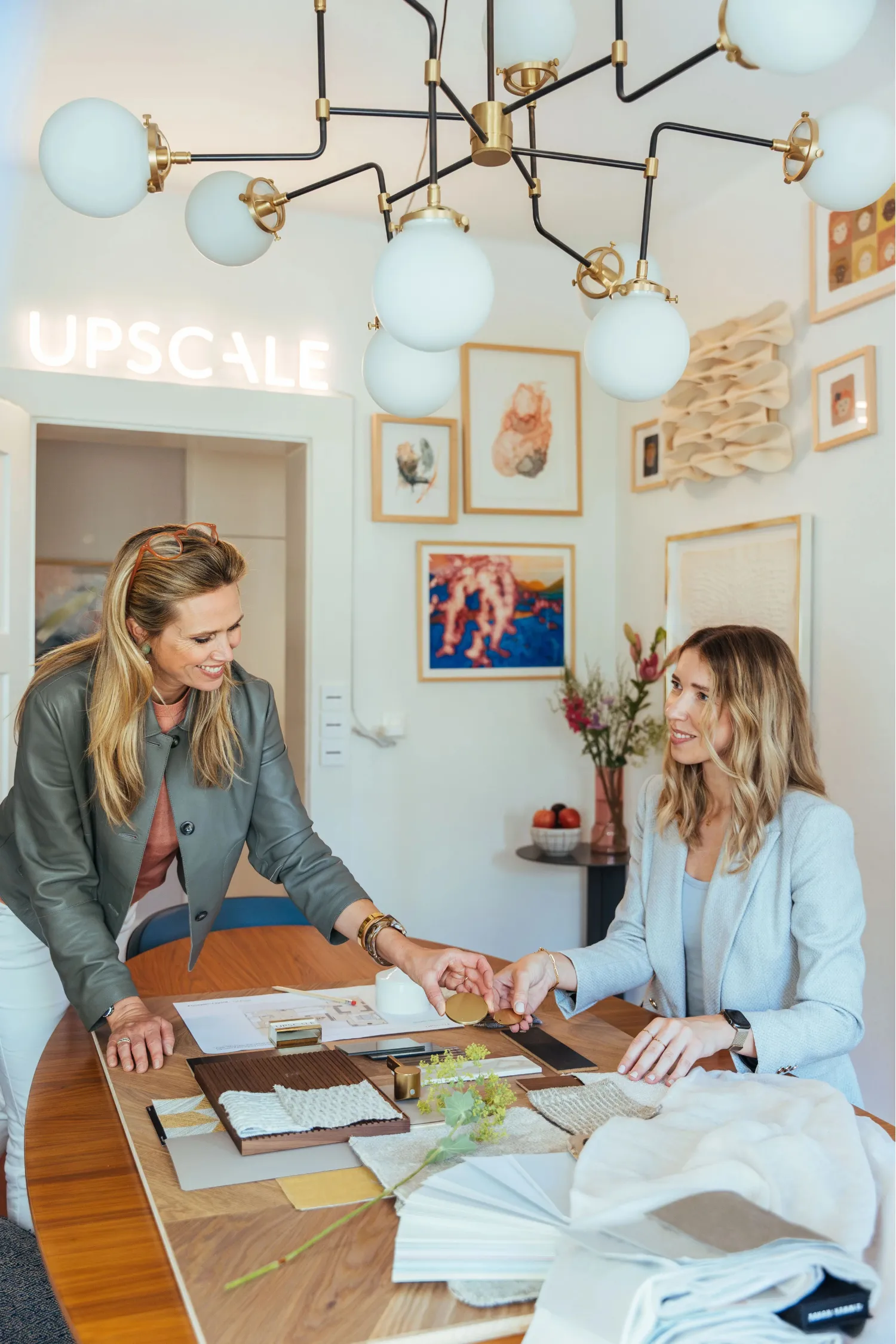
- Insist on samples before production. Fabric swatches and small material mock-ups reveal exactly how a finish will patinate, catching problems before they're built into a five-figure piece.
- Lock decisions into technical drawings. A properly dimensioned drawing set removes ambiguity between what you approved and what arrives on site.
Pro Tip: Ask your designer for a physical material board, not just digital renderings, before signing off on a bespoke commission. Fabric and wood read completely differently under Zollikon's grey winter light than they do on a screen.
The reason these steps matter so much is that integrated joinery functions almost like architectural sculpture. A built-in bookcase or media wall becomes the room's fixed point, the element everything else is arranged around, and it needs to be right the first time because it isn't going anywhere.

What does commissioning bespoke furniture actually involve?
Commissioning a serious bespoke project follows a fairly predictable rhythm, even if the pieces themselves are anything but ordinary. Expect five phases: an initial briefing session, a concept and material proposal, sample approval, production, and finally delivery and installation. For a single significant piece, this can move quickly; for a full-house furnishing programme, it stretches over several months.
Budget clarity at the outset saves you from expensive surprises later. Architect and design fees typically run to 10 to 15% of project value, with project management adding a further 5 to 10% on top of construction and furniture costs.
Statistic callout: A high-end residence's full bespoke furnishing programme in Switzerland commonly falls between CHF 50,000 and CHF 500,000, depending on scope, room count, and material grade.
Before signing off on any commission, settle these decisions early:
- Material permanence: choose species and finishes you're genuinely prepared to live with for 15 to 20 years.
- A neutral structural base, with personality layered in through cushions, art, and accessories rather than the furniture itself.
- Future adaptability: leave room for covers, hardware, or finishes to change without rebuilding the piece.
- A clear budget contingency, generally 10% of project value, to absorb material or specification changes mid-project.
Room-by-room: where bespoke furniture earns its keep
Some rooms reward a bespoke approach more than others, mostly because they're where poorly scaled furniture becomes obvious fastest.
In the living room, correctly proportioned seating and a concealed media unit stop the largest room in the house from feeling like a showroom display. Integrated shelving, built flush to the wall, does the work three separate freestanding units never quite manage.
In the kitchen, fitted cabinetry in neutral, durable surfaces avoids the trap of a fashionable finish looking dated within five years. Stone composites and natural timber fronts age gracefully where high-gloss lacquer does not.
In the bedroom and wardrobe, built-in storage and a coordinated headboard preserve the sense of calm a bedroom is meant to have, rather than competing with it. A bespoke wardrobe designed around your actual wardrobe contents, not a generic template, tends to outlast any freestanding alternative.
In the home office, an ergonomic desk with concealed cable management and adaptable shelving supports a room that has to work harder than almost any other in the house.
Finish and upholstery choices across these rooms often include well-known brands for statement seating, precision-engineered desks and office furniture, or pieces sourced for smaller functional additions that don't need a full bespoke build.
Portfolio proof: what disciplined sourcing looks like in practice
A recent new-build project near Zollikon shows what early planning makes possible: oak parquet and porcelain finishes specified before construction finished, allowing bespoke furniture to be built into the technical infrastructure rather than retrofitted afterwards.
Upscale Interiors controls this outcome by managing materials, suppliers, and installation as one continuous process, so the finish specified in the concept phase is the finish that actually arrives on site, documented in the same tailored design approach used across other Swiss projects.
Sourcing materials responsibly for bespoke pieces
A piece built to last decades has to start with materials that were sourced responsibly in the first place. Ask where the timber came from. FSC-certified hardwoods, reclaimed oak, and sustainably managed European forests all produce furniture with a genuine story behind it, rather than a vague "eco-friendly" label attached after the fact.
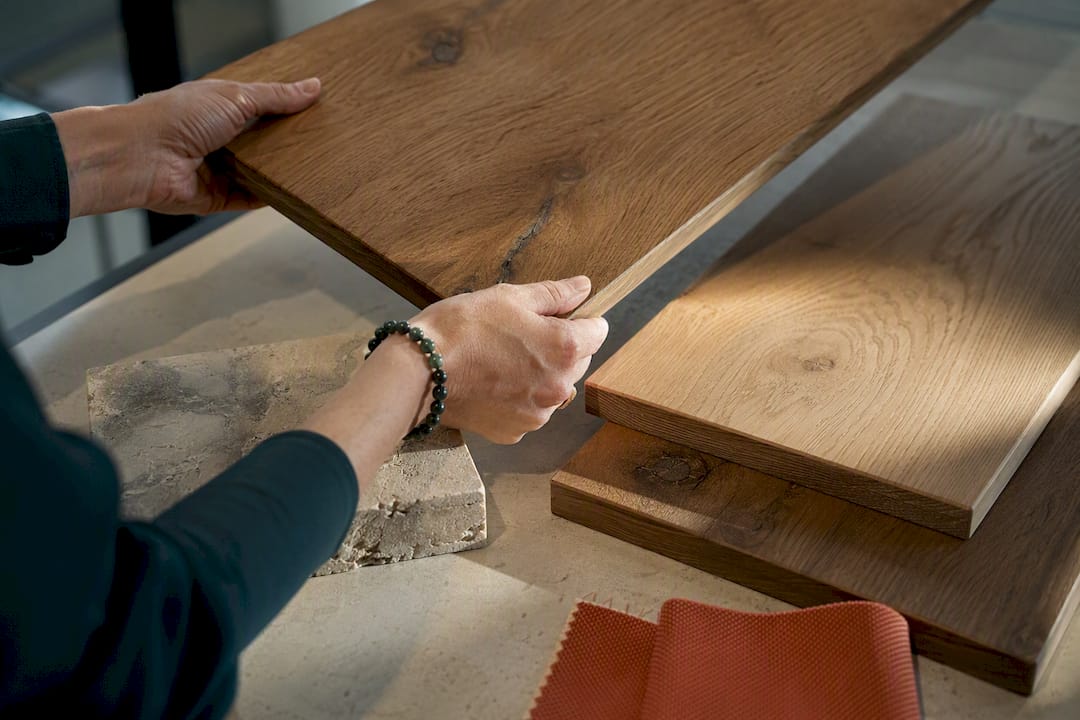
Upholstery deserves the same scrutiny. Natural fibres such as wool, linen, and full-grain leather generally outperform synthetic blends both environmentally and in how they wear over time, and many European workshops now disclose tanning and dyeing processes on request. Brands such as Jim Thompson and Dedar are known for textile ranges with transparent production standards, while Duvivier and Milano Bedding build upholstered pieces designed for reupholstering rather than replacement, which is itself a sustainability decision.
Metal and stone fittings matter too. Locally sourced marble and quarried stone reduce transport impact compared with imported alternatives, and hardware from established European foundries tends to be repairable rather than disposable. Asking a supplier directly about certification, chain of custody, and repair support is a reasonable question for any commission at this price point, and a workshop confident in its sourcing will usually answer without hesitation.
Choosing responsibly sourced materials isn't a separate consideration from timelessness. It's the same decision, seen from a different angle.
Designer viewpoint: restraint over statement-chasing
The rooms that age best usually contain one confident, well-made statement piece, not five. Craftsmanship and restraint outlast trend-led choices every time. Keep the bones neutral, let one bespoke piece carry the personality, then evolve the room through cushions, art, and accessories rather than furniture replacements.
— Giorgia D'Amico
Ready to commission a bespoke interior that lasts
This service offers an alternative to piecing a room together from catalogue purchases and hoping it holds together. Where off-the-shelf shopping leaves you guessing at proportion and material quality, the process can be built around your rooms from the first conversation: consultation, space planning, material selection, 3D visualisation, furniture sourcing across a network of European manufacturers, and full project management through to installation.
An initial consultation typically starts with a walkthrough of how you actually use each room, followed by a concept proposal and material samples before anything goes into production. If you're weighing a bespoke commission for a Zollikon home, explore Upscale Interiors' interior design services or book a call to start the briefing conversation.
Sources
Further reading: Engelberg bespoke furniture, Eben&Or joinery know-how, Swiss architect cost guidance, European fittings examples.
- Furnishings and fittings know-how | Eben&Or
- Architect costs and tips | Offertenschweiz
- R31 new-build project — Inizia portfolio
FAQ
What is the 3-5-7 rule in interior design?
It's a proportion guideline for grouping objects and heights in threes, fives, or sevens, since odd numbers read as more visually balanced than even ones. Designers apply it to furniture arrangements, shelving displays, and even lighting fixture groupings.
What is the most timeless interior design style?
There's no single "most timeless" style, but classic and understated approaches built around neutral palettes, natural materials, and proportion consistently outlast trend-driven looks. Classic interior design tends to age better precisely because it doesn't chase a particular moment.
What is the 70/30 rule in interior design?
The 70/30 rule suggests roughly 70% of a room's palette should be a dominant neutral tone, with the remaining 30% used for contrast, texture, or a statement colour. It keeps a room cohesive while still leaving room for personality.
How much does an interior designer make in Switzerland?
Interior designer earnings in Switzerland vary widely by experience, region, and whether the designer works independently or within a firm, and no single reliable figure applies across the whole profession. Project fees, rather than salaries, are usually the more relevant number for homeowners, and these commonly sit at 10 to 15% of overall project value.
Does bespoke furniture cost more than buying ready-made pieces?
Bespoke furniture generally costs more upfront than ready-made alternatives, but it's built to last decades rather than years, which changes the real cost per year of ownership. A full bespoke furnishing programme for a high-end residence typically ranges from CHF 50,000 to CHF 500,000 depending on scope.
Recommended
- Zollikon Interior Design
- Custom Ceiling Design in our project in Zollikon
- Why Luxury Homeowners in Engelberg Choose Bespoke Furniture
- How to set a bespoke interior design budget in Switzerland