.svg)

Most people hear “Basel” and think of banking regulations. In reality, Basel is one of Switzerland’s most rewarding cities to visit, a compact, culturally rich destination sitting at the point where Switzerland, France, and Germany meet. Whether you’re planning your first trip, looking for the best restaurants in Basel, or you’re a homeowner wanting to bring a little of that distinctive Swiss elegance into your living room, this guide covers it all. You’ll leave with a clear picture of what makes Basel so worth your time.
Key takeaways
Basel: geography, history, and identity
Basel sits at the upper Rhine, right where three countries converge. To your left is France, to your right is Germany, and beneath your feet is Switzerland. This tri-national position is not just a geographic curiosity. It has shaped the city’s culture, food, language, and design sensibility for centuries.
The city divides into two distinct halves along the Rhine. Grossbasel and Kleinbasel sit on opposite banks, each with its own personality. Grossbasel is the historic left bank, home to the medieval Old Town, the Minster, and most of the major museums. Kleinbasel, on the right bank, is more modern and commercial, with a lively nightlife scene and a grittier, more local feel. You can cross between them on foot in minutes.
Basel’s history stretches back to Roman times, when a fort called Basilia stood on the hill above the Rhine. The medieval period left the city with its most iconic landmarks, including the red sandstone Basel Minster and the ornate Town Hall. By the 15th century, Basel had become a center of humanism and printing, with Erasmus of Rotterdam spending much of his life here. That intellectual tradition never really left.
Here’s what defines Basel’s character today:
- A medieval Old Town that feels lived-in rather than touristy
- Over 40 museums packed into a city of fewer than 200,000 people
- A Rhine River that functions as a public park, swimming pool, and transport route
- A creative energy fed by the convergence of three national cultures
This combination makes Basel tourism feel genuinely different from other Swiss cities. It’s not trying to be Zürich or Geneva. It has its own thing going on, and that’s exactly the appeal.
Top things to do and see in Basel
Basel punches well above its weight when it comes to things to do. The density of world-class experiences in such a small area is honestly remarkable.
- Visit Kunstmuseum Basel. This is the oldest public art collection in the world, and it shows. The permanent collection spans from the Renaissance to the present day, with works by Holbein, Picasso, and Cézanne. Plan at least two hours.
- Experience Art Basel. Every June, Art Basel draws 290 galleries from 43 countries, turning the city into a global art hub. The 2026 edition also features 22 site-specific public art projects scattered across the city’s historic and public spaces. Even if you’re not an art collector, the energy is electric.
- Explore the Fondation Beyeler. Located just outside the city center in Riehen, this is consistently ranked among the finest private art museums in Europe. The building by Renzo Piano is an attraction in its own right.
- Climb Basel Minster. The twin towers of this red sandstone cathedral offer some of the best views over the Rhine and the surrounding rooftops. Note that tower access is seasonal, so check ahead before you visit.
- Swim in the Rhine. This is a Basel ritual. Locals pack their belongings into a waterproof bag called a Wickelfisch, jump in upstream, and float down with the current. It’s free, it’s fun, and it tells you more about Basel’s character than any museum.
- Cross on a cable ferry. The Rhine ferries run entirely on river current, no motor required. There are four of them, and a crossing costs less than a coffee. It’s one of those small, perfect experiences you don’t forget.
- Walk through the Old Town. The Rathaus (Town Hall) with its vivid red facade, the medieval Spalentor gate, and the winding lanes around the Minster are all within easy reach of each other. Most landmarks are reachable within a 10 to 15 minute walk, which makes slow, unhurried exploration feel natural.
Dining in Basel: what and where to eat
Basel’s food scene reflects its position at the crossroads of three countries. You’ll find French refinement, German heartiness, and Swiss precision all on the same street, sometimes on the same menu.
Start with Basler Läckerli, the city’s signature biscuit. Made from honey, hazelnuts, almonds, candied citrus peel, and warming spices, it’s been baked here since the Middle Ages. Läckerli Huus is the most famous shop, but you’ll find versions in bakeries and supermarkets across the city. Pick up a tin as a gift. People love it.
Beyond the Läckerli, here’s what to look for:
- Traditional Swiss-German dishes like Zwiebelkuchen (onion tart) and Flammkuchen (a thin, crispy flatbread with crème fraîche and toppings), both reflecting the Alsatian influence just across the border
- Modern Swiss cuisine at mid-range restaurants in the Old Town, where local ingredients meet contemporary technique
- Rooftop bars in Kleinbasel for evening drinks with Rhine views, popular with locals and visitors alike
- Free drinking fountains. Basel has over 300 public drinking fountains with clean, drinkable water. Carry a reusable bottle and you’ll never need to buy water.
Pro Tip: Lunch is almost always better value than dinner at Basel’s sit-down restaurants. Many places offer a daily lunch menu (Mittagsmenu) that includes two courses for significantly less than the evening price.
Interior design inspiration from Basel homes
If you live in Basel or you’re thinking about redesigning your home here, you’re sitting on a goldmine of visual inspiration. The city’s architecture tells a story that spans seven centuries, and the best Basel interiors reflect that layered history without feeling like a museum piece.
Basel’s design scene blends medieval influences with contemporary art and texture, favoring natural materials, warm tones, and layered surfaces that create a sense of depth and comfort. Think exposed stone paired with linen, dark wood floors under soft ambient lighting, and art on walls that actually means something to the people who live there.
Here are the design directions that feel most at home in Basel residences:
- Classic with a contemporary edge. The Old Town’s architecture lends itself to interiors that honor traditional proportions while using modern materials and finishes.
- Art-forward living spaces. With Art Basel as an annual fixture, many homeowners treat their walls as a rotating gallery. Knowing how to work with art and designers together makes a real difference to the final result.
- Textured, layered surfaces. Rough plaster, woven textiles, and natural stone add warmth to spaces that might otherwise feel cold in the long Swiss winters.
- Seasonal adaptation. Basel winters are gray and cool. Interiors that layer textiles, warm lighting, and organic materials create a cozy atmosphere that makes the season feel intentional rather than something to endure.
Ready to design your Basel home?
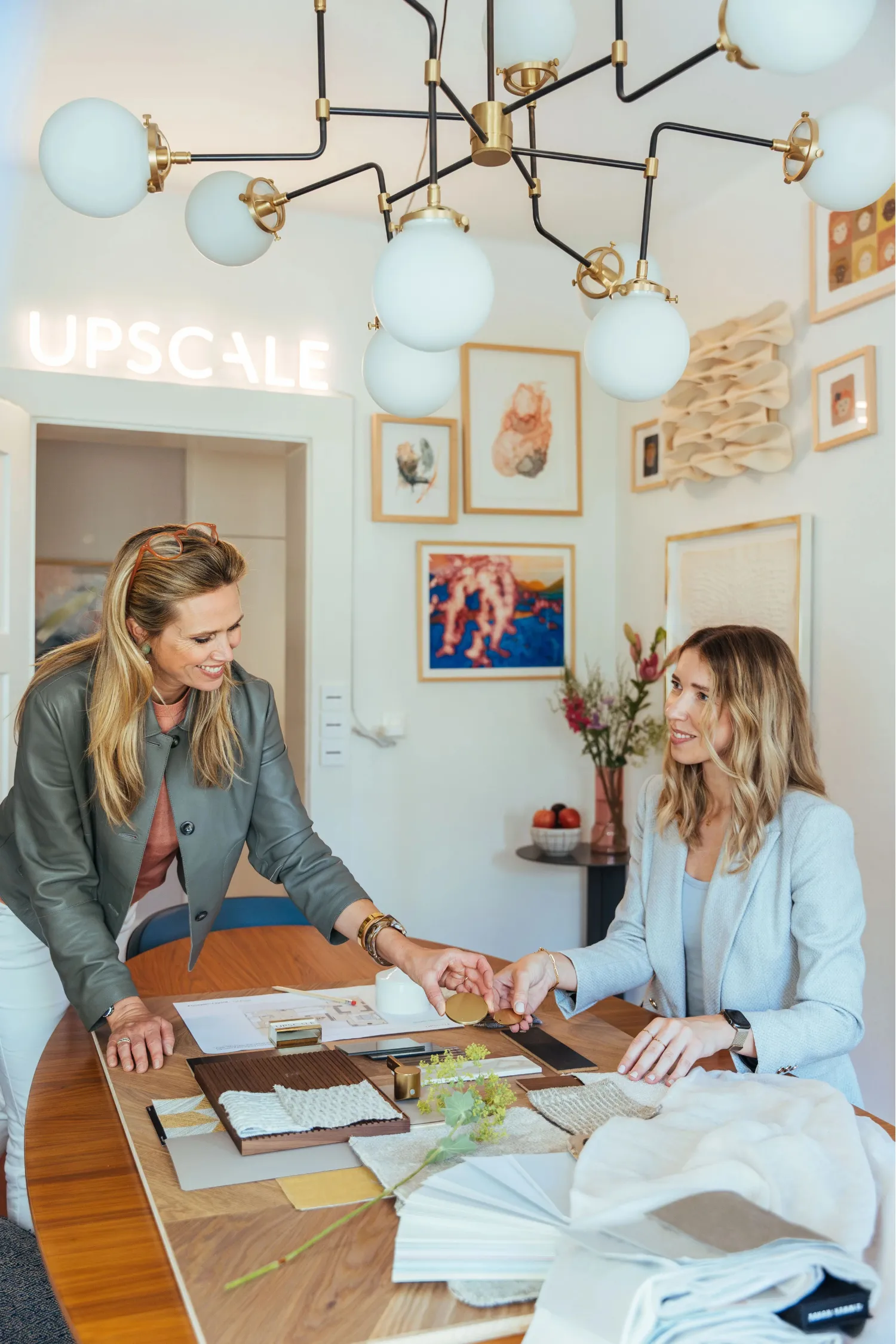
Basel homeowners have something genuinely special to work with: a city full of artistic energy, historic architecture, and a design culture that values quality over novelty. At Upscale, we work with residents across Basel to translate that inspiration into spaces that feel both beautiful and deeply personal.
Whether you’re drawn to classic interior elegance or you want to explore layered textures and art-forward living, our designers bring the creative vision and local knowledge to make it happen. You can browse designer profiles like Carina’s portfolio to get a feel for the styles and approaches available to you. The best place to start is a conversation. Book your interior design consultation with Upscale today and find out what your Basel home could really look like.
FAQ
What is Basel best known for?
Basel is best known as Switzerland’s cultural capital, home to over 40 museums, the annual Art Basel fair, and a beautifully preserved medieval Old Town along the Rhine River.
When is the best time to visit Basel?
June is ideal for Art Basel, while January brings the famous Fasnacht carnival. Summer also offers Rhine swimming and outdoor festivals that make the city especially lively.
What is the Basel Card and is it worth it?
The Basel Card comes free with most hotel stays and covers public transport plus discounts at more than 25 museums. For most visitors, it pays for itself within the first day.
What should I eat in Basel?
Start with Basler Läckerli, the city’s traditional spiced biscuit, then explore the tri-national menu of Swiss, French, and German dishes available across the city’s restaurants and cafes.
Is Basel good for interior design inspiration?
Absolutely. Basel’s blend of medieval architecture, world-class art culture, and contemporary design makes it one of the richest sources of home design inspiration in Switzerland.
Recommended
- Interior Design Zurich | Swiss Interior Designers – Upscale
- Geneva Interior Design | Swiss Interior Designers – Upscale