.svg)

One of the questions we hear most from clients is, "Why doesn't my home look like the interiors I see in magazines or on Pinterest?" The answer is rarely a single piece of furniture or a specific colour. More often, it is the careful layering of materials and textures that creates depth, warmth, and a sense of balance.
A beautifully designed interior is rarely made up of just one or two materials. Instead, it combines natural stone, wood, textiles, metals, glass, plaster, and other finishes in a thoughtful way, allowing each element to complement the others. This layering gives a space character, making it feel refined, inviting, and timeless rather than flat or one-dimensional.
Mixing materials may look effortless, but achieving the right balance is one of the more technical aspects of interior design. A warm timber paired with natural stone, brushed brass alongside soft bouclé, or matte plaster contrasted with glossy details can completely transform the atmosphere of a room. When these combinations are carefully considered, the result feels harmonious and sophisticated. When they are not, a space can quickly feel overwhelming or disconnected.
In this article, we will share the principles we use to layer materials successfully, along with examples from our own interior design projects to show how thoughtful material combinations can elevate every room in a home.
Beyond Colour: The Importance of Materiality
Many clients begin their interior design journey with a colour palette in mind, and while this provides a valuable starting point, colour is only one part of creating a truly exceptional interior. The real character of a space comes from its materiality: its textures, finishes, and the way each surface interacts with light.
Materials bring warmth, depth, and dimension in a way that paint alone never can. A neutral interior, for example, can feel incredibly rich and sophisticated when it combines honed limestone, warm oak, brushed brass, soft bouclé, and natural linen. Rather than relying on colour for impact, these carefully selected materials create visual interest through contrast, texture, and craftsmanship.
This is why, at Upscale Interiors, we develop a curated material palette alongside every colour concept. By considering finishes, textures, proportions, and natural light from the very beginning, we create interiors that feel layered, balanced, and timeless.
Material selection is particularly important in luxury interior design, where quality and cohesion are often more influential than decoration alone. The right combination of materials can make even a restrained colour palette feel considered and sophisticated. Without this level of material variation, even the most beautiful colour scheme can appear flat and lack the depth that defines a truly refined space.
Creating Balance Through Contrast
The most successful interiors are built around a clear material hierarchy. Instead of allowing every finish to compete for attention, we select one or two key materials to define the space, with the remaining finishes playing a supporting role. This creates a sense of harmony, allowing each element to be appreciated without overwhelming the room.
Balance is achieved through thoughtful contrast. Pairing hard surfaces with soft textures, matte finishes with reflective accents, or smooth materials with tactile ones adds depth and visual interest while maintaining a calm, sophisticated aesthetic. Natural stone appears warmer when paired with linen upholstery, brushed steel appears softer alongside bouclé, and textured plaster walls are complemented beautifully by polished brass details.
Contrast does not necessarily mean choosing materials that are dramatically different. Some of the most sophisticated interiors use subtle variations within a restrained palette. A honed stone beside a brushed timber, for example, can create enough contrast through texture and light without introducing another strong colour or finish.
Equally important is restraint. A carefully curated palette of three to five primary materials is often enough to create a rich, layered interior without making the space feel cluttered. Repeating a key material, such as timber, stone, or metal, through adjoining rooms also helps to establish a natural flow and gives the home a timeless character.
The goal is not to make every room identical. Instead, we look for connections between spaces so that the materials feel as though they belong to the same home. This continuity becomes especially important in open-plan interiors, where several functional areas need to work together visually.
Living Room: Where Comfort Meets Sophistication
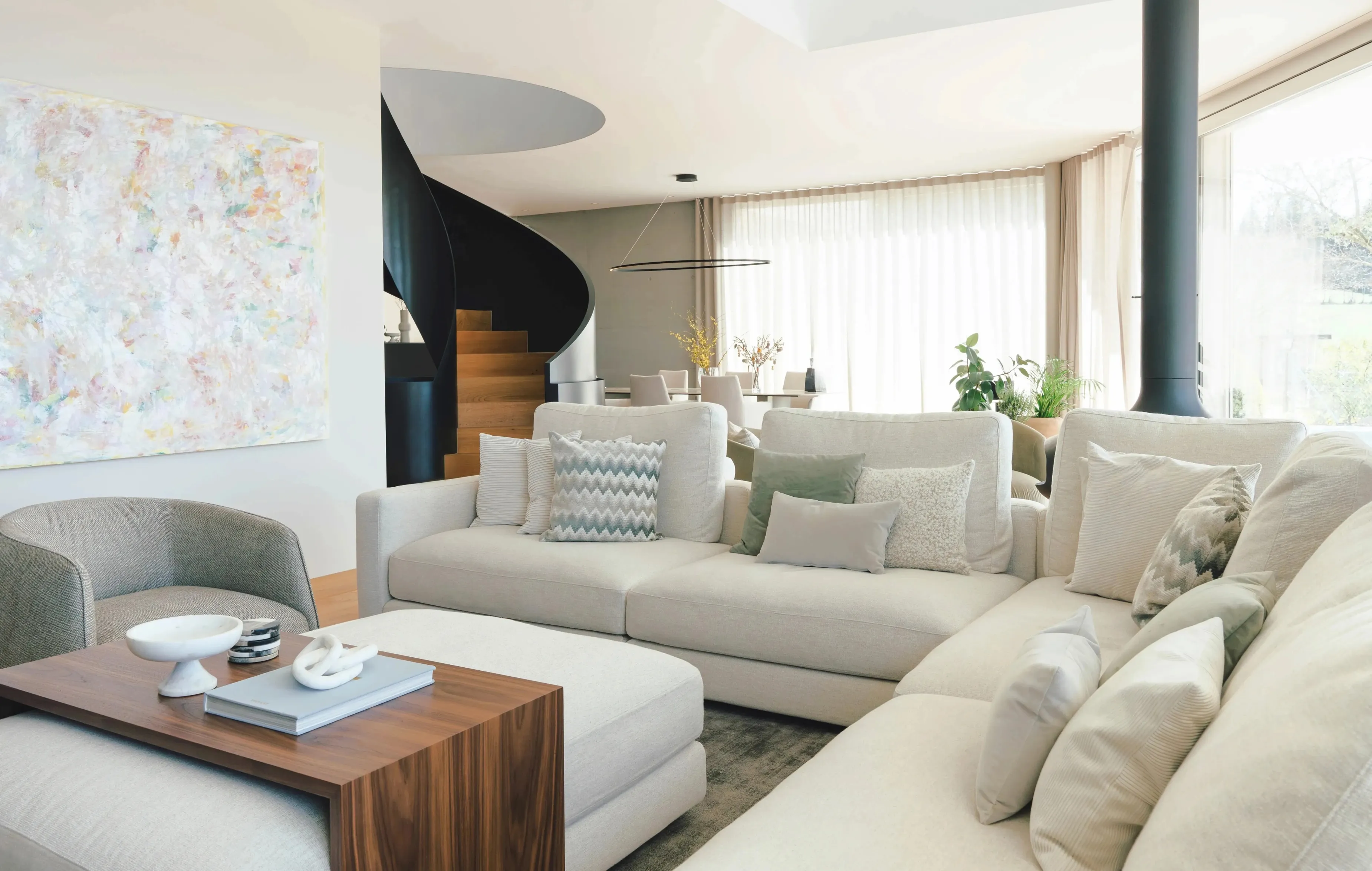
The living room is often the most layered space in a home, combining a variety of materials to create warmth, comfort, and visual interest.
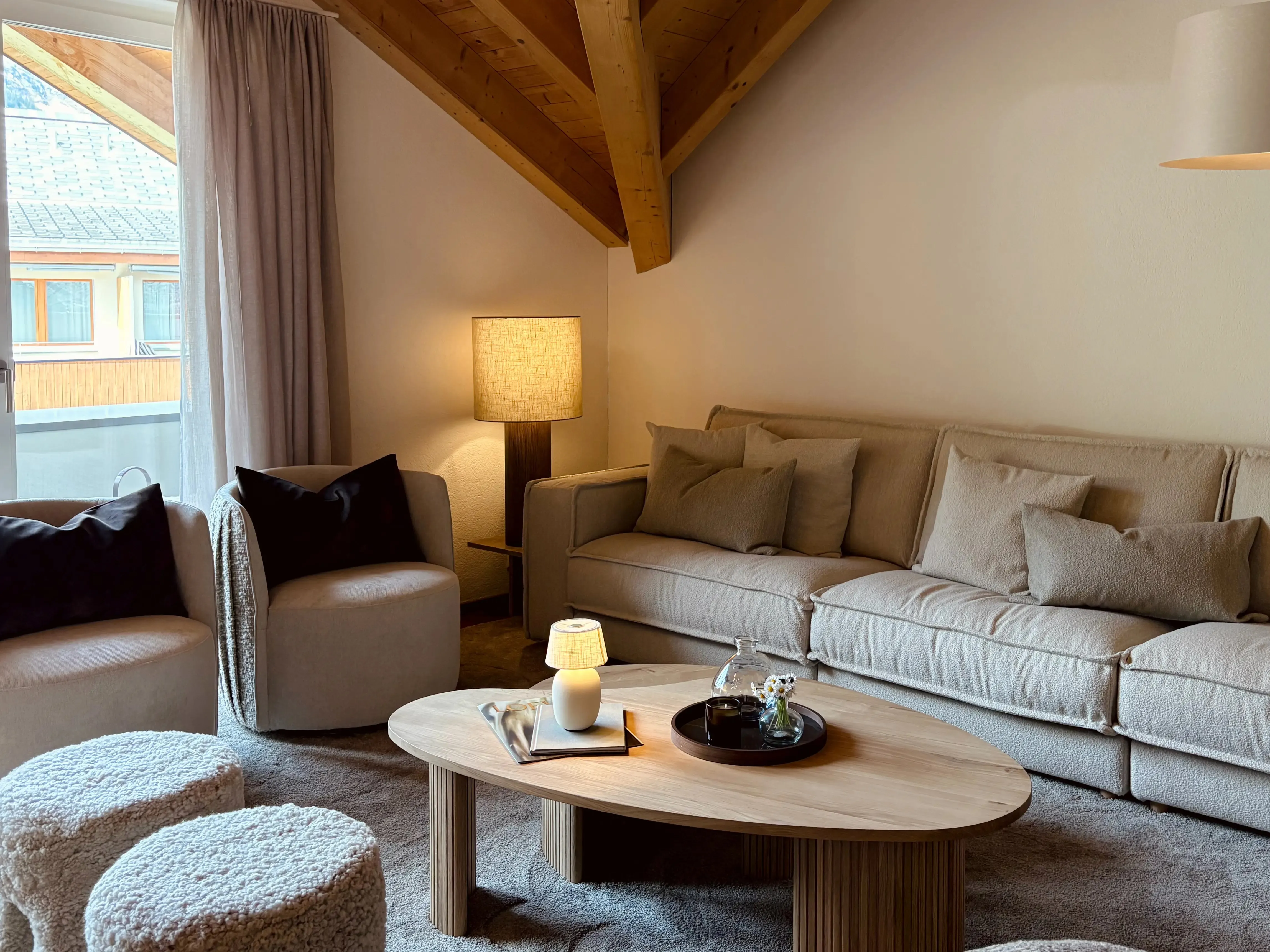
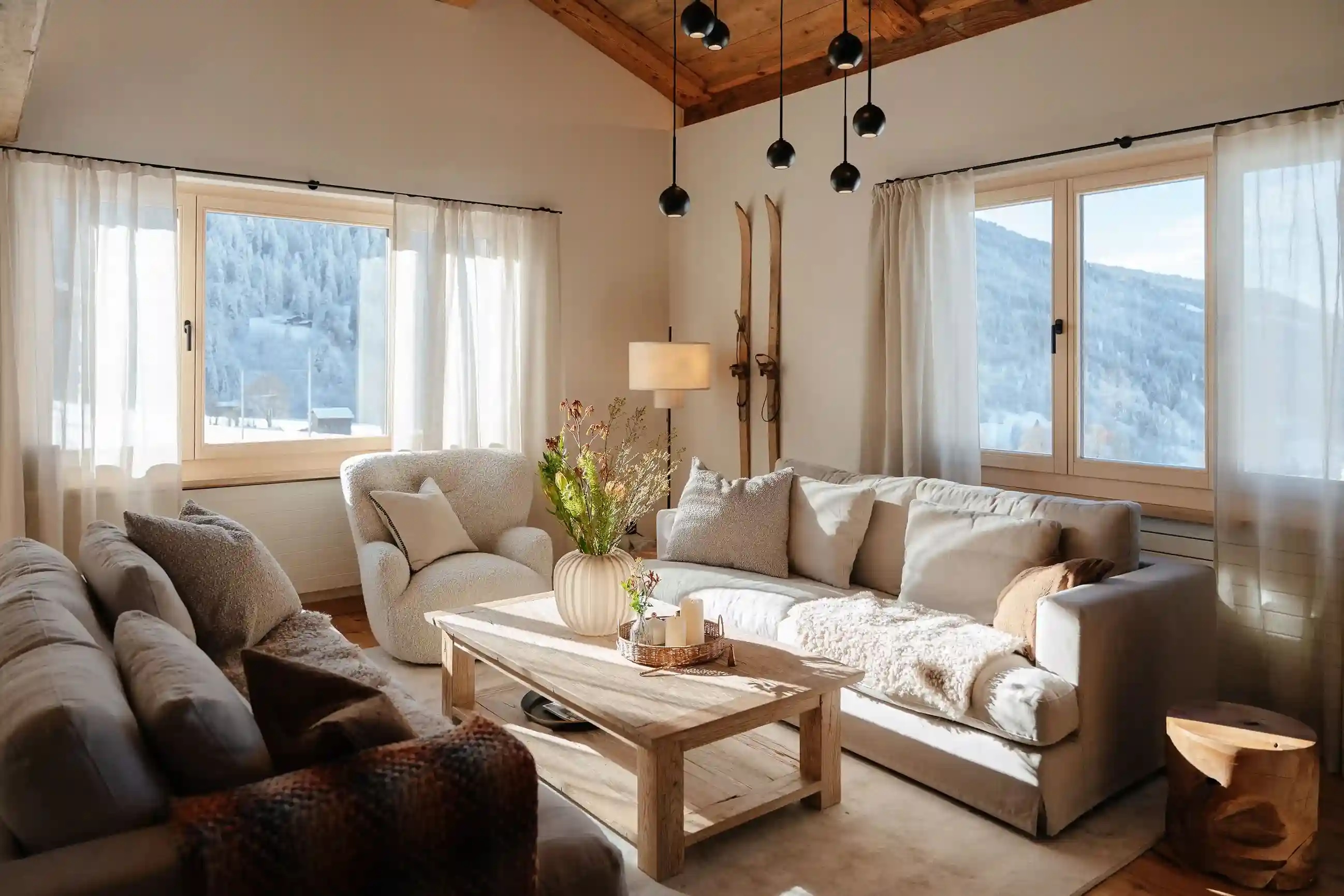
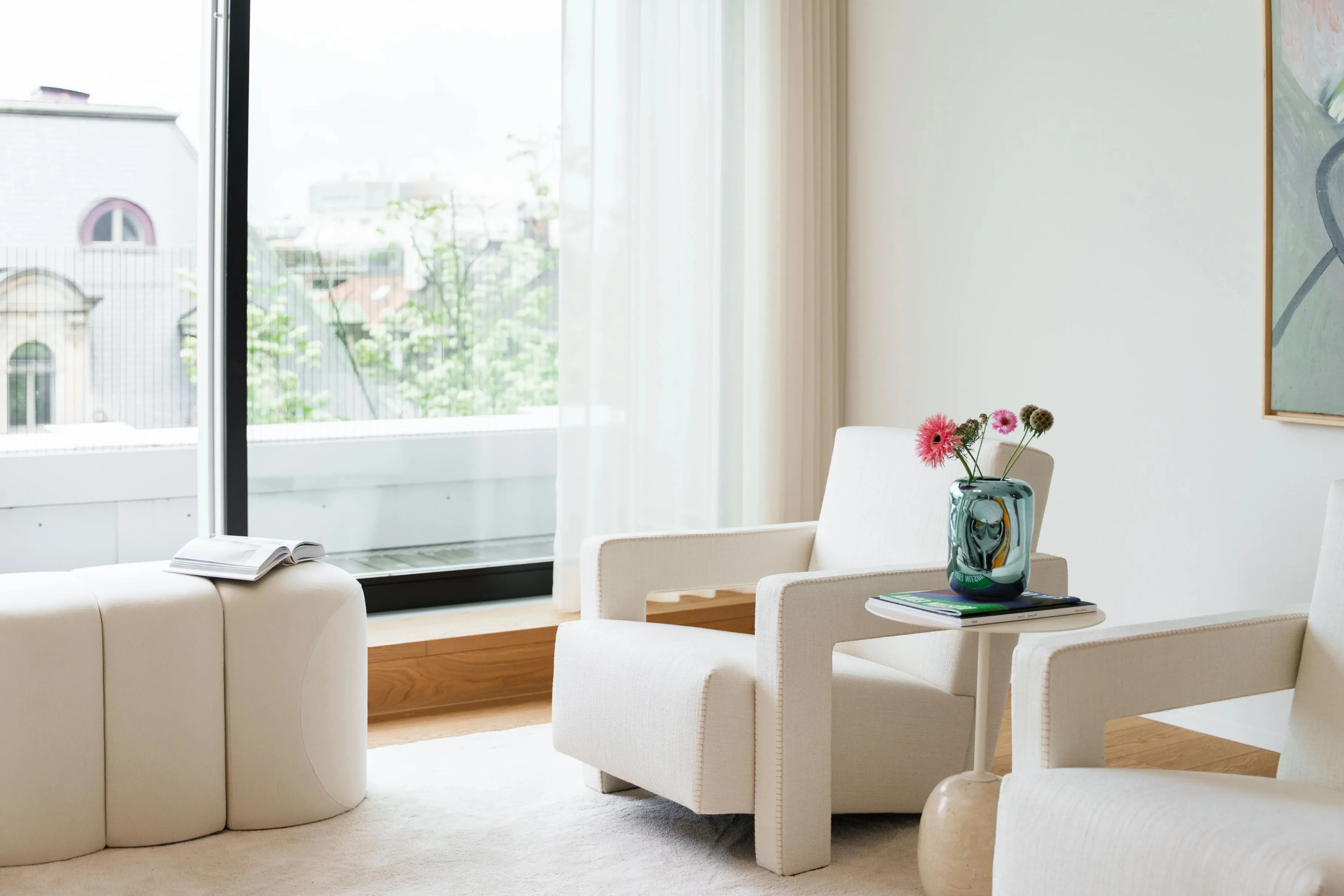
We achieve this by combining a stone or marble coffee table with a bouclé or velvet sofa, a wooden or upholstered accent chair, a soft area rug, and refined metal details through lighting or hardware. Each material contributes something different to the overall atmosphere. Stone introduces weight and permanence, timber adds warmth, textiles create softness, and metal brings a subtle sense of refinement.
To give the space its own character, we introduce one distinctive material, such as travertine, fluted glass, or reclaimed wood, as a subtle focal point. The result is a living room that feels balanced, elegant, and effortlessly inviting.
Texture is particularly important here. A room filled with soft fabrics can lack definition, while one dominated by hard surfaces can feel cold. Bringing the two together creates the sense of comfort that makes a living room feel lived in while maintaining a sophisticated aesthetic.
Kitchen: Beauty Meets Function
A well-designed kitchen balances practicality with timeless elegance. We like to pair natural stone worktops with wooden or lacquered cabinetry, complemented by refined metal accents such as brushed brass or matte black hardware.
We recommend selecting the stone first, as its unique veining and natural tones provide the foundation for the entire material palette. Natural stone can vary significantly in colour, pattern, and movement, so allowing it to guide the surrounding finishes often results in a more cohesive design.
Once the stone has been selected, we consider the cabinetry, flooring, splashbacks, hardware, and lighting as part of the same material story. Timber can soften a stone-heavy kitchen, while metal details add definition and a sense of craftsmanship.
In a kitchen, material choices also need to perform as beautifully as they look. Durability, maintenance, moisture, heat, and everyday use all influence our recommendations. The most successful kitchen designs bring together aesthetic appeal and practical considerations from the beginning.
Bathroom: The Small Room Worth Taking Risks In
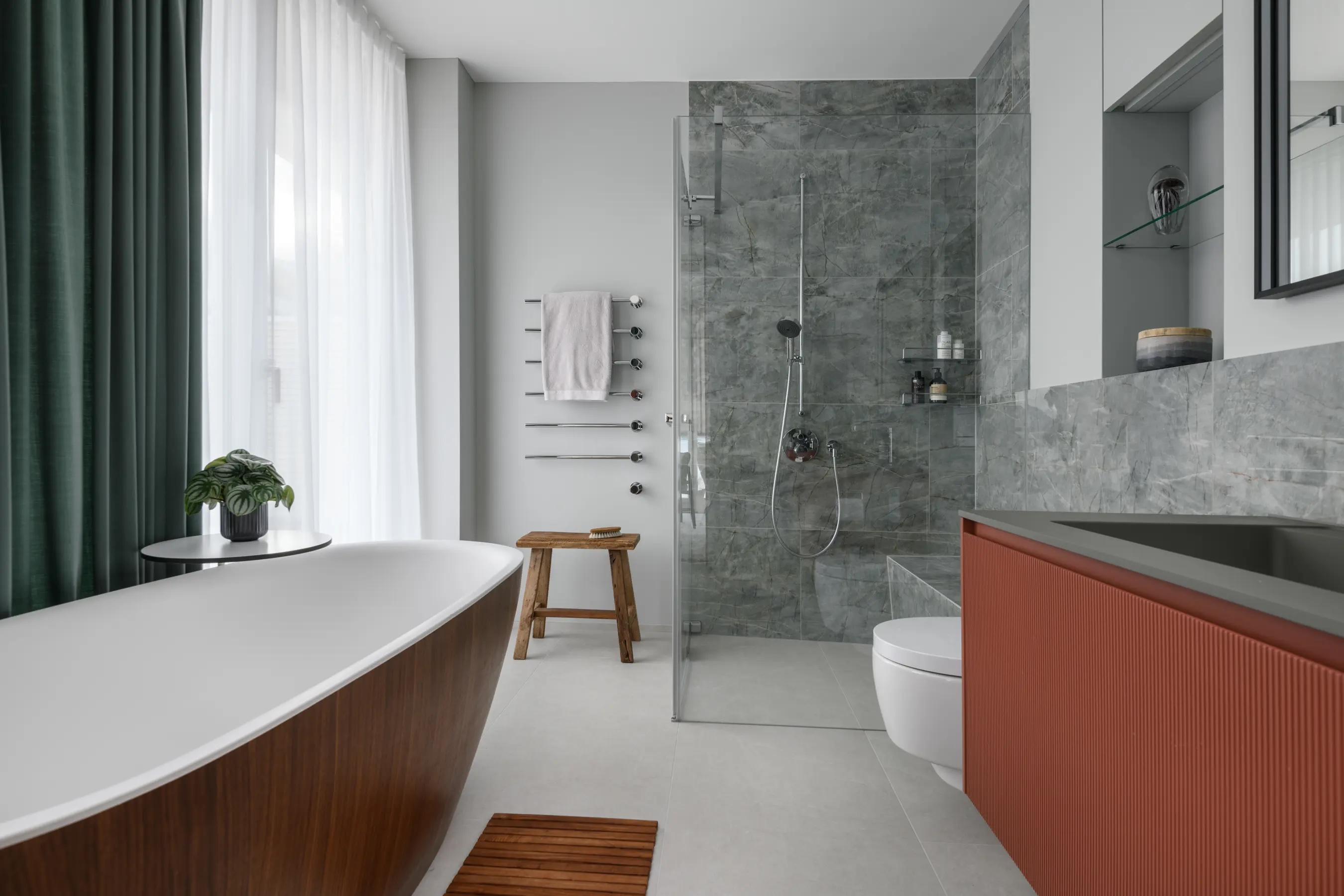
Bathrooms provide the perfect opportunity to experiment with distinctive material combinations. Because they are often smaller than other rooms, a considered material palette can create a strong sense of atmosphere without requiring a large number of decorative elements.
Pairing warm textures, refined finishes, natural stone, and wallpaper can make the space feel elevated and individual. Combining different surface qualities, such as honed and polished finishes or matte and glossy textures, adds depth and creates a sophisticated, layered atmosphere.
We also like to consider how materials interact with bathroom lighting. A polished stone may reflect light differently from a honed surface, while textured plaster or a tactile wall covering can create subtle shadows throughout the day. These small differences are what give a bathroom depth and character.
Bedroom: Materials You Actually Want to Touch
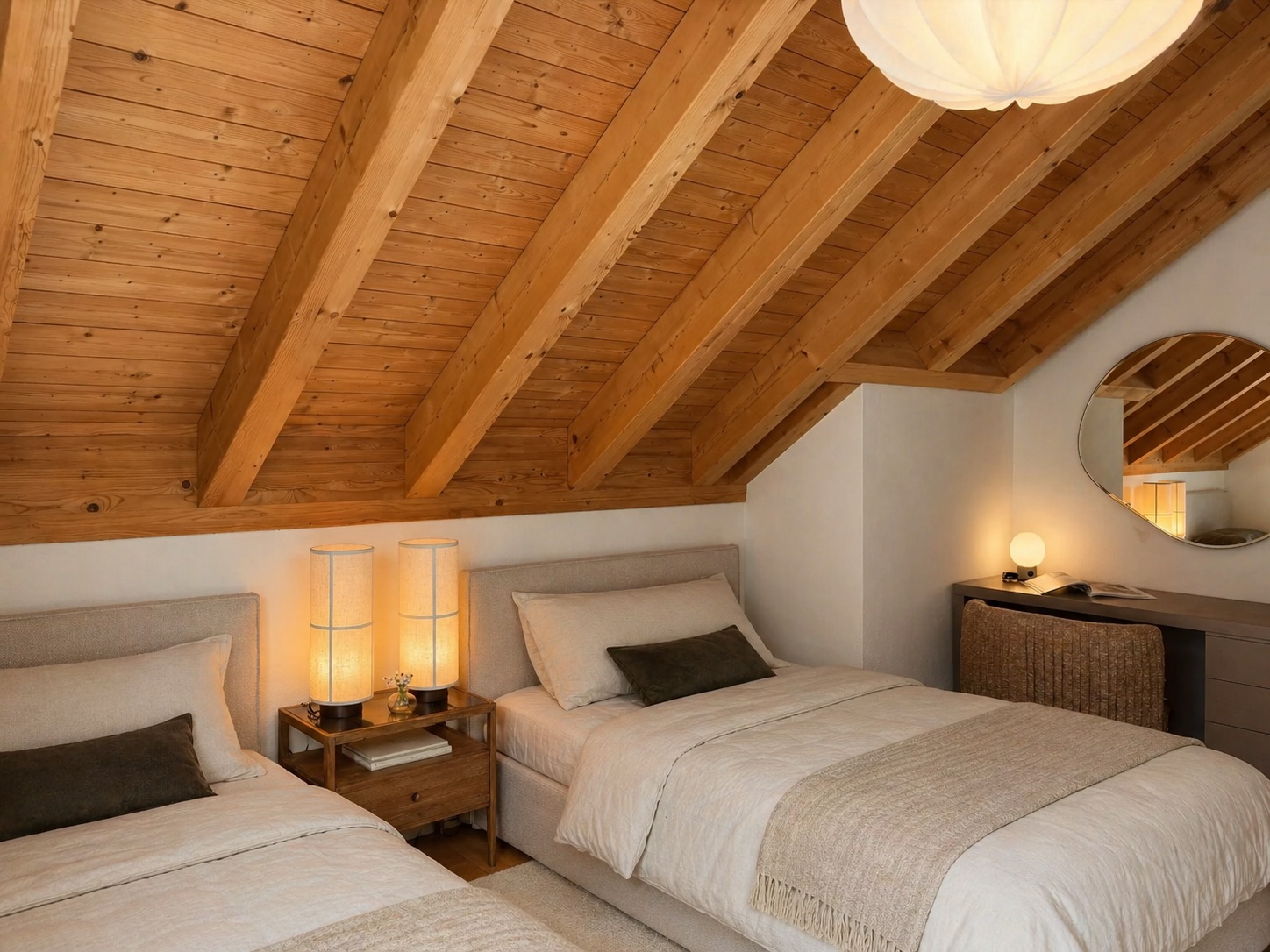
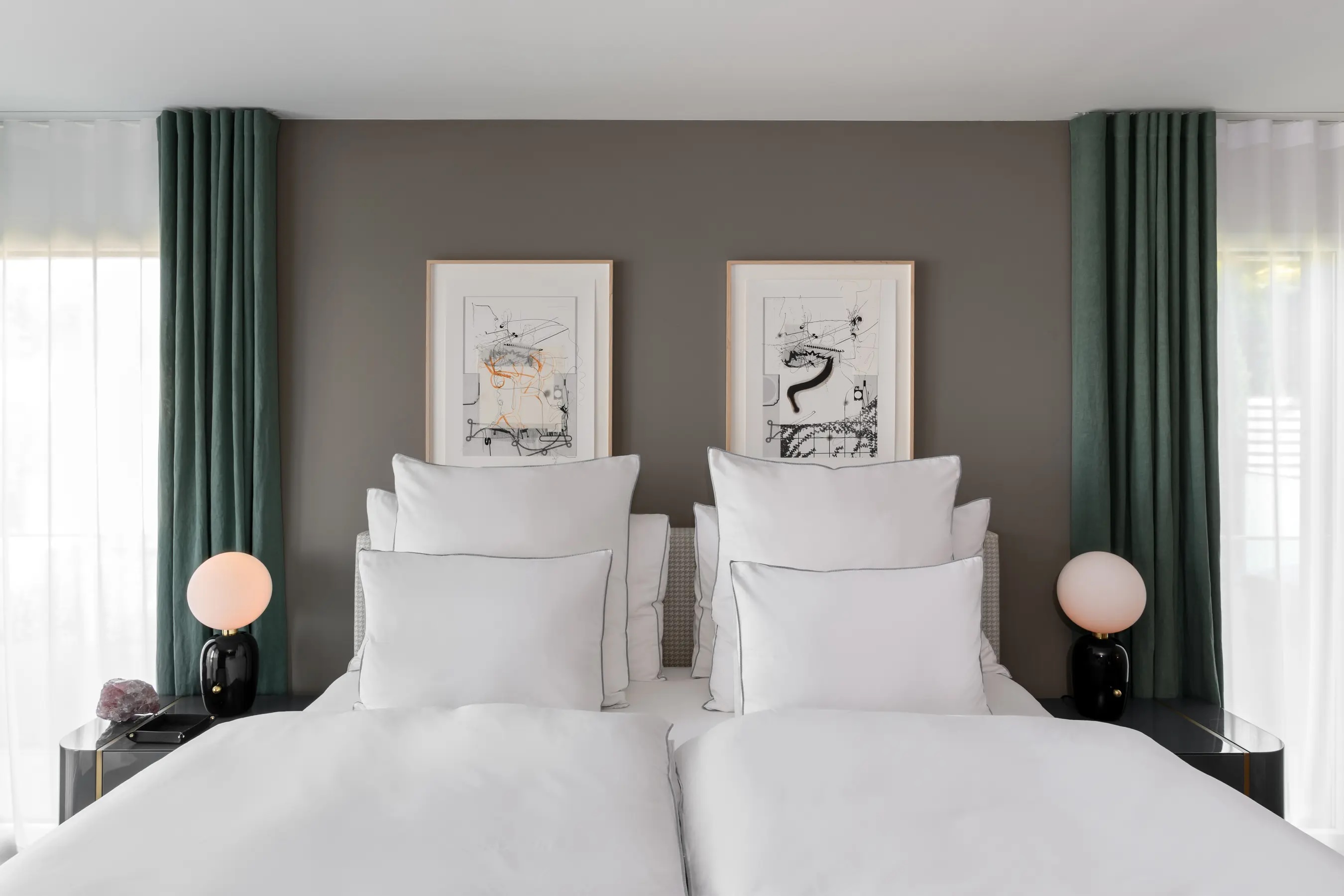
Fabric plays the leading role in the bedroom, bringing softness, warmth, and a sense of comfort. Focus on tactile materials such as linen and velvet headboards, bouclé benches, wooden or lacquered bedside tables, and soft metal lighting.
Layering textiles of different weights and textures adds depth, creating a bedroom that feels warm, inviting, and effortlessly refined. Linen can provide a relaxed foundation, while velvet or bouclé introduces softness and visual richness. Timber brings warmth, while carefully selected metal accents add structure without making the space feel overly formal.
In a bedroom, material selection should ultimately support the way you want the room to feel. It is one of the spaces where tactile qualities matter most, because these are materials you interact with every day. A beautifully considered bedroom is not simply something to look at. It should feel comfortable, calming, and natural.
Combinations We Keep Coming Back To
Some material combinations have a timeless quality that allows them to work across different interior styles and homes. These are a few of the pairings we return to again and again:
- Warm oak + honed marble + brushed brass
- Travertine + linen + matte black metal
- Walnut + bouclé + fluted glass
- Textured plaster + natural stone + woven rattan
What makes these combinations work is not simply the individual materials. It is the relationship between them. Warm and cool tones, hard and soft surfaces, and matte and reflective finishes create enough contrast to keep the interior visually interesting while maintaining a sense of calm.
"Luxury is found in the details. A carefully curated material palette creates interiors that not only look beautiful but also feel authentic, inviting, and designed to last."
- Phaedra Roma, Interior Designer, Upscale Interiors AG
How We Actually Choose Materials
Creating a beautiful material palette is only one part of the process. The way those materials are selected, tested, and developed is equally important. We believe the best interiors come from a combination of creative instinct, technical knowledge, and a clear understanding of how a home will actually be used.
At Upscale Interiors, we begin by understanding the architecture, natural light, lifestyle, and character of each home. From there, we develop a material direction that supports the overall interior concept rather than treating each finish as an isolated choice.
Source From 350+ Furniture and Material Partners
Our access to more than 350 furniture and material partners allows us to look beyond standard collections and explore a much broader range of finishes, furnishings, fabrics, surfaces, and details.
This gives us the flexibility to find materials that are right for a particular project rather than designing around what happens to be readily available. Whether we are looking for a specific stone, an unusual timber finish, a particular textile, or a distinctive piece of furniture, sourcing is an important part of creating an interior that feels individual.
The goal is not simply to use expensive materials. It is to select materials that work together and contribute something meaningful to the overall design.
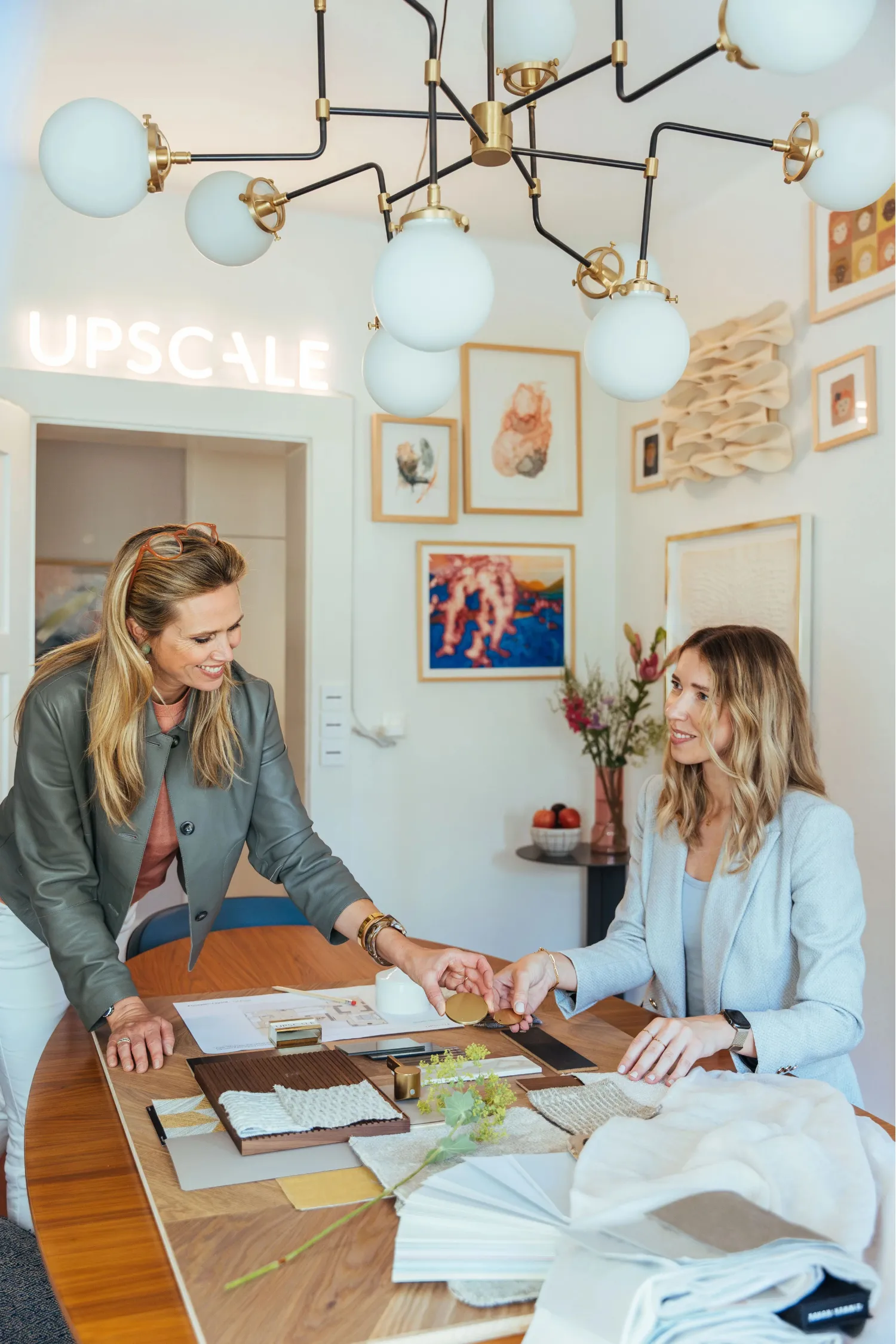
Build Physical and Digital Material Boards
Material boards allow us to see how individual finishes work together before they are introduced into the space.
We combine samples of stone, timber, fabrics, metals, glass, paint, and other finishes to create a visual representation of the proposed material palette. Physical samples are particularly valuable because they allow us to experience the texture, weight, sheen, and natural variation of each material.
Digital material boards complement this process by helping us explore different combinations and develop the overall visual direction of the interior.
This stage is where many of the subtle decisions are made. A particular shade of timber may look completely different beside warm limestone than it does beside a cooler marble. A brushed metal finish may feel understated next to one textile but much more prominent beside another.
Seeing these relationships together allows us to refine the palette before the materials are brought into the home.
Create 3D Visualisations
Material choices can be difficult to understand from samples alone, particularly when several different surfaces are being used within the same room.
Our 3D visualisations allow us to explore how materials will interact with the architecture, furniture, lighting, and proportions of the space. They help us consider questions such as how much of a particular material should be visible, where a texture should be repeated, and whether a focal material feels appropriately balanced.
This process also allows us to refine the design before installation. Rather than making decisions in isolation, we can see how the complete interior works as a composition.
Consider Durability and Maintenance
Beautiful materials also need to work for everyday life.
When selecting finishes, we consider how they will be used, how much maintenance they require, and how they are likely to age. A material that looks beautiful but is unsuitable for the lifestyle of the household may not be the right choice.
This is particularly important for kitchens, bathrooms, flooring, and other high-use areas. Natural stone, timber, textiles, and metal finishes all have different characteristics, and understanding these differences helps us make recommendations that are both aesthetically considered and practical.
For us, timeless design is not about creating a home that remains untouched. It is about choosing materials that develop character over time and continue to feel appropriate as the home evolves.
The Importance of Natural Light
One of the most overlooked aspects of material selection is natural light.
The same material can look remarkably different depending on the orientation of a room, the time of day, and the surrounding finishes. A warm stone may appear softer in afternoon sunlight, while a darker timber can take on a completely different character in a north-facing room.
This is why we consider natural light from the beginning of the interior design process. We do not simply select materials based on how they look in a showroom or photograph. We consider how they will behave within the actual space.
Artificial lighting is equally important. Pendant lights, wall lights, concealed lighting, and accent lighting can all change the way surfaces are perceived. A textured wall may become more expressive under directional lighting, while a polished surface can reflect light throughout a room.
Understanding these relationships allows us to create interiors that continue to change subtly throughout the day.
Mixing Materials Without Losing Cohesion
One of the biggest misconceptions about mixing materials is that every material needs to be repeated throughout the entire home.
In reality, cohesion can come from much more subtle connections. A brass detail in the kitchen might be echoed by a bedside light in the bedroom. A particular timber tone might appear in the living room and again in a hallway. The same stone could be used in a kitchen and then reinterpreted in a bathroom.
These repetitions create visual links between rooms without making the interiors feel repetitive.
We also pay close attention to proportions. If a strong material is used across a large surface, the surrounding materials may need to be quieter. Conversely, a distinctive material can be highly effective when used in a smaller detail.
The key is knowing when to make a statement and when to allow a material to support the overall composition.
A Material Palette Should Reflect the Home
There is no single formula for creating the perfect material palette.
A mountain home may call for warm timber, natural stone, textured wool, and aged metals that connect with its surroundings. A contemporary city apartment might benefit from a more refined combination of stone, glass, lacquer, metal, and carefully selected textiles.
The architecture should always be part of the conversation.
We look at the existing structure, proportions, views, natural surroundings, and architectural details before deciding how materials should be introduced. This helps us create interiors that feel connected to their setting rather than placed independently within it.
The same principle applies to the people who live there. A material palette should reflect the client's lifestyle, preferences, and personality. The most successful interiors are not simply beautiful. They feel like they belong to the people who inhabit them.
Ready to Layer Materials in Your Own Home?
Whether you're designing one room or starting from a blank apartment, the material palette is what ultimately gives a space its own identity.
The combination of stone, timber, textiles, metals, glass, and other finishes can completely change the way a home feels. When carefully considered, these materials create depth, warmth, texture, and a sense of continuity that cannot be achieved through colour alone.
Our designers work closely with you to transform your style, budget, architecture, and lifestyle into a considered material palette that creates a home with depth, character, and lasting appeal.
From the first material samples to the final details, our approach is intentionally thoughtful. Every surface, texture, and finish has a role to play in the finished interior.
Because when materials are chosen with care, the result is more than a beautiful room. It becomes a home that feels cohesive, personal, and timeless.