.svg)

When we design for a child, our perspective shifts from simply decorating a room to active empowerment. This is the heart of Montessori design: creating a beautifully tailored environment that fosters independence, freedom of movement, and deep respect for a child's natural pace.
At Upscale Interiors, we believe that children's spaces should be just as sophisticated, serene, and well-crafted as the rest of your home. By leaning on thoughtful spatial planning and custom craftsmanship, we translate these life-changing educational principles into beautiful, enduring spaces that grow alongside your family.
1. Set the Stage with Freedom of Movement
Montessori philosophy revolves around giving children complete freedom of movement within a safely prepared space. Traditional high cribs or beds create physical barriers, making a child reliant on an adult to start or end their day. Swapping them for a low Montessori bed changes everything.
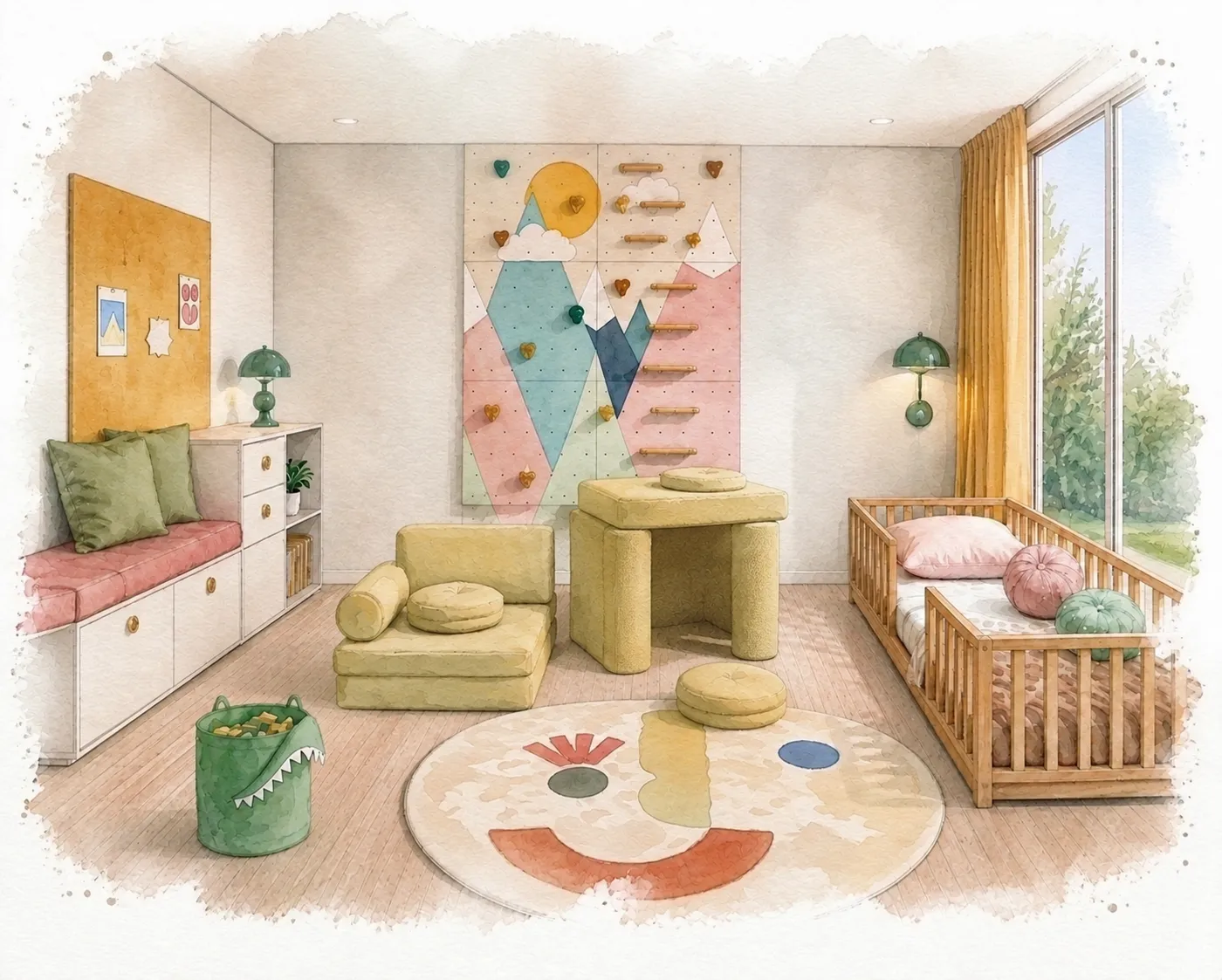
When we design a child's bedroom, we map out distinct movement zones. By placing a low Montessori bed quietly in a resting corner, the child gains safe, unassisted access to sleep. The rest of the room opens up into dedicated areas for physical exploration. We integrated a custom indoor climbing wall across the back wall to support gross motor skills, while the modular textured sofa components are lightweight enough to be rearranged by the child as building blocks for open-ended, active play.
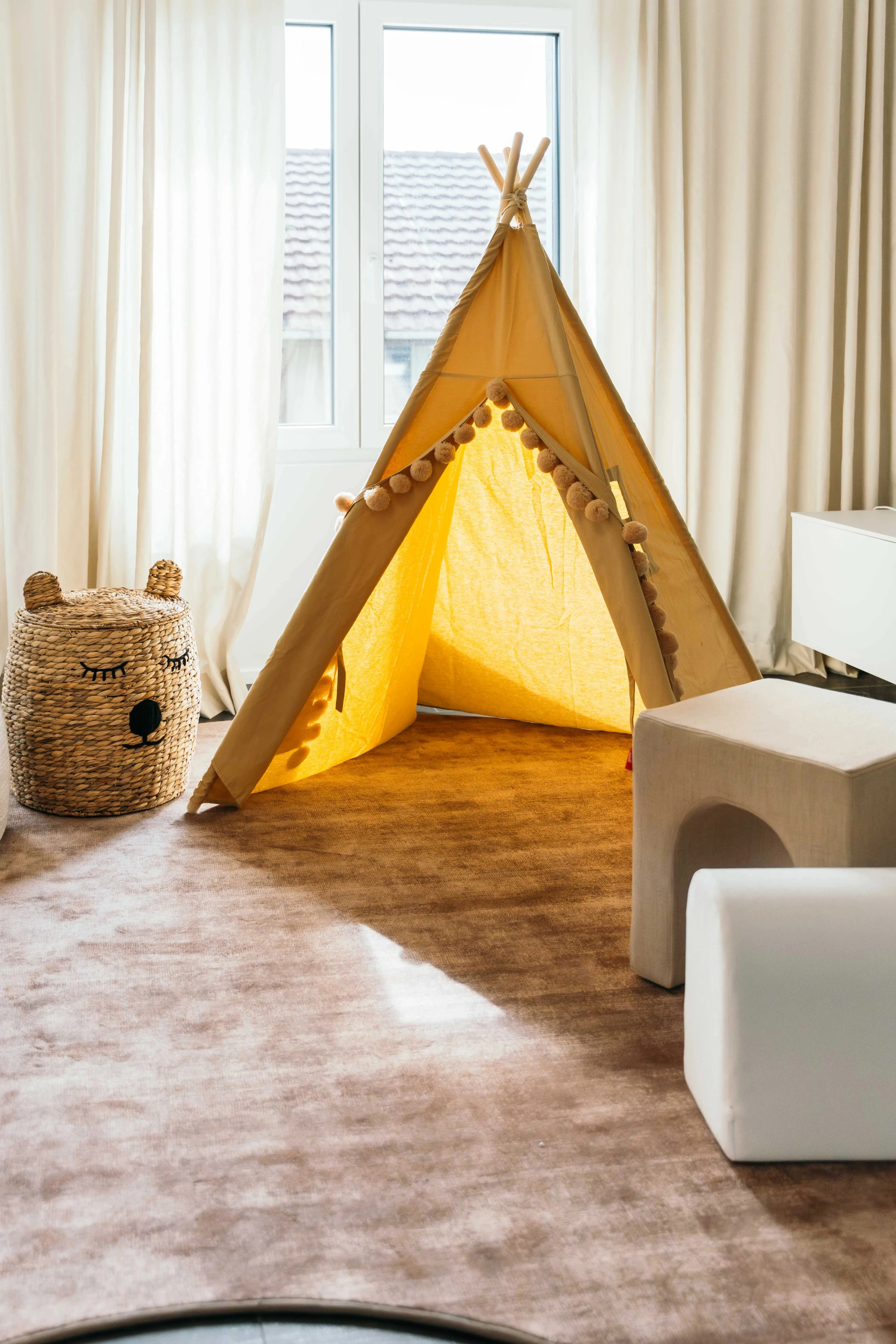
In another home, we can achieve that exact same freedom using a softer approach. By pairing a cozy fabric teepee with sculptural soft poufs and building blocks, children can independently slide, stack, and climb over them to shape their own environment. This thoughtful zoning allows the central floor space to adapt fluidly to the child's natural energy, setting a peaceful rhythm for rest and independence from day one.
2. Tailor the First Year: Designing for Infancy
An infant's environment should focus on soft, grounding tones, gentle visual planes, and curated spaces that support early milestones. A well-considered Montessori nursery can encourage exploration without overwhelming a baby with unnecessary visual stimulation.

In a nursery setting, a low-profile approach encourages early motor exploration. Centering a soft, textured area rug with a simple wooden activity gym allows an infant to practice visual tracking and intentional reaching without the overstimulation of flashing plastic toys. Keeping furniture low and scaled to the floor prepares the space for the exact moment the baby starts to sit and crawl.
This approach is not about filling a nursery with Montessori products. It is about carefully considering what the child can see, reach, touch, and eventually use independently. The result is a calmer environment that supports development while remaining visually connected to the wider interior of the home.
3. Embrace Child-Scale Ergonomics and "Me-Do-It" Furniture
A truly successful Montessori space removes physical frustrations by making everything proportional to a child's height. When a child can easily reach their own tools, their confidence soars.
This principle can be incorporated into bespoke children's interiors without sacrificing sophistication. Furniture, storage, seating, and creative spaces can all be designed around the child's scale while maintaining the architectural language and material quality of the home.

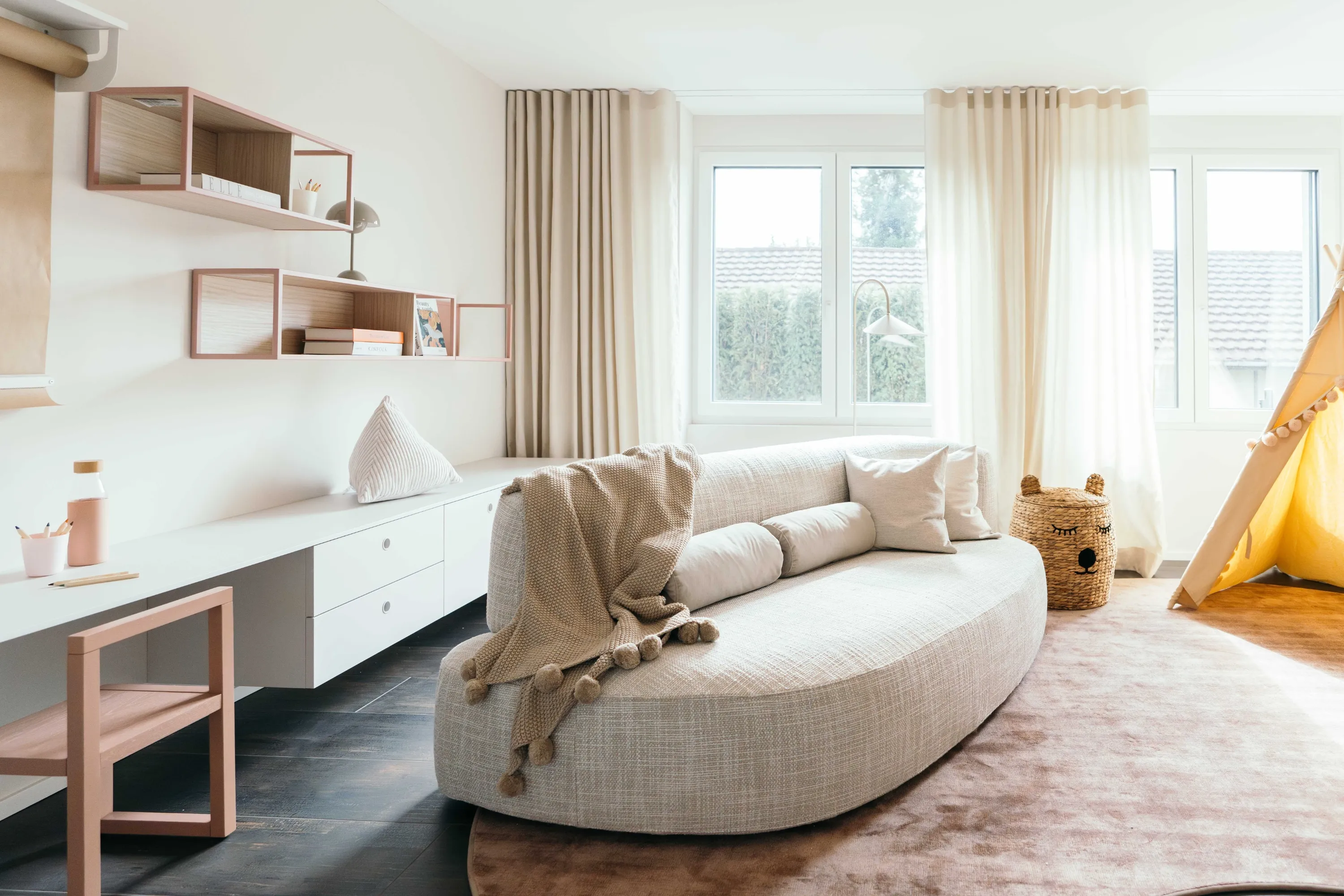
We love utilizing long, low linear credenzas that serve a dual purpose. They act as open toy storage while offering a comfortable, low bench seat for lounging.
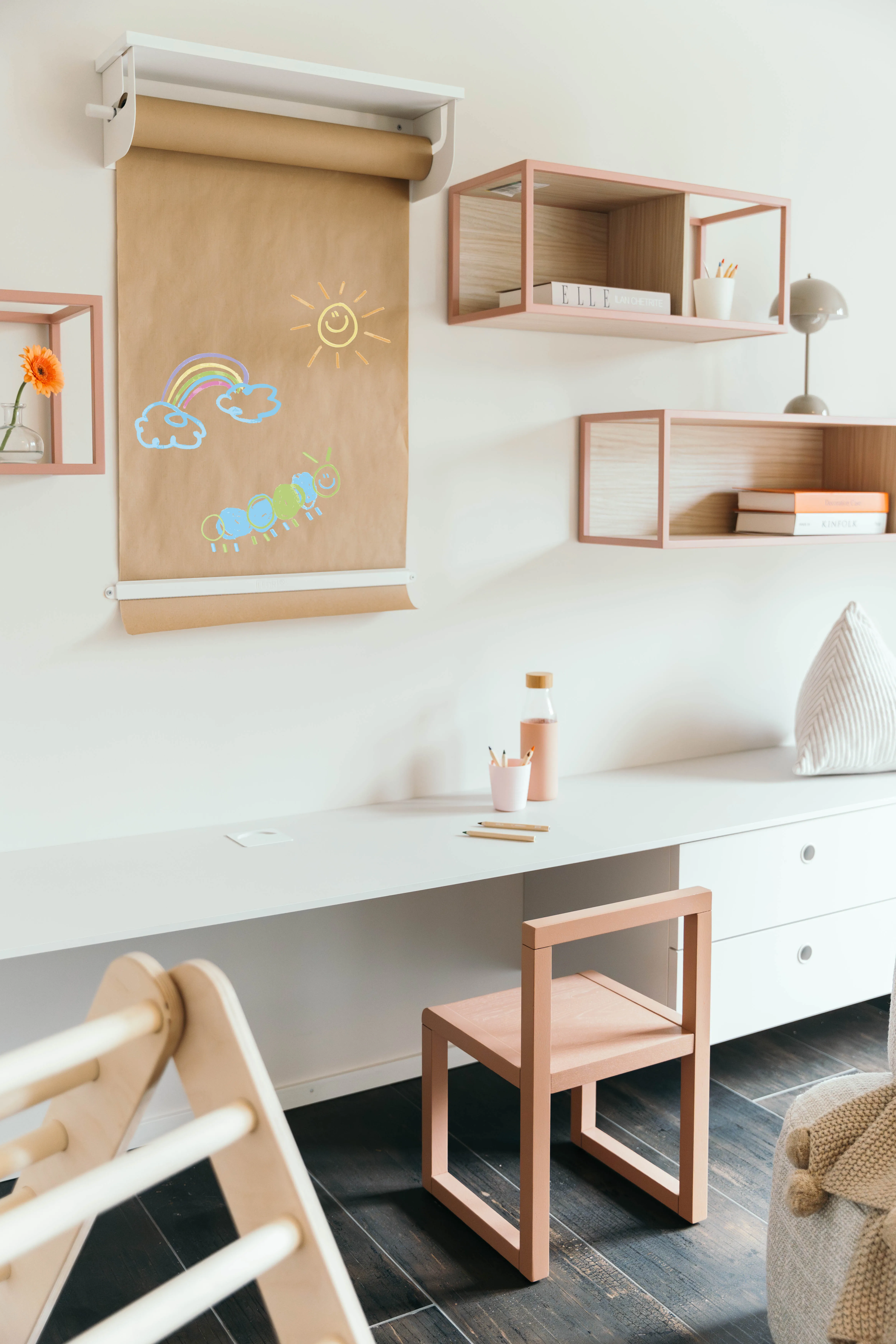
To support fine motor focus, we integrate kid-sized workstations. Paired with a continuous wall-mounted kraft paper roller, it provides an ever-ready, reachable canvas for spontaneous drawing.
These details are small, but their impact is significant. Instead of asking an adult to retrieve a toy, find a pencil, or prepare a place to draw, the child can simply begin. That sense of accessibility is at the heart of Montessori bedroom design and helps transform a beautifully designed room into a genuinely prepared environment.
4. Inject Color and Joy into Custom Storage Units
Who says child-centered design has to be completely neutral? You can create highly organized, floor-to-ceiling storage that feels incredibly vibrant, joyful, and tailored to a child's daily routines.
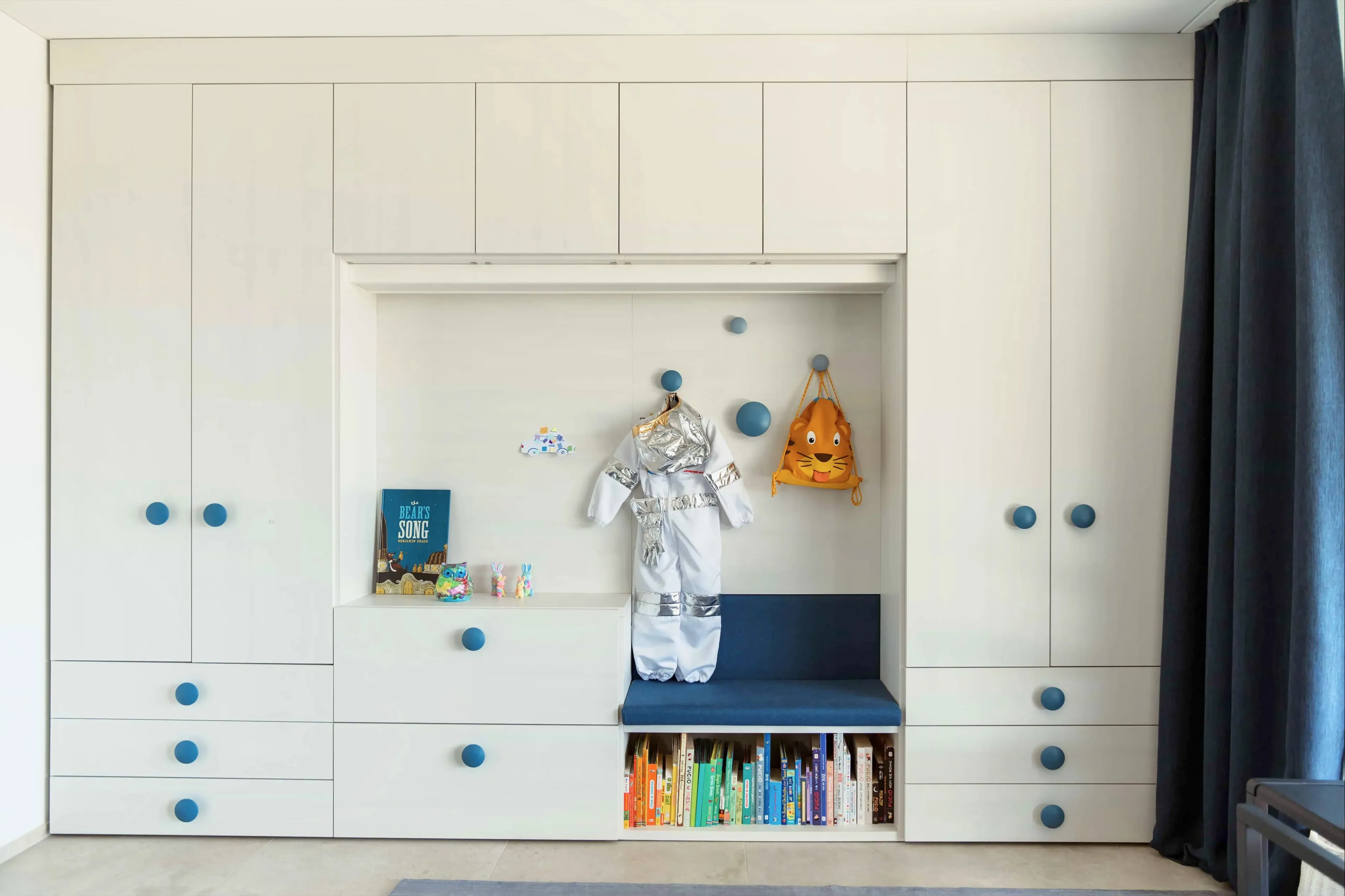
In one of our favorite projects, we highlighted a custom wardrobe system using a beautiful, colorful palette. By punctuating a crisp white background with oversized, playful blue wall knobs, we turned a daily wardrobe routine into a colorful, welcoming invitation. Children can independently hang their favorite costumes, backpacks, or jackets at their own height.
The surrounding cabinetry uses a smart structural hierarchy. The lower drawers feature chunky blue pulls for child-led access to everyday clothes and toys, while the push-to-open upper cabinets hide seasonal items safely away and out of a parent's sight.
This kind of bespoke children's storage demonstrates how Montessori principles can work beautifully alongside sophisticated interior design. Accessibility does not mean every item needs to be within reach. The key is to distinguish between the things a child can safely access independently and the belongings that should remain higher up or behind closed cabinetry.
Well-designed storage can also bring a sense of order to a child's bedroom. When every item has a logical place, putting things away becomes part of the daily rhythm rather than a task imposed entirely by a parent.
5. Perfect the Presentation of Toys and Literature
In a Montessori home, toys are never thrown into deep, chaotic bins. Instead, we use the principle of "beautiful presentation" to spark curiosity and focus.
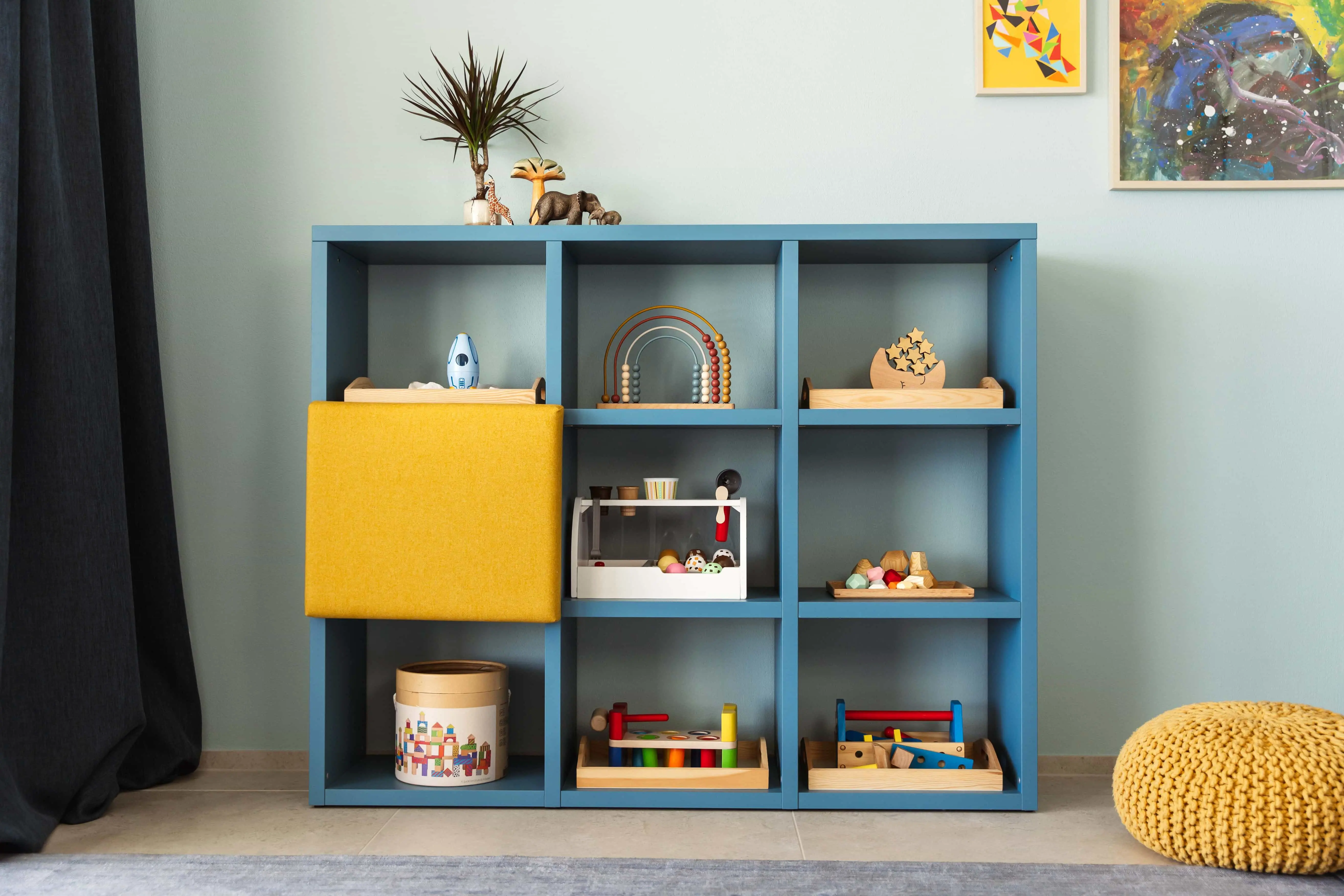
For toys, open grid shelving allows you to display just a few thoughtfully curated activities at a time on individual wooden trays. This respects a child's innate love for order, prevents choice overload, and makes clean-up intuitive and satisfying for small hands.
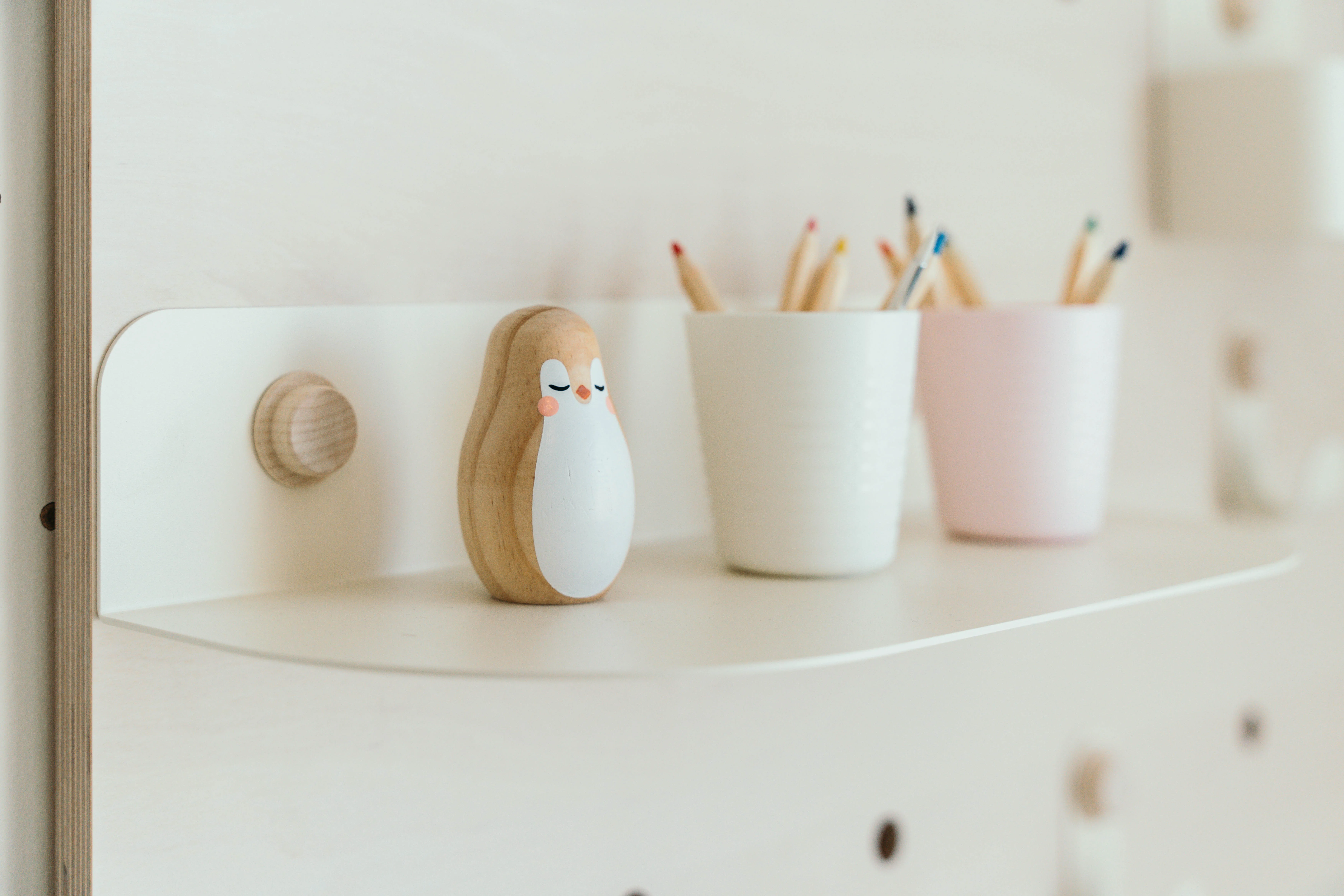
The way materials are presented matters just as much as the storage itself. Rather than hiding every toy away, we give selected objects enough breathing room to be noticed and appreciated. This creates a quieter visual environment while encouraging children to make deliberate choices about what they want to explore.
The same principle applies to books and creative materials. Children's literature can be displayed at an accessible height, allowing a child to see the covers and independently choose a story. A small selection of books presented forward-facing can be far more inviting than a crowded bookshelf where every title is difficult to distinguish.
Notice how materials are displayed rather than stored out of sight. Placing thick, beautiful colored pencils upright in simple, pastel-toned cups invites spontaneous creation, treating creative tools with the same respect we give to art itself.
By giving everything a clear, dedicated home, like a charming, handcrafted wooden penguin resting neatly on a curved cream ledge, we speak directly to a child's natural love for order. The room becomes more than a place to keep possessions. It becomes an environment that quietly teaches care, choice, and responsibility.
6. Honor Practical Life and Flexible Details
True Montessori design shines brightest in the micro-details that bridge a child's world with real-life adult routines. These moments invite tactile exploration and personal control over the environment.
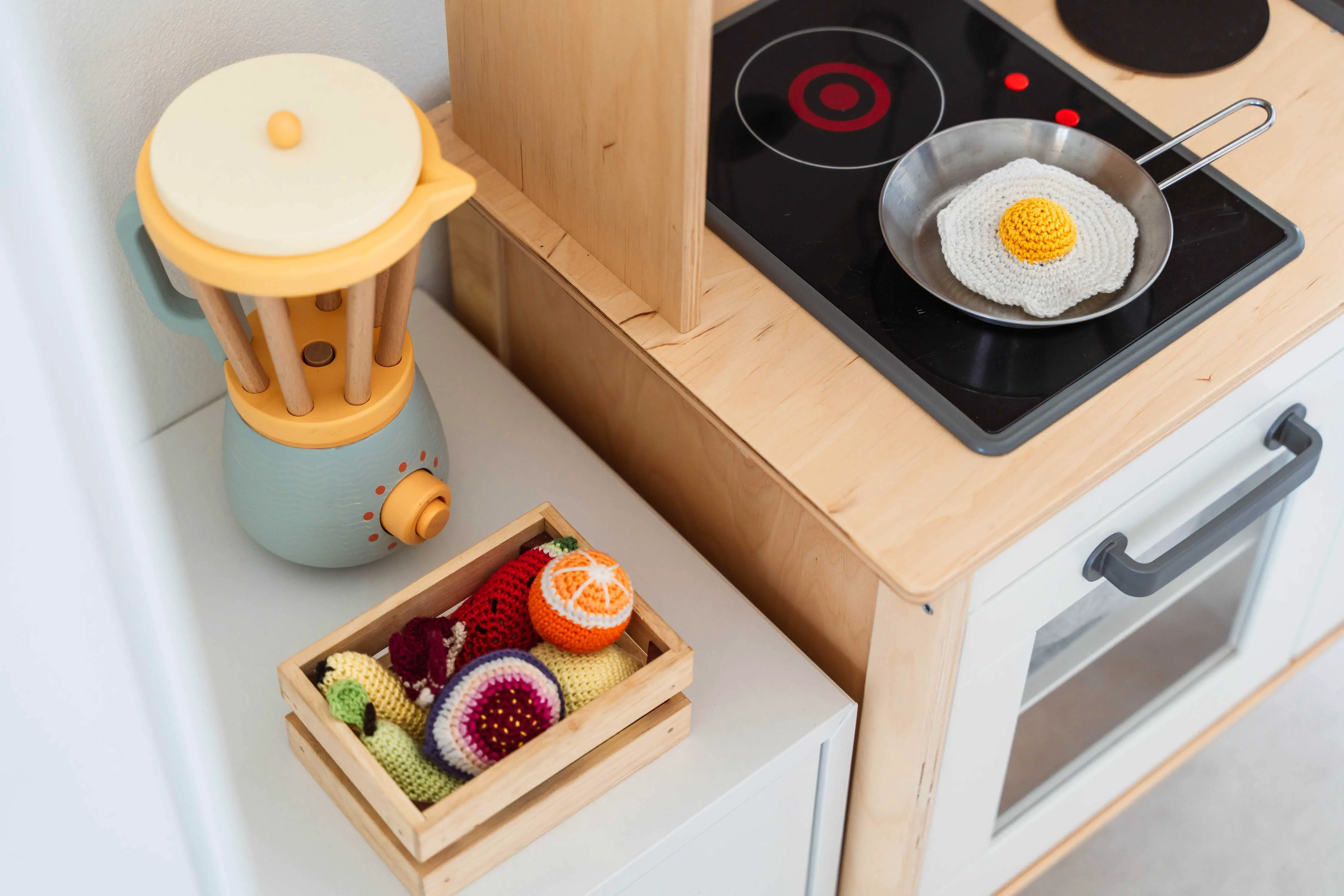
Integrating "Practical Life" zones, like a wooden play kitchen with real metal pans and beautifully crafted crocheted food, allows children to safely mirror household tasks, building motor control and organizational skills through play.
The beauty of these spaces comes from making everyday activities feel meaningful. A child can prepare pretend meals, arrange objects, carry materials from one area to another, and practice putting things back where they belong. These simple routines create opportunities for concentration and independence without making the room feel overly instructional.
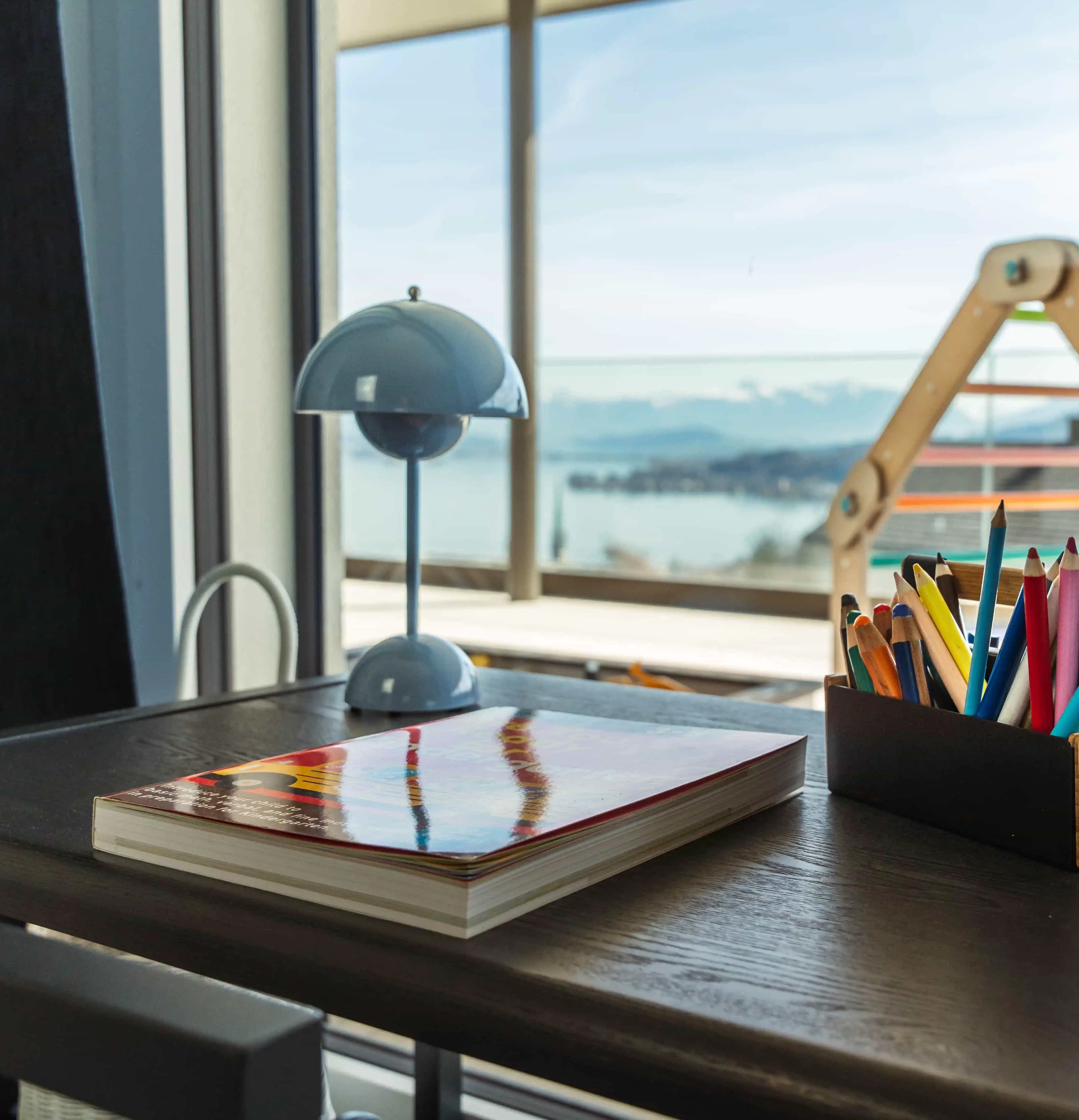
To give them even more control over their environment, we use cordless, rechargeable portable lamps. Removing dangerous cords empowers children to independently transport their light source from a desk to a cozy floor reading rug or an enclosed teepee sanctuary.
Whenever possible, orienting these focus workspaces toward natural light and beautiful views establishes a peaceful, biophilic atmosphere. Natural materials, tactile surfaces, soft textiles, and views of the outdoors can all contribute to a bedroom that feels grounded and connected to nature.
These flexible details are particularly valuable as children grow. A reading corner can become a quiet place for homework. A creative workstation can evolve into a study area. The most successful children's interiors are designed not only around what a child needs today, but also around how those needs will change over time.
7. Extend the Prepared Environment Beyond the Walls
The outdoor environment is just as vital to development as the indoor bedroom. If your home has a balcony, terrace, or garden, let the design flow outside to bridge active gross motor skills with fresh-air exploration.
A thoughtfully designed outdoor space can become a natural extension of a Montessori bedroom. Rather than treating the terrace or garden as a separate area, we look for ways to create continuity between the two environments, using natural materials, accessible features, and simple opportunities for independent play.
The Senses of the Earth
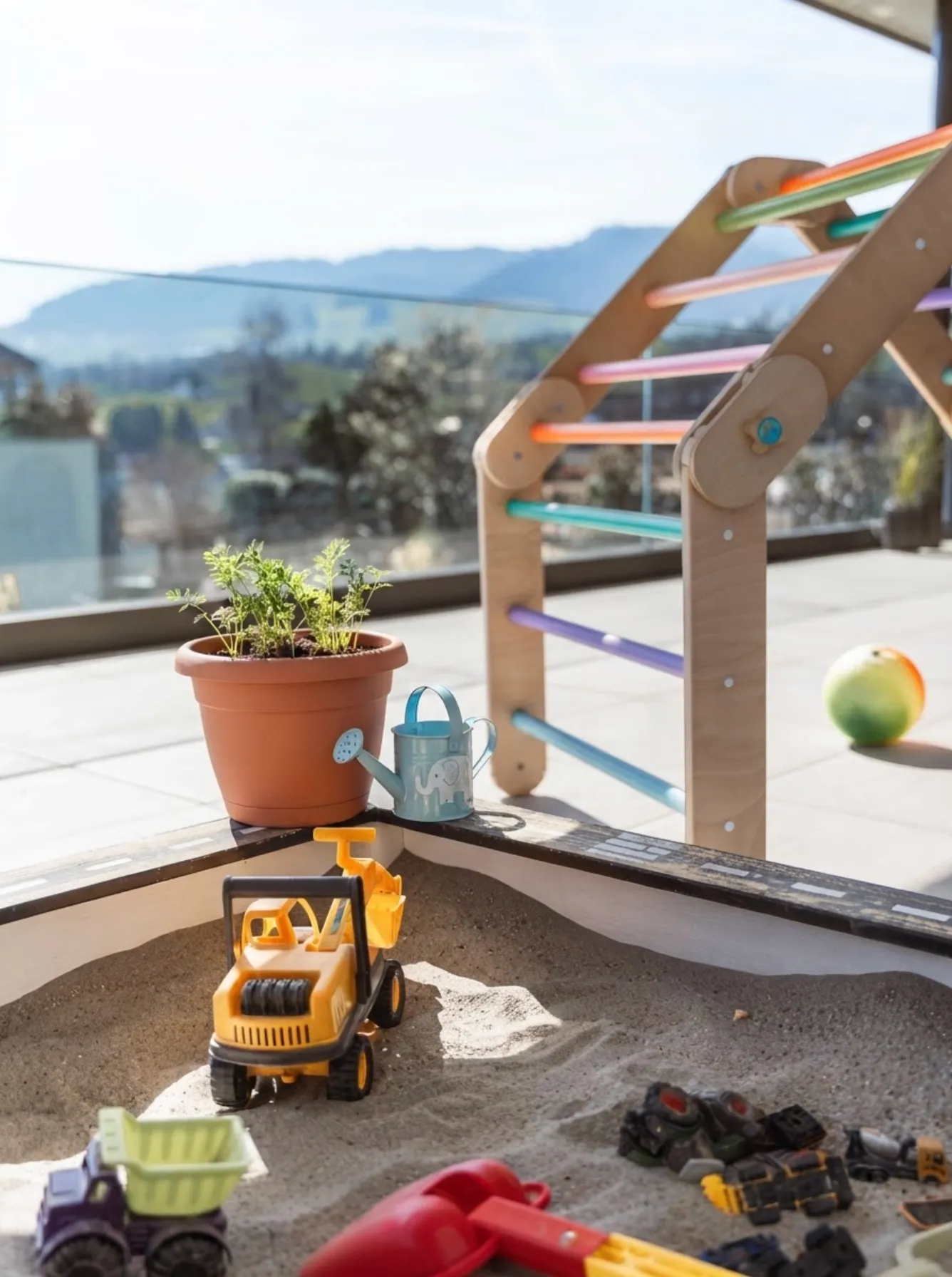
A custom, low-profile wooden sandbox sits directly on the terrace, providing an expansive sensory area. Filling it with simple trucks lets children experience the grounding weight of sand, encouraging focused, independent play against a serene natural backdrop.
The simplicity is intentional. Sand, wood, and a handful of familiar objects provide enough sensory interest without creating visual clutter. Children can dig, pour, build, and experiment at their own pace, developing coordination and concentration through open-ended play.
Cultivating Lifelong Nurturers
We love designing outdoor play zones with a gardening corner. Placing a lightweight terracotta pot planted with easy-to-grow greens right next to the play area alongside a small, colorful watering can invites a beautiful daily ritual.
Giving a child the responsibility to water a seed and watch it sprout directly fosters a deep, lifelong respect for nature. It also introduces one of the most valuable aspects of Montessori philosophy: allowing children to participate in meaningful, everyday activities rather than simply observing adults doing them.
A small garden does not need to be elaborate. Even a single planter can provide an opportunity to care for something living, notice gradual changes, and understand the connection between effort and growth.
Reaching for the Sky
Adjacent to the sandbox, a climbing frame allows gross motor skills to safely flourish outdoors. Navigating the wooden rungs in the open air gives children a freeing sense of space and physical confidence.
These outdoor elements also complement the movement opportunities we create indoors. A child can move from quiet concentration at a gardening station to active climbing and exploration, creating a natural balance between focus, movement, and rest.
Bringing Montessori Elegance to Your Home
Designing a Montessori room isn't about compromising on the elegant design language of your home. It is about scaling beauty, order, and functionality to a child's perspective.
The most successful Montessori bedrooms do not feel like classrooms or playrooms that have been added as an afterthought. They feel like considered parts of the home, with carefully selected materials, custom furniture, thoughtful proportions, and a sense of calm that both children and adults can appreciate.
By investing in tailored millwork, choosing natural, highly tactile fabrics, and prioritizing clear, accessible layout zones, you create an environment where your child can truly thrive.
The beauty of a bespoke approach is that Montessori principles do not have to dictate a particular aesthetic. A child's bedroom can be warm and colorful, soft and neutral, playful or architectural. What matters is that the environment gives the child opportunities to move freely, make choices, participate in everyday routines, and gradually take ownership of their surroundings.
When these principles are thoughtfully integrated into the architecture and interior design of a home, independence becomes part of the space itself.
Designing a Montessori Bedroom That Grows With Your Child
A child's bedroom is never truly finished. As they grow, the way they move through the space, interact with furniture, choose activities, and express their personality will naturally change.
This is why we approach Montessori bedroom design as an evolving environment rather than a fixed arrangement. A low bed can support early independence, while flexible furniture and accessible storage can adapt as a child becomes more capable. A creative workstation can eventually become a place for reading or homework, and an open area originally designed for physical exploration can evolve into a space for imaginative play.
The goal is not to predict every stage of childhood. It is to create enough flexibility within the architecture and furniture plan that the room can respond naturally as your child develops.
For us, this is where bespoke interior design becomes particularly meaningful. Every element can be considered in relation to the child, the family, and the wider home. Materials can be selected for their tactile quality and durability. Storage can be designed around real routines. Furniture can be scaled appropriately without looking temporary. Even the smallest details can contribute to a greater sense of calm, order, and independence.
A beautifully designed Montessori bedroom should ultimately feel effortless. The child knows where things belong, can reach the objects they are ready to use, and has room to move, explore, create, rest, and simply be themselves.
Bringing Montessori Elegance to Your Home
Designing a Montessori room isn't about compromising on the elegant design language of your home. It is about scaling beauty, order, and functionality to a child's perspective.
By investing in tailored millwork, choosing natural, highly tactile fabrics, and prioritizing clear, accessible layout zones, you create an environment where your child can truly thrive. The result is a space that feels sophisticated enough for the home, yet intuitive enough for the child who lives in it.
Are you looking to design a thoughtful, inspiring space that grows beautifully alongside your child? Contact our design team at Upscale Interiors today to schedule a residential interior design consultation in Switzerland.