.svg)

A Designer's Guide to Choosing the Right Shade
Have you ever painted a room the perfect warm beige, only to find that it suddenly looks grey or even slightly green? Or fallen in love with a wallpaper in the showroom that feels completely different once it's installed?
In most cases, the colour isn't the problem. The light is.
Natural daylight changes constantly throughout the day, and every room receives light differently depending on its orientation. As interior designers, understanding this relationship is one of the most important parts of creating spaces that feel balanced, welcoming and timeless.
The way natural light interacts with wall colours can influence the entire atmosphere of a room. A shade that feels warm and inviting in one space may look cooler, brighter or more muted in another. This is particularly important when choosing neutral paint colours, textured wallpapers and natural wallcoverings, where subtle changes in tone can become much more noticeable.
In this guide, we'll explain how room orientation affects wall colours, why wallpapers deserve special attention, and how to choose finishes that look beautiful from morning until evening.
Why Natural Light Matters More Than the Paint Colour
Many people choose wall colours under showroom lighting or after looking at a small paint swatch. While this is a good starting point, it doesn't tell the whole story.
The same colour can appear completely different depending on:
- the amount of natural daylight entering the room
- the direction the windows face
- the time of day
- the season
- the weather
- surrounding materials such as flooring, curtains and furniture
- the colour of adjacent walls and surfaces
- whether the finish is matte, textured or reflective
This is why professional interior designers always evaluate colours within the actual space before making a final recommendation.
Natural light can bring out subtle undertones that aren't obvious on a small sample. A neutral beige may reveal pink, yellow or green undertones, while a white may appear warmer or cooler depending on the quality of daylight entering the room.
The surrounding interior matters too. A timber floor, natural stone surface, coloured curtains or upholstered furniture can all reflect their tones onto nearby walls. This means that choosing a wall colour is rarely an isolated decision. It needs to work as part of the entire interior.
North-Facing Rooms: Soft Light with Cooler Tones
North-facing rooms receive some of the coolest and most consistent natural daylight throughout the day. Although this creates a calm and understated atmosphere, it can also make white walls feel slightly blue and neutral colours appear colder than expected.
This doesn't mean you have to avoid light colours in a north-facing room. Instead, choosing warmer undertones can help balance the cooler daylight.
To create warmth, we often recommend:
- warm whites instead of bright, cool whites
- soft beige and greige tones
- warm taupes
- muted earthy neutrals
- wallpapers with woven textures or natural fibres
These finishes reflect light gently and help create a comfortable atmosphere even on cloudy days.
For a living room, bedroom or reading area, warmer neutrals can be particularly effective because they prevent the space from feeling stark. Textured wallcoverings can also introduce another layer of warmth by creating subtle variations in how the daylight falls across the surface.
The key is to embrace the softer quality of north-facing light rather than trying to make the room feel artificially bright.
South-Facing Rooms: Bright Light Throughout the Day
South-facing spaces generally enjoy the most natural daylight and often feel bright from morning through to the afternoon. Because of the strength and warmth of the sunlight, colours can appear lighter and more vibrant than they do on a sample card.
This makes south-facing rooms particularly versatile when it comes to colour.
You can comfortably consider:
- deeper earthy tones
- olive greens
- warm clay colours
- terracotta-inspired shades
- richer taupes
- darker wallpapers with subtle texture
The abundance of natural light can prevent these richer colours from making the room feel heavy.
A deeper wall colour can actually make a bright south-facing room feel more balanced and sophisticated. Rather than competing with the sunlight, an earthy or muted shade can provide contrast and give architectural details more presence.
However, it's still important to test samples in the room. Strong sunlight can change dramatically depending on the season and weather, so a colour that looks beautifully balanced in winter may feel much warmer during the height of summer.
East-Facing Rooms: Warm Mornings, Cooler Afternoons
East-facing rooms receive beautiful golden sunlight in the morning before becoming cooler later in the day. Bedrooms often benefit from this orientation because the morning light feels fresh and energising.
The challenge is that the room can look quite different by afternoon.
When selecting colours for an east-facing room, it's important to consider both conditions rather than choosing a shade based solely on how it looks in the morning. Balanced neutrals usually perform well because they can adapt to the changing quality of daylight.
Soft beige, greige, warm grey and understated natural tones can create a room that feels comfortable throughout the day.
For bedrooms, this can be particularly effective. A colour that feels fresh in the morning but remains soft and calming as the daylight changes can help the space feel naturally cohesive.
If you're considering wallpaper, look at the sample early in the morning as well as later in the day. The texture and undertones may become much more apparent as the direction of the light changes.
West-Facing Rooms: A Room That Changes Character
West-facing spaces are often the most dramatic when it comes to natural light. During the morning they can feel relatively cool, while the late afternoon sun introduces warm golden and sometimes orange tones.
This changing light can make some colours appear completely different within just a few hours.
Warm greys, muted greens and natural materials generally adapt well to these changing conditions. They provide enough warmth during the cooler parts of the day without becoming excessively yellow or orange when the afternoon sun enters the room.
West-facing living rooms and dining spaces can benefit particularly well from colours with subtle, balanced undertones. These shades tend to respond naturally to the changing light rather than competing with it.
If a room receives strong evening sunlight, consider how the wall colour will look at the time you are most likely to use the space. A colour that looks perfect at 10am may not be the same colour visually at 6pm.
Wallpapers React to Light Too
Wallpaper isn't only about pattern. It's also about texture.
Natural grasscloth, linen-effect vinyls and embossed papers all interact differently with daylight. As the sun moves across the room, textured wallpapers create subtle shadows that add depth and character to the walls.
This is one reason wallpapers often make interiors feel richer and more layered than paint alone.
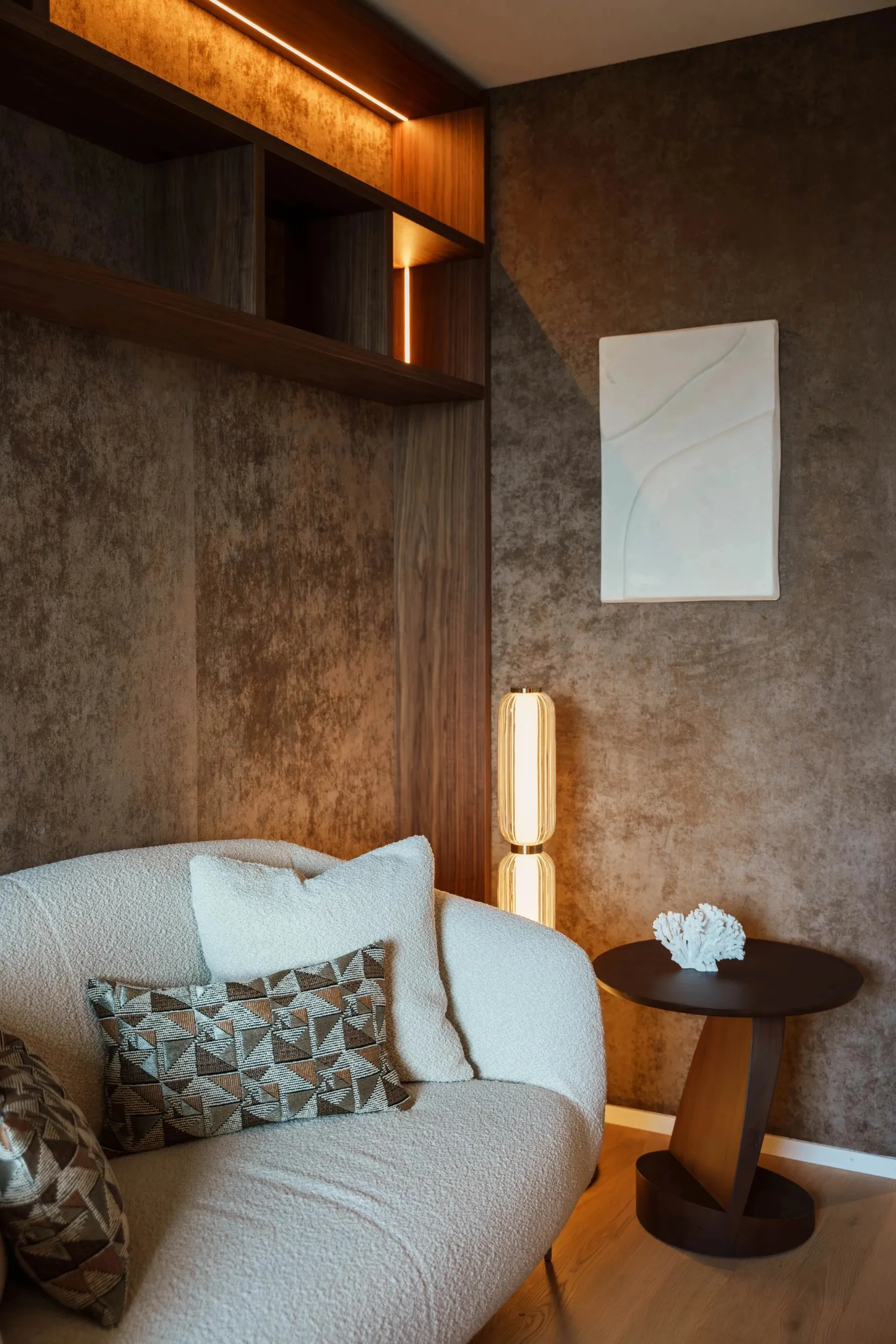
A flat painted wall reflects light relatively consistently, while a textured wallcovering can create small variations in tone and shadow. These changes can make a room feel more tactile and interesting without requiring a strong pattern or dramatic colour.
At Upscale Interiors, we frequently combine soft neutral colours with textured wallcoverings to introduce warmth without overwhelming the space.
This approach works particularly well when the goal is to create an elegant interior that feels sophisticated but still comfortable. A subtle texture can add character while allowing furniture, artwork and architectural details to remain the focus.
Why Samples Matter: Seeing Materials in Real Light
One of the biggest mistakes homeowners make is choosing colours from a catalogue or under artificial showroom lighting.
A small sample can give you an initial impression, but it cannot show you exactly how a finish will behave on an entire wall throughout the day.
Instead, we always recommend viewing samples:
- in the morning
- at midday
- in the afternoon
- in the evening
- on both sunny and cloudy days
- alongside the flooring, fabrics and furniture that will remain in the room
This simple step often changes the final decision and helps avoid costly repainting later.
For wallpapers, ordering a larger sample allows you to appreciate not only the colour but also the texture, pattern scale and way the surface interacts with natural light.
It's also worth placing the sample on different walls. A wall directly opposite a window can look very different from one beside the window, even within the same room.
Don't Forget the Season
Natural light doesn't stay the same throughout the year.
The angle of the sun changes with the seasons, and the amount and quality of daylight entering a room can shift accordingly. A colour that feels soft and neutral during one part of the year may appear warmer, cooler or brighter at another time.
This is particularly important for homes with large windows or strong exposure to direct sunlight.
Rather than trying to predict every possible variation, we recommend choosing colours with undertones that complement the room's overall light throughout the year.
This is where professional colour consultation can make a real difference. Looking at the room as a whole helps ensure that the chosen colour isn't simply beautiful on a sample, but works with the architecture, orientation and materials already present.
Our Designer's Tip
"Rather than asking, 'What's the perfect wall colour?', ask: 'How will this color look in this room throughout the entire day?' The answer depends on orientation, daylight, surrounding materials and texture, not just the pain itself. When all these elements work together, your walls become more than a background. They create atmosphere, enhance natural light and bring balance to the entire interior."
- Phaedra Roma, Interior Designer at Upscale Interiors.
Choosing Wall Colours for Your Home
There is no single perfect white, beige, grey or green that works in every room.
The best wall colour depends on the relationship between the colour and the space around it. Room orientation, window size, natural light, flooring, furniture and wall texture all contribute to the final result.
When choosing a colour, consider asking:
- Which direction does the room face?
- When is the room used most often?
- Does it receive direct sunlight?
- Does the natural light feel warm or cool?
- What colours are already present in the room?
- Will the walls be painted or covered with wallpaper?
- How does the sample look at different times of day?
These questions can help narrow down your choices and make the final decision much easier.
Final Thoughts
Choosing wall colours is about much more than selecting your favourite shade.
Understanding how natural light transforms colours allows you to create interiors that feel beautiful from sunrise to sunset. Whether you're selecting paint, textured wallpaper or bespoke wall finishes, considering room orientation is one of the simplest ways to achieve a timeless result.
A successful interior doesn't simply respond to colour. It responds to light, texture, materials and the way people use the space.
If you're planning a renovation or building a new home, the design team at Upscale Interiors can help you select colours, materials and wallcoverings that complement your home's natural light and create a cohesive interior tailored to your lifestyle.
The right colour isn't necessarily the one that looks best in the showroom. It's the one that looks right in your home.