.svg)

Custom kitchen design is the practice of building a kitchen from the ground up around your specific space, lifestyle, and aesthetic preferences rather than selecting from pre-made cabinet lines or standard layouts. In Verbier, where alpine chalets carry deep architectural heritage and property values sit firmly in the luxury tier, this approach has moved from a nice-to-have to the defining feature of serious home renovations. Homeowners here are no longer satisfied with kitchens that simply function. They want spaces that feel personal, honor the mountain environment, and hold their value for decades. The shift toward bespoke cabinetry, natural materials, and thoughtfully planned layouts is reshaping what it means to live well in one of Switzerland’s most sought-after resorts.
How custom kitchen design is transforming homes in Verbier right now
The most significant shift in Verbier home renovations is the move away from generic, showroom-ready kitchens toward spaces that feel like they were born inside the chalet. According to the 2026 Houzz Kitchen Trends Study, 29% of homeowners prefer wood cabinetry in 2026, overtaking white as the top choice. That number reflects something deeper than a color trend. It signals a collective appetite for warmth, texture, and materials that age beautifully rather than date quickly.
In Verbier specifically, this preference aligns perfectly with the chalet vernacular. Old timber, rough stone, and hand-finished surfaces have always defined the alpine interior. What custom kitchen design does is take those heritage cues and translate them into a fully functional, modern cooking space. You get the soul of a mountain home without sacrificing a single inch of practicality. The same Houzz study found that 76% of renovators adopt open-concept layouts with large islands, which speaks directly to how Verbier homeowners entertain. A chalet kitchen is rarely just a kitchen. It’s where guests gather after a day on the slopes, where family meals stretch into the evening, and where the home’s social energy lives.
Designer Jessica Whitley captures this well, noting that layered lighting and custom cabinetry create livable, timeless kitchens rather than spaces chasing fleeting trends. That philosophy resonates strongly in Verbier, where the goal is always longevity over novelty.
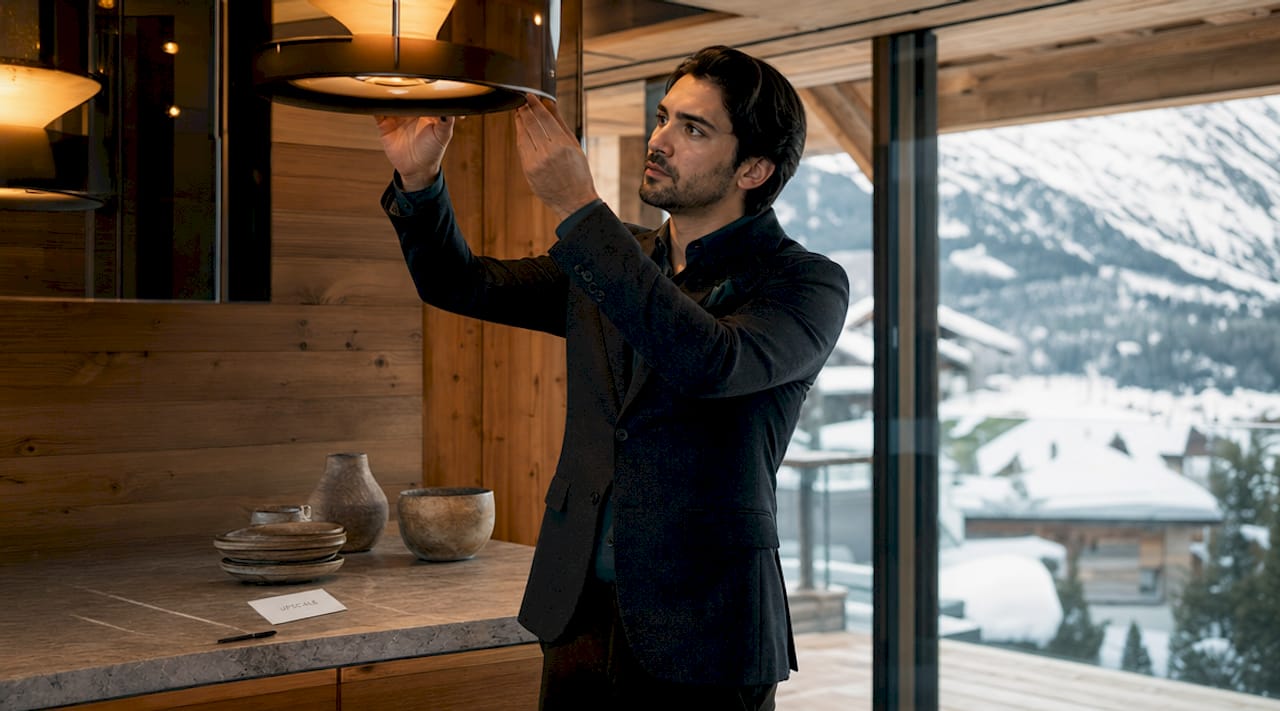
What are the key custom kitchen trends shaping Verbier homes?
The trends defining Verbier kitchens in 2026 are not arbitrary. They respond directly to how people actually live in alpine homes, and they reward homeowners who invest in quality over quantity.
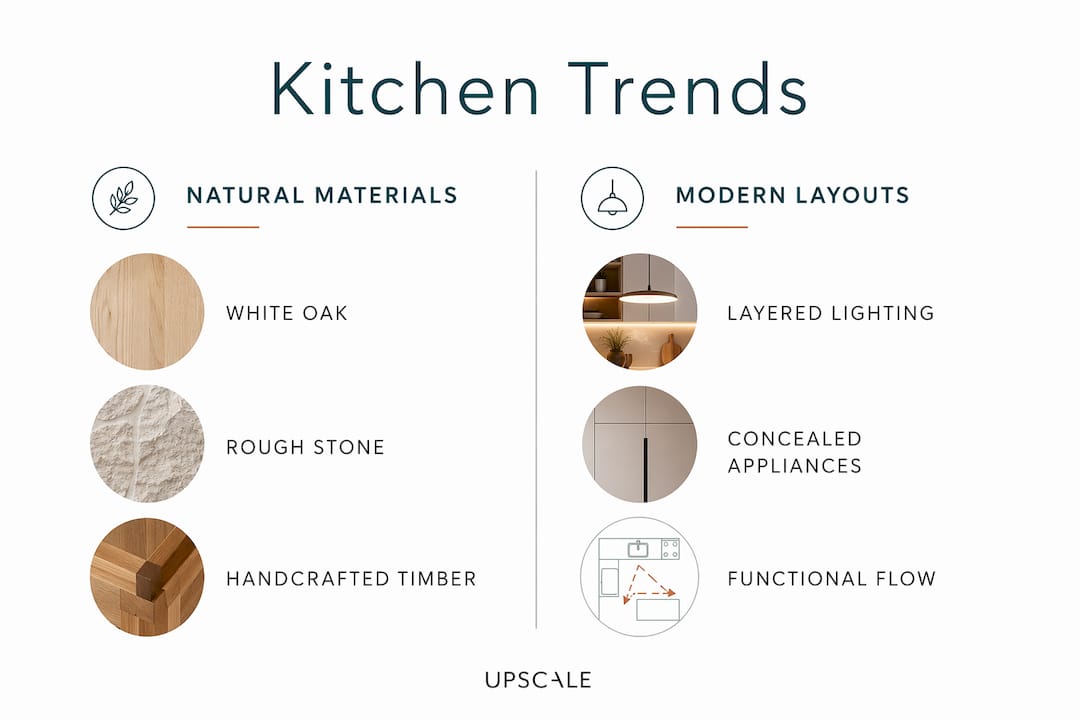
- Wood over white: Warm wood tones in cabinetry, whether walnut, oak, or scorched timber, create a sense of groundedness that white kitchens simply cannot match in a mountain setting. The grain, the texture, and the natural variation make every kitchen unique.
- Open-concept layouts with statement islands: Large islands serve double duty as prep surfaces and social anchors. In a chalet, the island is often where the après-ski conversation happens before dinner even starts.
- Layered lighting: A single overhead fixture is no longer enough. Combining recessed task lighting, under-cabinet strips, and pendant fixtures over the island creates depth and atmosphere that shifts from bright and functional during cooking to warm and intimate during meals.
- Aging-in-place features: Wider walkways, drawer-style lower cabinets instead of deep cupboards, and lever-style hardware are appearing in more Verbier renovations. These details improve daily usability without any visual compromise, and they future-proof your investment.
- Soft architectural details: Curved cabinet edges, integrated handles, and flush-fit appliances replace the sharp, industrial look that dominated a decade ago. The result feels refined rather than clinical.
Pro Tip: When selecting wood for cabinetry in an alpine home, choose species with tight grain patterns like white oak or Swiss stone pine. They resist humidity fluctuations better than open-grain woods, which matters in a mountain climate where temperatures swing significantly between seasons.
Explore how natural materials and modern layouts are influencing luxury Swiss alpine interiors for more visual inspiration on these trends.
How does layout innovation enhance functionality in Verbier chalets?
Layout is where custom kitchen design earns its keep. The 2026 Houzz Kitchen Trends Study found that 52% of renovating homeowners change their kitchen layout to improve functionality. That means more than half of all kitchen projects are not just about looks. They’re about fixing how the space actually works. In Verbier chalets, where footprints are often irregular and structural walls cannot always be moved, smart layout planning is the difference between a kitchen that flows and one that frustrates.
Here’s how the most effective layout strategies break down for alpine homes:
- Audit the prep-cook-cleanup triangle first. Before choosing any cabinet style or countertop material, map the path between your refrigerator, cooktop, and sink. If those three points require you to cross the main traffic path, every other design decision is working against you.
- Choose L-shaped or U-shaped configurations. These are the most popular layouts for renovating homeowners, with L-shaped at 34% and U-shaped at 31%. Both configurations keep the work zone contained while leaving room for an island or a breakfast bar on the open side.
- Work within the existing footprint where possible. Expanding a kitchen in a chalet often means touching structural elements, which adds cost and complexity. Skilled designers can reconfigure cabinet placement, relocate appliances, and open sightlines without breaking through a single wall.
- Separate cooking zones from entertaining zones. A dedicated prep area on one side of the island and seating on the other creates a natural boundary. Your guests stay close without getting in the way of the actual cooking.
- Plan for traffic flow as a non-negotiable. Ironwood Custom Builders notes that ignoring kitchen traffic flow in mountain chalet renovations often leads to functional failure and reduced property value despite high-end finishes. A beautiful kitchen that bottlenecks at the refrigerator door is a liability, not an asset.
Pro Tip: Walk through your kitchen at peak use time, which is usually when one person is cooking and another is setting the table or pouring drinks. If you’re bumping into each other, your layout needs work before your materials do.
How are technology and bespoke craftsmanship integrated into Verbier kitchen designs?
The most impressive Verbier kitchens manage a difficult balancing act. They feel completely traditional on the surface while hiding genuinely sophisticated technology underneath. This is not accidental. It requires deliberate collaboration between cabinetmakers, designers, and technology specialists from the very start of a project.
- Panel-ready appliances concealed by custom cabinetry: Refrigerators, dishwashers, and even wine coolers can be fitted with custom cabinet fronts that match the surrounding joinery exactly. According to a Robb Report feature on Swiss chalet design, custom cabinet fabrication is the primary technique used to preserve traditional alpine aesthetics while integrating contemporary appliances.
- Scorched timber and specific wood grains: Techniques like shou sugi ban, the Japanese practice of charring wood to enhance durability and deepen color, are appearing in Verbier kitchens as both a practical and aesthetic choice. The result is a surface that looks ancient and feels entirely intentional.
- Smart kitchen technology that disappears: Induction cooktops flush with the countertop, touch-activated faucets, and integrated speakers behind cabinet panels are all possible without any visible technology intruding on the design.
- Artistic focal points as design anchors: Thomas Crauwels, a recognized authority on luxury chalet interiors, identifies custom timber bars and statement fireplaces as the elements that define kitchen character in Verbier’s high-end market. A custom bar built from reclaimed alpine wood, for example, does more for a kitchen’s identity than any appliance upgrade ever could.
“Effective chalet renovations in Verbier balance heritage with modern convenience by using authentic materials such as old wood and rough stone with restraint for elegant, lived-in spaces.” — Thomas Crauwels
You can see this philosophy in action through Upscale’s modern chalet project in Klosters, which demonstrates how heritage materials and contemporary function can coexist beautifully in an alpine setting.
How do custom kitchens in Verbier contribute to home value and lifestyle?
The return on a custom kitchen in Verbier operates on two levels. There’s the financial return, which shows up when you sell or rent the property, and there’s the daily return, which shows up every morning when you make coffee in a space that actually works for you.
| Benefit | Standard kitchen | Custom kitchen |
|---|---|---|
| Material quality | Pre-selected, off-the-shelf finishes | Chosen for your specific climate, use, and aesthetic |
| Layout fit | Generic configurations | Designed around your actual cooking habits and traffic flow |
| Appliance integration | Visible, standard finishes | Panel-ready, concealed within bespoke cabinetry |
| Focal point | None or generic | Custom bar, statement island, or architectural feature |
| Long-term value | Depreciates with trends | Timeless materials hold and grow value |
Thomas Crauwels’ analysis of Verbier’s luxury market confirms that unique masterpieces like custom architectural elements anchor kitchens with character that cookie-cutter luxury simply cannot replicate. A prospective buyer or rental guest notices immediately when a kitchen has been designed with intention. That impression translates directly into perceived value.
Livability is equally important. Aging-in-place features, wider walkways, and drawer-style lower cabinets mean your kitchen works as well for you at 70 as it does today. Luxury chalet décor in Verbier demands a delicate balance of respecting heritage while embracing modern convenience, and the kitchen is where that balance is most visible and most tested. Getting it right means you never have to renovate again.
The professional dimension matters too. The 2026 Houzz Kitchen Trends Study found that 87% of renovating homeowners hire professionals for kitchen projects, with higher-end projects seeing nearly universal professional involvement. That figure reflects a simple truth: the complexity of integrating materials, technology, layout, and local building constraints in a mountain home is not a DIY undertaking.
Key takeaways
Custom kitchen design in Verbier delivers lasting value by combining authentic alpine materials, function-first layouts, and concealed technology into spaces that are personal, timeless, and worth every franc invested.
| Point | Details |
|---|---|
| Wood is the new white | 29% of 2026 renovators choose wood cabinetry, making it the top choice for warmth and longevity. |
| Layout drives function | 52% of renovations change the layout first, with L-shaped and U-shaped configurations leading results. |
| Technology should disappear | Custom cabinetry conceals panel-ready appliances to preserve the alpine aesthetic without sacrificing convenience. |
| Focal points define character | Custom bars, statement islands, and architectural features create identity that generic kitchens cannot match. |
| Professionals are the standard | 87% of high-end kitchen renovations involve professional designers, reflecting the complexity of bespoke projects. |
What I’ve learned from watching Verbier kitchens transform
Working closely with alpine home projects over the years, I’ve noticed one pattern that separates the kitchens people love from the ones they merely tolerate: the homeowners who got it right started with function and let the aesthetics follow. Not the other way around.
The temptation in a place like Verbier is to lead with the visual. You see a stunning piece of scorched timber or a gorgeous slab of local stone, and you want to build the kitchen around it. That instinct isn’t wrong, but it needs to be grounded in how you actually use the space. I’ve seen beautiful kitchens where the refrigerator opens into the main walkway, or where the island is so large it blocks the path to the dining area. No amount of beautiful wood fixes that.
What I find genuinely exciting about the current direction of bespoke kitchen design in Verbier is how seriously homeowners are taking the idea of signature spaces. They’re not asking for the kitchen that looks like every other luxury chalet on the market. They’re asking for the kitchen that tells their story. A family that skis together and cooks together needs something very different from a couple who uses the chalet as a quiet retreat. Custom design is the only approach that can honor both.
My honest advice: before you look at a single cabinet sample or countertop swatch, spend a week paying attention to how you actually move through your current kitchen. Where do you set things down? Where do you get stuck? Where does the light feel wrong? Those observations are worth more than any trend report. And when you do bring in a designer, share those observations first. The best results I’ve seen always start with that conversation.
— Tom
How Upscale can bring your Verbier kitchen vision to life
Upscale Interiors specializes in exactly the kind of bespoke residential design that Verbier homes demand. From space planning and material selection to 3D visualizations and full project management, the team brings the expertise to translate your vision into a kitchen that works beautifully on every level. Whether you’re drawn to scorched timber and stone or a cleaner, more contemporary alpine aesthetic, Upscale’s approach is always tailored to you, never templated. You can explore custom kitchen design services to understand the full scope of what’s possible, or browse the bespoke cabinetry options to see how furniture and joinery come together in a finished space. Booking a consultation is the simplest first step toward a kitchen that genuinely reflects your Verbier lifestyle.
FAQ
What makes a kitchen “custom” versus standard?
A custom kitchen is designed and built specifically for your space, lifestyle, and material preferences rather than selected from a manufacturer’s pre-set catalog. Every dimension, finish, and layout decision is made for your home alone.
Which kitchen layout works best for a Verbier chalet?
L-shaped and U-shaped layouts are the most effective for alpine chalets, used by 34% and 31% of renovating homeowners respectively, because they keep the work zone contained while accommodating irregular footprints and entertaining needs.
How do designers hide modern appliances in traditional chalets?
Custom cabinet fabrication with panel-ready fronts allows refrigerators, dishwashers, and wine coolers to be concealed behind joinery that matches the surrounding cabinetry exactly, preserving the traditional alpine aesthetic completely.
Does a custom kitchen actually increase property value in Verbier?
Yes. Kitchens designed with authentic materials, functional layouts, and signature focal points hold value far better than trend-driven renovations, and they command stronger buyer and rental interest in Verbier’s competitive luxury market.
How long does a custom kitchen renovation typically take?
Most bespoke kitchen projects in luxury alpine homes take between three and six months from design approval to completion, depending on the complexity of cabinetry fabrication, appliance sourcing, and any structural work required.