.svg)

Choosing the right interior style for a high-end home in Zürich, Geneva, or Basel is genuinely exciting, but it can also feel overwhelming. The history of interior design is rich, layered, and full of surprising turns, and the best spaces today rarely belong to just one era. Understanding interior design style evolution examples gives you a real advantage: you can see which styles have proven their staying power, which ones are having a meaningful revival, and how to blend them in ways that feel personal rather than trend-chasing. This article walks you through the most compelling style evolutions, with practical guidance for discerning homeowners and developers who want spaces that age beautifully.
Table of Contents
- Key criteria for evaluating interior design style evolution examples
- Mid-century modern: enduring elegance and organic forms
- Victorian interior design to Grandmillennial revival: ornate to curated elegance
- Art Deco influence: geometric luxury for modern sophistication
- Biophilic design: nature’s resurgence in luxury interiors
- Comparing evolved styles: features, materials, and suitability
- An expert’s perspective: layering timelessness and sustainability in evolving interiors
- Bring timeless style and bespoke design to your home with Upscale Interiors
- Frequently asked questions
Key Takeaways
| Point | Details |
|---|---|
| Cyclical nature of styles | Interior design styles evolve in 20-30 year cycles driven by nostalgia and cultural shifts. |
| Timeless style balance | Mixing vintage and modern elements creates elegant, lasting interiors for affluent homes. |
| Biophilic design growth | Natural materials and wellness-focused interiors are trending strongly in 2026 luxury projects. |
| Selective Victorian revival | Grandmillennial style uses fewer Victorian elements to maintain contemporary restraint. |
| Material and region matter | Swiss climate and culture shape material choices and style adaptations for enduring appeal. |
Key criteria for evaluating interior design style evolution examples
Before diving into specific styles, it helps to have a framework. Not every design trend that resurfaces deserves a place in a bespoke European home. Some revivals are driven purely by nostalgia and fade quickly. Others reflect genuine shifts in how we live, what we value, and how materials and craftsmanship have evolved.
Here are the most important criteria to consider when evaluating any style evolution:
- Historical roots and cultural resonance. A style with deep roots tends to age well. Mid-century Modern, Art Deco, and Victorian design each carry a cultural weight that gives them staying power across decades.
- Material quality and adaptability. The best evolved styles translate beautifully into contemporary materials. Teak, marble, brass, and natural linen have appeared across multiple design eras because they genuinely perform and look extraordinary over time.
- Regional fit. Swiss homeowners in cities like Lucerne or Zug often gravitate toward styles that balance warmth and precision, cozy textures with clean architecture. A style that works in a New York loft may feel wrong in a lakeside villa in Küsnacht.
- Sustainability alignment. Interior design trends repeat in 20 to 30 year cycles due to generational nostalgia and are accelerated by social media. What’s new is that today’s revivals are filtered through a sustainability lens, favoring reclaimed materials, natural fibers, and artisan production.
It’s also worth noting that styles evolve cyclically, influenced by economic conditions and collective mood. After periods of excess, interiors tend to pull back toward warmth and simplicity. After austerity, they often embrace richness and ornament again. Knowing where we are in that cycle helps you make choices that feel current without being fleeting.
Pro Tip: Before committing to a full design direction, take a moment to discover your unique style through a guided quiz. It can surface preferences you didn’t know you had and save you from costly mid-project pivots.
With criteria established, we can explore exemplary interior design styles that have evolved meaningfully over time, reflecting these factors.
Mid-century modern: enduring elegance and organic forms
Few styles have demonstrated the kind of sustained appeal that Mid-century Modern has. Born from the post-World War II optimism of the 1940s through 1960s, it celebrated the idea that good design should be accessible, functional, and beautiful all at once. Designers like Hans Wegner, Eero Saarinen, and Florence Knoll shaped interiors that still feel fresh today.
Mid-century Modern remains among the top five most-searched design styles in 2026, characterized by organic forms, clean lines, and mixed materials like wood with fiberglass. That’s remarkable staying power for a movement that’s over 70 years old.
What makes it so adaptable? A few things stand out:
- Organic shapes that soften architectural rigidity, particularly useful in the precise, angular buildings common in Swiss cities like Basel and Zürich
- Mixed materials that feel both warm and modern, teak paired with fiberglass, marble with walnut, leather with chrome
- Restraint in decoration, which suits contemporary living without feeling cold or impersonal
- Scalability, from a single statement armchair to a fully realized open-plan living space
Today’s version of mid-century modern style often incorporates reclaimed woods and low-VOC upholstery, making it a genuinely sustainable choice. Authentic vintage pieces from Danish or American manufacturers carry real investment value, while quality reproductions offer accessibility without sacrificing the look.
Pro Tip: In a Zürich apartment with high ceilings and minimal natural light, a warm walnut sideboard and a sculptural pendant light in amber glass can transform the entire feel of a room. You don’t need to redecorate everything to get the impact.
Next, we explore the intricate Victorian style and its modern reinterpretation, contrasting sharply with Mid-century Modern’s minimalism.
Victorian interior design to Grandmillennial revival: ornate to curated elegance
Victorian interiors, spanning roughly 1837 to 1901, were unapologetically maximalist. Jewel-tone walls in emerald, sapphire, and burgundy, carved mahogany furniture, damask wallpapers, velvet upholstery, and an almost theatrical layering of textiles and accessories defined the era. It was design as status, comfort as spectacle.
Victorian interior design featured ornate millwork, jewel-tone colors, and layered textiles, evolving into Grandmillennial style with 90% fewer accessories as of 2026. That reduction is the key insight. Grandmillennial design, which emerged strongly in the early 2020s, takes the emotional richness of Victorian interiors and edits them ruthlessly.
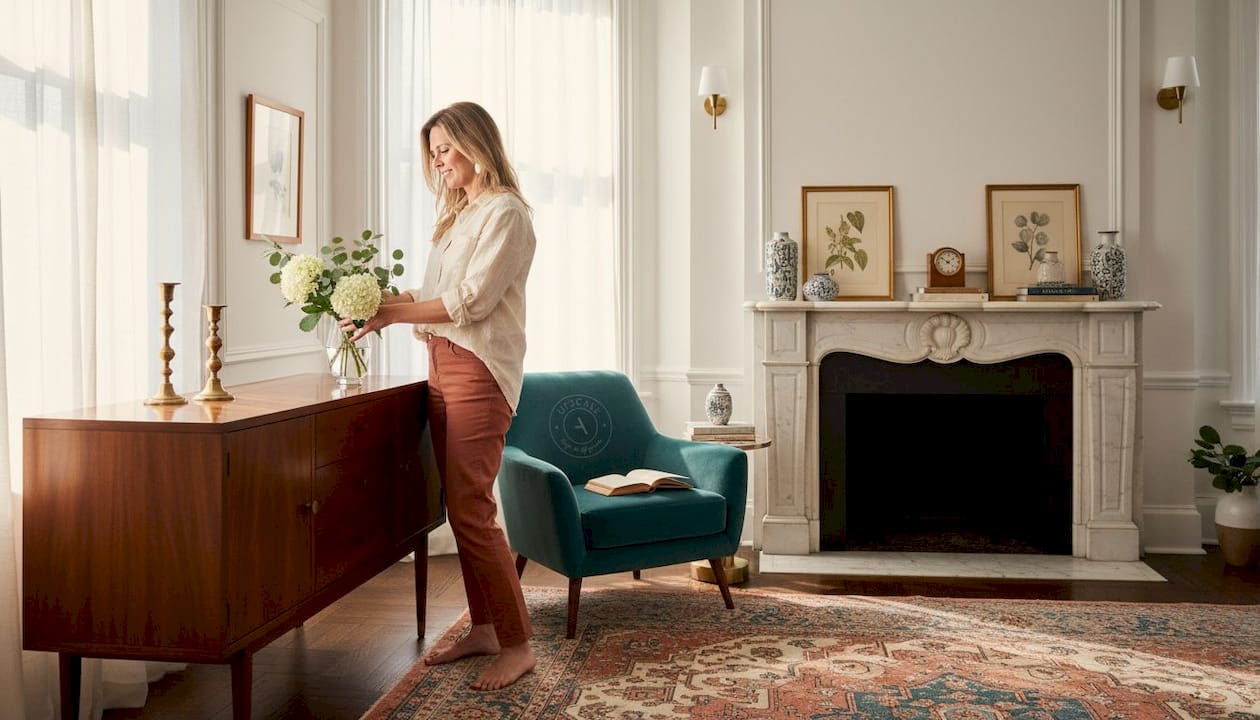
Here’s how the three Victorian sub-periods evolved in terms of color and furniture:
| Period | Color palette | Furniture character |
|---|---|---|
| Early Victorian (1837-1860) | Dark, rich tones: burgundy, forest green | Heavy, carved, Gothic-influenced |
| High Victorian (1860-1880) | Jewel tones with gilded accents | Elaborate, eclectic, layered |
| Late Victorian (1880-1901) | Lighter, more muted tones | Aesthetic movement influence, lighter forms |
Grandmillennial style retains the jewel tones and layered textiles but strips away the clutter. Think a single bold patterned wallpaper in a dining room, paired with linen curtains and a contemporary dining table. The ornament is there, but it breathes.
Key features that carry forward into modern Grandmillennial spaces:
- Velvet upholstery in deep jewel tones
- Patterned wallpapers used selectively, often in one statement room
- Antique or vintage accessories chosen for meaning, not quantity
- Layered rugs and textiles that create warmth without chaos
For homeowners in Geneva or Lausanne with period properties, this approach is a gift. You can honor the architectural heritage of your building while creating a space that feels genuinely contemporary and livable.
Pro Tip: Explore our interior design guide for curated advice on blending traditional and modern elements without losing coherence.
From Victorian grandeur to geometric glamour, let’s examine how Art Deco reshaped interiors in the early 20th century and influences today’s luxury design.
Art Deco influence: geometric luxury for modern sophistication
Art Deco emerged in Paris in the 1920s as a bold rejection of the organic curves of Art Nouveau. It embraced geometry, symmetry, and unabashed luxury. Lacquered surfaces, brass inlays, chevron patterns, stepped forms, and jewel-tone accents became its signature language. It was glamorous, confident, and unmistakably modern for its time.
What’s fascinating is how well it translates into contemporary high-end interiors. Art Deco’s geometric patterns and luxurious materials influence 70% of high-end European projects in 2026, with curved brass fixtures and geometric tiles being particularly popular. That’s not a niche revival. That’s a mainstream design force.
In cities like Geneva and Lausanne, where luxury residential and hospitality projects set a high bar, Art Deco elements appear in:
- Curved brass fixtures in bathrooms and kitchens that add warmth and sculptural interest
- Geometric floor tiles in entryways that make an immediate, lasting impression
- Lacquered cabinetry in deep navy or forest green with brass hardware
- Stepped architectural details in ceilings or built-in shelving that reference the Deco era without replicating it literally
The key to using Art Deco in a contemporary Swiss home is restraint. A single geometric tile floor in an entrance hall, a pair of brass wall sconces in a study, or a lacquered bar cabinet in a living room carries the spirit of the movement without tipping into costume.
“Art Deco is one of those rare styles where even a single well-chosen element changes the entire character of a room. It’s not about recreating the 1920s. It’s about borrowing its confidence.”
Now turning to a modern trend that highlights nature and wellbeing: biophilic design and its 2026 surge in Swiss and European interiors.
Biophilic design: nature’s resurgence in luxury interiors
Biophilic design, which means design that connects people with nature, has moved from a niche wellness concept to one of the most requested approaches in high-end residential work. The idea is straightforward: when your home includes natural light, living plants, organic textures, and materials drawn from the earth, you feel better in it. Less stressed, more focused, more at ease.
The numbers back this up. The global biophilic design sector grew over 20% since 2023, with natural fiber rugs, solid wood furniture, and indoor plants surging by up to 20% by Spring 2026.
For Swiss homes, particularly mountain residences in Gstaad or Andermatt, or lakeside properties in Meggen or Erlenbach, biophilic design is almost a natural extension of the setting. The challenge and the opportunity is bringing that outside-in feeling into urban apartments in Zürich or Zug.
Here’s a quick comparison of biophilic materials and their applications:
| Material | Sensory quality | Ideal application |
|---|---|---|
| Solid oak | Warm, tactile, durable | Flooring, furniture, wall paneling |
| Limestone | Cool, textured, timeless | Bathrooms, kitchen counters, fireplaces |
| Linen | Soft, breathable, organic | Curtains, upholstery, bed textiles |
| Rattan | Light, airy, natural | Accent furniture, lighting, storage |
| Bamboo | Sustainable, smooth, modern | Flooring, cabinetry, decorative screens |
Key design moves that define a biophilic interior:
- Maximizing natural light through sheer curtains and reflective surfaces
- Incorporating a living wall or grouped indoor plants as a focal point
- Using raw or lightly finished natural materials rather than heavily processed ones
- Connecting interior spaces visually to gardens, terraces, or mountain views
Pro Tip: Adding texture through natural materials is one of the most cost-effective ways to introduce biophilic warmth into any room, even in a city apartment.
Having explored these style evolutions individually, we now compare their key features to guide your design selection.
Comparing evolved styles: features, materials, and suitability
Choosing between these four evolved styles, or deciding how to layer them, becomes much easier when you see them side by side. Each brings a distinct character, and each suits different settings, lifestyles, and priorities.
| Style | Color palette | Key materials | Ambiance | Ideal setting |
|---|---|---|---|---|
| Mid-century Modern | Warm neutrals, mustard, olive | Teak, walnut, fiberglass, leather | Clean, organic, inviting | Urban apartments, home offices |
| Victorian / Grandmillennial | Jewel tones, cream, gold | Velvet, carved wood, damask | Rich, layered, curated | Period properties, formal rooms |
| Art Deco | Navy, emerald, black, gold | Brass, lacquer, marble, geometric tile | Glamorous, bold, structured | Luxury residences, hospitality |
| Biophilic | Earthy neutrals, sage, terracotta | Oak, limestone, linen, rattan | Warm, calm, grounded | Mountain retreats, lakeside homes |
A few observations worth making:
- Mid-century Modern characteristics make it the most versatile choice for Swiss urban properties, working equally well in a Zürich penthouse and a Basel family home
- Art Deco suits clients who want a strong design statement and are comfortable with boldness
- Victorian/Grandmillennial rewards clients with a love of history and an eye for curation
- Biophilic is the strongest choice for wellness-focused spaces and properties with strong connections to landscape
You can also layer these styles intentionally. A biophilic base with Art Deco brass accents, for example, creates spaces that feel both grounded and glamorous. Adding texture design ideas from multiple traditions creates depth without confusion.
An expert’s perspective: layering timelessness and sustainability in evolving interiors
Here’s something most design articles won’t tell you: the biggest mistake affluent homeowners make isn’t choosing the wrong style. It’s choosing too many things at once and then replacing them all within three years.
This is what designers call the Diderot effect, a psychological pattern where one new purchase triggers a cascade of replacements until the entire room feels new but somehow incoherent. Quiet luxury evolves over years by mixing vintage with custom pieces, avoiding rapid datedness in 80% of projects. The most enduring interiors we see in Swiss homes are built slowly, intentionally, with each piece chosen to last decades rather than seasons.
Our perspective, shaped by working with clients across Zürich, Geneva, Davos, and Verbier, is that sustainability and luxury are not in tension. They’re the same thing. A solid oak floor that lasts 50 years is more luxurious than a trendy laminate that needs replacing in five. A custom-made sofa in quality linen is more sustainable and more beautiful than a fast-furniture equivalent. Natural materials, artisan craftsmanship, and thoughtful sourcing are what make a space feel genuinely elevated.
We also believe that biophilic elements are best integrated structurally during construction or renovation, not added as an afterthought. A skylight, a planted terrace, or a stone feature wall costs far less when it’s part of the build than when it’s retrofitted. For Swiss homeowners planning renovations in cities like Winterthur or St. Gallen, this is worth factoring into the brief from day one.
Finally, when it comes to Art Deco, we’d encourage restraint over recreation. A full Art Deco interior can feel theatrical rather than livable. But a single brass-framed mirror, a geometric entry tile, or a lacquered cabinet in an otherwise calm room? That’s the kind of detail that makes guests stop and say wow. Explore modern interior inspiration to see how these principles come to life in real projects.
Bring timeless style and bespoke design to your home with Upscale Interiors
At Upscale Interiors, we specialize in exactly this kind of thoughtful, layered design for clients in Zürich, Geneva, Basel, and across Switzerland and Europe. Whether you’re drawn to the organic warmth of Mid-century Modern, the curated richness of Grandmillennial, the geometric confidence of Art Deco, or the grounded calm of biophilic design, our team helps you find the right balance for your specific space and lifestyle. We offer personalized consultations for both residential and commercial projects, including full project management, material selection, and 3D visualization. If you’re ready to create a home or development that truly reflects your taste, explore luxury interior design in Zürich or discover how we approach commercial interior design services for high-end Swiss properties. You can also explore our guide to adding texture to your home for immediate inspiration.
Frequently asked questions
What are examples of interior design style evolutions I can use in my Swiss home?
Popular evolutions include Mid-century Modern’s organic forms updated for today, Victorian style’s shift into Grandmillennial layering, Art Deco’s geometric luxury reinterpreted with brass and tile, and the recent rise of biophilic design connecting interiors with nature through wood, stone, and living plants.
How does biophilic design benefit luxury interiors?
Indoor plants reduce stress by up to 37% and improve concentration by nearly 15%, and biophilic design extends this benefit by incorporating natural light, organic materials like linen and limestone, and living greenery to create spaces that feel genuinely restorative.
What is the best approach to mix historical style elements with modern interiors?
Modern Victorian design succeeds by selecting a few statement elements, such as a patterned wallpaper or a velvet armchair, within a restrained contemporary backdrop, preserving elegance without overwhelming the space.
Which interior design style is ideal for high-end commercial projects in Switzerland?
Art Deco influences appear in 70% of high-end European projects, while biophilic design supports wellness and productivity, making both strong choices for commercial spaces in Swiss urban centers like Zürich and Geneva where client experience and ambiance are paramount.