.svg)

Zug gilt als eine der attraktivsten Städte am See in der Schweiz. Auf 425 Metern über dem Meeresspiegel am nordöstlichen Ufer des Zugersees gelegen, befindet sich die Stadt nur 23 km südlich von Zürich. Hier trifft eine wunderschön erhaltene mittelalterliche Altstadt auf eines der steuerlich attraktivsten Umfelder Europas, was Fachkräfte, Familien und designbewusste Eigenheimbesitzer aus der ganzen Welt anzieht. Ob Sie einen Besuch planen, Wohngegenden erkunden oder ernsthaft über einen Umzug nachdenken – Zug belohnt Ihre Neugier auf Schritt und Tritt. Dieser Ratgeber deckt alles ab, von Verkehrsanbindungen und kulturellen Veranstaltungen bis hin zu Wohnvierteln und den Schritten für einen Umzug, damit Sie sich ein Leben hier ganz genau vorstellen können.
Welche Verkehrsmittel machen das Leben und Besuchen in Zug so komfortabel?
Die Fortbewegung in Zug ist zweifellos eines der größten Pluspunkte der Stadt. InterRegio-Züge verbinden Zug in etwa 25 Minuten mit Zürich und Luzern. Das bedeutet, Sie genießen die Ruhe einer Kleinstadt und bleiben gleichzeitig perfekt an zwei der wichtigsten urbanen Zentren der Schweiz angebunden. Diese Balance ist selten und ein wesentlicher Grund, warum sich so viele Berufstätige für Zug statt für eine Stadtwohnung entscheiden.
DieZuger Stadtbahn, die 2004 eröffnet wurde, bedient mit ihren 12 Zügen des Typs RABe 523 zwei Linien und ist direkt in das S-Bahn-Netz der Zentralschweiz integriert. Das macht ein Auto im Alltag weitgehend überflüssig, was sowohl Ihr Budget als auch Ihr Stresslevel schont. Besonders Familien schätzen es, dass Jugendliche problemlos durch die Stadt oder in umliegende Gebiete gelangen können, ohne dass man sich Gedanken über Parkplätze oder Verkehr machen muss.

Wer dennoch mit dem Auto unterwegs ist, erreicht über die Autobahn A14 (Ausfahrten Zug und Baar) schnell sein Ziel, und der Flughafen Zürich ist in etwa 40 Minuten erreichbar. Das macht internationale Reisen absolut unkompliziert und nicht zu einer halbtägigen Tortur.
Hier ist ein kurzer Überblick über Ihre wichtigsten Verkehrsmöglichkeiten in Zug:
- Zug (InterRegio): Zürich HB und Luzern in jeweils ca. 25 Minuten
- Zuger Stadtbahn: Zwei S-Bahn-Linien für lokale und regionale Verbindungen im Raum Zug
- Auto (Autobahn A14): Direkte Anbindung über die Ausfahrten 2 (Zug) und 3 (Baar)
- Flughafen Zürich: Ca. 40 Minuten mit dem Auto über A4/A14
- Fahrrad und zu Fuß: Die kompakte Innenstadt und die Seepromenade sind ideal zum Gehen und Radfahren
Profi-Tipp: Während des Zuger Mittelalterfests im September sind Parkplätze in der Nähe der Altstadt schnell belegt. Nutzen Sie den Zug oder die Stadtbahn und genießen Sie die Atmosphäre, ohne sich über die Parkplatzsuche zu ärgern.
Was sind die wichtigsten kulturellen Veranstaltungen und Attraktionen in Zug für 2026?
Zug bietet ein kulturelles Programm, das weit über das hinausgeht, was man von einer Stadt dieser Größe erwarten würde. Der Veranstaltungskalender für 2026 wird von zwei Highlights geprägt, die den lokalen Charakter perfekt widerspiegeln: die Liebe zur Geschichte, zur Gemeinschaft und zu hoher Qualität.
DasZuger Mittelalterfest 2026 findet am Samstag, den 19. September, und Sonntag, den 20. September, statt und hüllt die Burg Zug sowie die umliegende Altstadt in historische Darbietungen, kostümierte Händler und stimmungsvolle Marktstände. Dies ist keine Touristenfalle, sondern ein Fest, das Einheimische in großer Zahl anzieht und ein echtes Gemeinschaftsgefühl schafft. Viele kulturelle Aktivitäten in Zug konzentrieren sich saisonal auf solche Leuchtturmveranstaltungen, was den September zu einem der besten Monate macht, um die Stadt von ihrer lebendigsten Seite zu erleben.
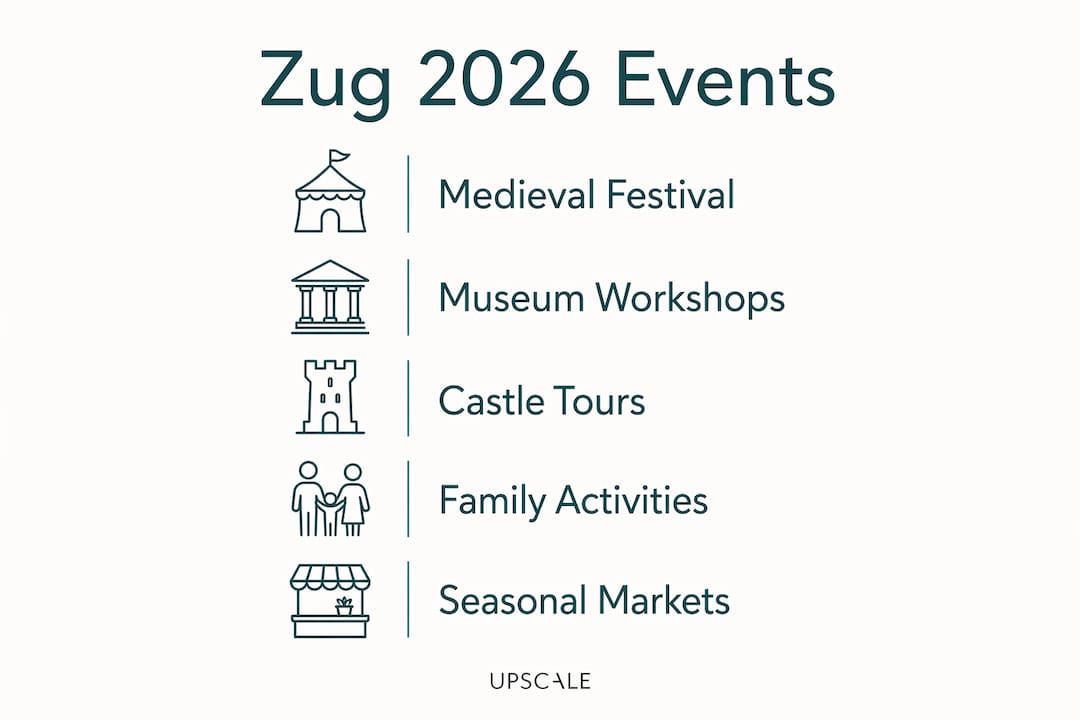
DasMuseum Burg Zug bietet im Jahr 2026 ein jährliches Mittelalter-Themenprogramm mit Workshops, Familienaktivitäten und Ausstellungen zum mittelalterlichen Leben in der Zentralschweiz an. Ein besonderes Ereignis findet am Sonntag, den 17. Mai 2026, von 08:00 bis 15:00 Uhr bei freiem Eintritt statt. Dieses Modell des freien Eintritts ist bemerkenswert – es zeigt eine Stadt, die möchte, dass ihre kulturellen Institutionen für alle zugänglich sind und nicht nur prestigeträchtig bleiben.
Die geführten Touren von Zug Tourismus runden das kulturelle Angebot wunderbar ab. Zur Auswahl stehen klassische Stadtführungen, interaktive CityBot-Erlebnisse, Rätselpfade und Teambuilding-Formate für Gruppen. Diese Touren vermitteln die Geschichte, Architektur und die Traditionen der familiengeführten Unternehmen auf eine Weise, die man bei einem eigenständigen Rundgang kaum erfassen kann. Wenn Sie neu in der Stadt sind oder Gäste empfangen, ist die Buchung einer dieser Touren eine lohnende Investition in Ihr Zug-Erlebnis.
Die kulturellen Highlights für 2026 auf einen Blick:
- Zuger Mittelalterfest: 19. und 20. September rund um die Burg Zug
- Mittelalterprogramm im Museum Burg Zug: Ganzjährige Workshops und Ausstellungen, inklusive Familientag mit freiem Eintritt am 17. Mai
- Geführte Touren von Zug Tourismus: Stadtführungen, CityBot, Rätselpfade und Gruppenformate ganzjährig verfügbar
- Zuger Stadtführer: Einzigartige lokale Erlebnisse, die über das übliche Sightseeing hinausgehen
Wie ist die Wohnlandschaft in Zug strukturiert?
Die Gemeinde Zug ist vielschichtiger, als es auf den ersten Blick scheint. Die Stadt umfasst einen kompakten Stadtkern sowie mehrere eigenständige Siedlungen, die sich über die Lorzenebene verteilen, darunter Lorzen, Kollermühle, Steinhuserbrugg, Ammannsmatt, Oberwil und Räbmatt. Jedes dieser Gebiete hat seinen eigenen Charakter in Bezug auf die Fußläufigkeit, den Lärmpegel und die Pendlerwege, auch wenn sie alle innerhalb derselben Stadtgrenzen liegen.
Die Altstadt und die Viertel am Seeufer bieten das fußgängerfreundlichste und optisch beeindruckendste Wohnerlebnis. Sie sind nur wenige Schritte vom Wasser, der mittelalterlichen Architektur und dem Hauptbahnhof entfernt. Der Nachteil ist, dass es sich hierbei meist um ältere Gebäude mit weniger Wohnfläche handelt und die Preise die erstklassige Lage widerspiegeln. Für designorientierte Bewohner erfordern diese Räume oft eine durchdachte Raumplanung, um ihren Charakter und ihre Proportionen optimal zur Geltung zu bringen.
Die äußeren Siedlungen und Gebiete, die an Nachbargemeinden wie Baar, Steinhausen und Cham grenzen, bieten mehr Platz, neuere Bauten und ein ruhigeres Tempo. Familien mit Kindern bevorzugen diese Zonen oft wegen der Kombination aus Grünflächen, Zugang zu Schulen und etwas niedrigeren Mieten.
EineLebenshaltungskostenanalyse für 2026 schätzt, dass ein berufstätiges Paar mit einem Kind in Zug monatlich 8.000 bis 11.500 CHF vor Einkommenssteuer benötigt, wobei die Mieten für Dreizimmerwohnungen zwischen 3.500 und 5.000 CHF liegen. Das ist im Allgemeinen günstiger als bei vergleichbaren Wohnungen in Zürich, und wenn man die deutlich niedrigeren Einkommenssteuersätze in Zug berücksichtigt, wird das finanzielle Gesamtbild äußerst attraktiv.
Profi-Tipp: Bevor Sie sich für ein Viertel entscheiden, verbringen Sie einen Wochentagvormittag und einen Samstagnachmittag in jedem Gebiet, das Sie in Betracht ziehen. Der Unterschied in Atmosphäre, Lärm und Fußgängeraufkommen zwischen der Zuger Altstadt und den äußeren Siedlungen ist frappierend und verrät Ihnen viel darüber, wie sich der Alltag dort tatsächlich anfühlen wird.
Welche praktischen Schritte sind mit einem Umzug nach Zug verbunden?
Ein Umzug nach Zug ist aufregend, und der administrative Teil ist einfacher zu bewältigen, als Sie vielleicht denken. Die Stadt ist für ihre effiziente Bearbeitung bekannt, insbesondere im Vergleich zu größeren Schweizer Städten. Dennoch gibt es feste Fristen und verfahrenstechnische Unterschiede je nach Nationalität, daher lohnt es sich, die Schritte im Voraus zu kennen.
So sieht der Umzugsprozess in der Praxis aus:
- Sichern Sie sich zuerst eine Wohnung. Sie benötigen eine bestätigte Adresse, bevor Sie sich anmelden können. Wenn Sie den Beginn Ihres Mietvertrags sorgfältig planen, vermeiden Sie den Stress, sich ohne Unterlagen anmelden zu müssen.
- Anmeldung innerhalb von 14 Tagen. Neuzugezogene müssen sich innerhalb von 14 Tagen nach Ankunft und vor Aufnahme einer Erwerbstätigkeit persönlich beim Einwohneramt anmelden. Dies ist eine verbindliche gesetzliche Vorschrift, keine Empfehlung.
- EU/EFTA-Staatsangehörige: Der Prozess ist relativ unkompliziert. Sie melden sich an, geben Ihren Beschäftigungs- oder Selbstständigkeitsstatus an und erhalten Ihre Aufenthaltsbewilligung. Das Zuger Amt ist dafür bekannt, diese Fälle effizient zu bearbeiten.
- Drittstaatsangehörige: Der Prozess ist aufwendiger. Viele Nationalitäten benötigen vor der Einreise in die Schweiz eine Bewilligung, was bedeutet, dass Ihre Zeitplanung Monate früher beginnen muss. Konsultieren Sie einen Einwanderungsspezialisten, bevor Sie Flüge buchen.
- Stellen Sie Ihre Unterlagen zusammen. Sie benötigen in der Regel Ihren Reisepass, Mietvertrag, Arbeitsvertrag oder einen Nachweis über finanzielle Mittel sowie Passfotos. Wenn Sie diese vor Ihrem Termin bereithalten, sparen Sie Zeit und vermeiden wiederholte Besuche.
- Melden Sie Kinder und Angehörige separat an. Jedes Familienmitglied benötigt eine eigene Anmeldung, berücksichtigen Sie dies also bei Ihrer Terminplanung.
Das entscheidende Wissen liegt hier im Timing. Bei der Umzugsplanung muss berücksichtigt werden, dass die Wohnungsunterlagen vor Ablauf der 14-tägigen Anmeldefrist vorliegen müssen. Wenn Ihr Mietvertrag an dem Tag beginnt, an dem Sie ankommen, läuft die Zeit bereits gegen Sie.
Die wichtigsten Erkenntnisse
Zug bietet eine seltene Kombination aus landschaftlicher Schönheit, kultureller Tiefe, effizientem Verkehr und günstigen steuerlichen Bedingungen, die es zu einem der lohnendsten Orte der Schweiz zum Leben oder für einen Besuch macht.
Warum mich Zug mehr überrascht hat, als ich erwartet hatte
Ich will ehrlich sein: Bevor ich wirklich Zeit in Zug verbracht habe, nahm ich an, es sei in erster Linie ein Finanzzentrum, das zufällig einen hübschen See hat. Diese Annahme war in jeder Hinsicht falsch.
Was mich am meisten beeindruckt hat, ist, dass sich die Altstadt nicht wie ein Museum für Touristen anfühlt. Sie fühlt sich bewohnt an. Menschen führen ihre Hunde am mittelalterlichen Zytturm vorbei auf dem Weg zur Bäckerei. Familien picknicken an Dienstagnachmittagen am Seeufer. Die Stadtbahn fährt ruhig und pünktlich ein, jedes Mal. Es gibt hier einen Rhythmus des täglichen Lebens, den größere Schweizer Städte zugunsten von Größe und Geschwindigkeit aufgegeben haben.
Aus innenarchitektonischer Sicht ist der Wohnungsbestand in Zug wirklich interessant. Die älteren Wohnungen am Seeufer haben eine Bausubstanz, die durchdachtes Design belohnt: hohe Decken, großzügige Fensterproportionen und Ausblicke, die die halbe Dekoration für Sie übernehmen. Die neueren Bauten in den äußeren Siedlungen bieten eine leere Leinwand, auf der Sie einen Raum ganz nach Ihren eigenen Vorstellungen gestalten können. Keines ist besser als das andere. Sie erfordern lediglich unterschiedliche Ansätze.
Mein ehrlicher Rat zu den Wohnvierteln: Wählen Sie nicht allein nach Prestige. Wählen Sie danach, wie Sie Ihre Vormittage tatsächlich verbringen. Wenn Sie gerne in ein Café gehen und eine Stunde lesen, wird sich die Altstadt wie ein Zuhause anfühlen. Wenn Sie einen Garten und Stille vor 8 Uhr morgens brauchen, schauen Sie sich in Oberwil oder den Siedlungen der Lorzenebene um. Zug belohnt Menschen, die ehrlich zu sich selbst sind, was sie von ihrem Wohnumfeld erwarten.
Sorgen Sie dafür, dass sich Ihr Zuhause in Zug so gut anfühlt, wie es aussieht
Die Wohnräume in Zug haben echten Charakter, egal ob Sie in einer historischen Altbauwohnung oder einem modernen Neubau in Seenähe leben. Die richtige Inneneinrichtung macht den entscheidenden Unterschied zwischen einem Haus, das funktioniert, und einem Zuhause, das wirklich widerspiegelt, wer Sie sind. Das Expertenteam von Upscale versteht die Nuancen des Schweizer Wohnraums, von der Raumplanung in kompakten Altstadtgrundrissen bis zur Materialauswahl für zeitgenössische Bauten. Wenn Sie sich in Zug einleben und möchten, dass Ihr neues Zuhause wirklich maßgeschneidert wirkt, erkunden Sie die Design-Dienstleistungen von Upscale für eine Beratung, die bei Ihrem Lebensstil beginnt, nicht bei einer Vorlage. Sie können auch maßgeschneiderte Möbeloptionen durchstöbern, die perfekt in Ihren Raum passen. Für diejenigen, die den gesamten Prozess der Beauftragung eines Designers in der Schweiz durchlaufen, ist dieser Leitfaden zum Ausschreibungsverfahren für Innenarchitekturein hervorragender Ausgangspunkt.
FAQ
Wofür ist Zug, Schweiz, bekannt?
Zug ist bekannt für seine malerische Lage am Zugersee, die gut erhaltene mittelalterliche Altstadt und den Status als einer der steuergünstigsten Kantone der Schweiz, was ihn zu einem Anziehungspunkt für internationale Fachkräfte und Unternehmen macht.
Wie komme ich von Zürich nach Zug?
InterRegio-Züge verbinden den Zürcher Hauptbahnhof in etwa 25 Minuten mit Zug, was die Strecke zu einem der am besten erreichbaren Ziele für Tagesausflüge oder Pendler in der Zentralschweiz macht.
Was sind die besten Aktivitäten in Zug im Jahr 2026?
Das Zuger Mittelalterfest am 19. und 20. September ist der kulturelle Höhepunkt des Jahres, während die kostenlosen Familienprogramme im Museum Burg Zug und die Führungen von Zug Tourismus das ganze Jahr über lohnende Erlebnisse bieten.
Ist das Leben in Zug teuer?
Ein berufstätiges Paar mit einem Kind sollte mit monatlichen Ausgaben von 8.000 bis 11.500 CHF vor Steuern rechnen, wobei die Mieten für eine Dreizimmerwohnung zwischen 3.500 und 5.000 CHF liegen. Die Lebenshaltungskosten sind im Allgemeinen niedriger als in Zürich und die Einkommenssteuersätze in Zug liegen deutlich unter dem Schweizer Durchschnitt.
Wie lange habe ich Zeit, mich nach dem Umzug nach Zug anzumelden?
Neuzugezogene müssen sich innerhalb von 14 Tagen nach Ankunft und vor Arbeitsantritt persönlich beim Einwohneramt anmelden, wobei das Verfahren für EU/EFTA-Staatsangehörige einfacher ist als für Drittstaatsangehörige.
Empfohlen
- Einrichtungstrends 2024 | Upscale Interiors
- Innenarchitektur Zürich | Schweizer Innenarchitekten – Upscale
- Klosters Innenarchitektur | Upscale Interiors
- Upscale Interiors Designerin | Carina