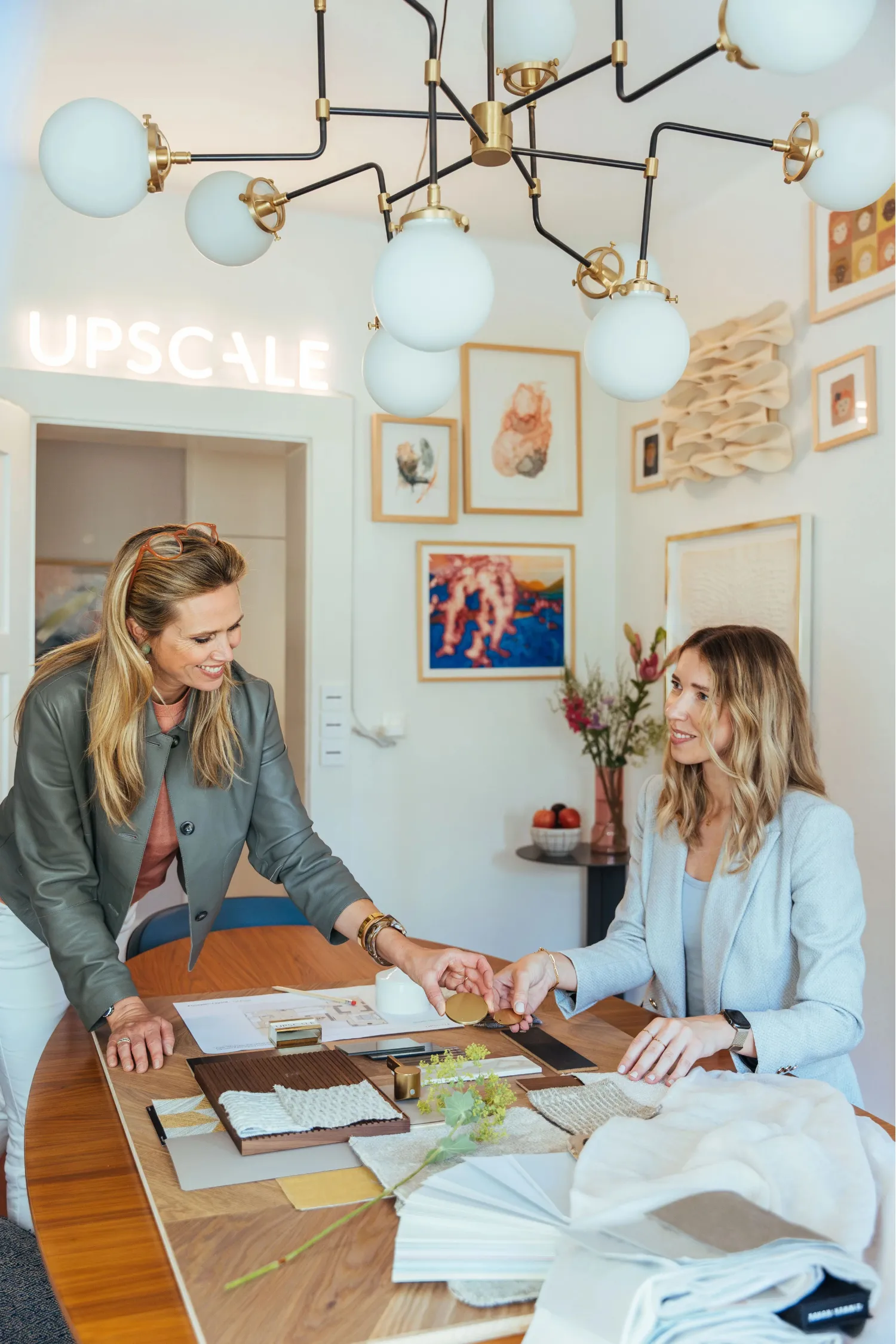
.svg)

Luxury interior design elevates homes in Bern by combining expert lighting design, premium materials, considered spatial planning and heritage sensitivity into a single, coherent scheme. Some interior design firms approach this by pairing conservation-aware detailing with market-tested staging techniques, the kind that studies show can shorten a property's time on the market. The result touches daily comfort as much as resale value.
TL;DR:
- Professionally staged luxury homes in Bern can sell in approximately 42 days, compared to 165 days for unstaged properties, with asking prices potentially increasing by up to 5%.
- The key rooms for maximum perceptual return are the living room, kitchen, and primary suite, where lighting, material quality, and sensory details strongly influence buyer impressions.
- Achieving quiet luxury relies on integrated elements of layered lighting, natural, durable materials, careful spatial flow, and sensory layering like scent and sound.
- For heritage-listed properties, conservation standards require discreet restoration and careful planning, with early specialist involvement to avoid delays and preserve character.
- Budget priorities should include kitchens, primary suites, lighting, finishes, and energy efficiency improvements, which together enhance value and buyer confidence.
Upscale Interiors
Shape a More Desirable Bern Home
Upscale Interiors creates tailored residential spaces through interior design, architecture, space planning, and material selection.
How luxury design produces measurable value
The financial case for luxury design isn't guesswork. Industry reporting on the Swiss high-end property market shows that professionally staged luxury homes can see average days on market fall from 165 to 42, with asking prices rising by as much as 5%.
Why does this happen? Buyers don't just assess square metres. They respond to how a home feels within the first thirty seconds of walking through the door, and that response is engineered through lighting, scent, texture and the sense that every room has a purpose. A living room with a considered focal point and layered lighting reads as calm rather than cluttered. A kitchen with integrated, quality joinery signals long-term investment rather than a quick refresh. A primary suite styled with soft textiles and a curated colour palette suggests retreat, not just square footage.
Statistic Callout: Staged luxury homes in the Swiss market average 42 days to sell, against 165 days for comparable unstaged properties.
Three areas consistently deliver the biggest perceptual return:
- The living room, where sightlines and lighting shape a buyer's first impression.
- The kitchen, where material quality and joinery signal durability.
- The primary suite, where sensory detail (fabric, scent, sound) creates the emotional pull staging reports point to.
Core elements that create 'quiet' luxury
Quiet luxury in Bern homes rarely comes from a single statement piece. It comes from four elements working together: light, material, flow and sensory detail. Industry commentary on high-end staging notes that today's luxury market favours sensory curation and spatial narrative over visible branding, which is a shift worth briefing your designer on directly.
- Layered lighting. Combine ambient, task and accent layers, and keep colour temperature between 2700K and 3000K for warmth without the yellow cast that dates a scheme. Dimmable circuits let a room shift from bright and functional to soft and social.
- Tactile, timeless materials. Natural stone, quality timber joinery, and woven natural textiles read as lasting quality rather than trend, and they wear well over decades rather than seasons.
- Considered flow. Furniture placement should open sightlines to windows and views, not block them. Small moves, like turning a sofa 90 degrees toward a window, can transform how a room feels without a single structural change.
- Sensory layering. Acoustic treatment in open-plan spaces, a signature scent in the entryway, and soft-close joinery all add up to an experience, not just an aesthetic.
Pro Tip: Before choosing a single fabric or finish, stand in the room at the time of day you'll use it most. Morning light and evening light change how a colour temperature reads on the wall, and that ten-minute check saves costly reselection later.
Working in historic homes and conservation-aware design
Bern's old town carries UNESCO World Heritage status, which means many interior projects there must satisfy conservation authorities before a single wall moves. That isn't a constraint to fear. It's a framework that, handled well, protects the very character buyers are paying for.
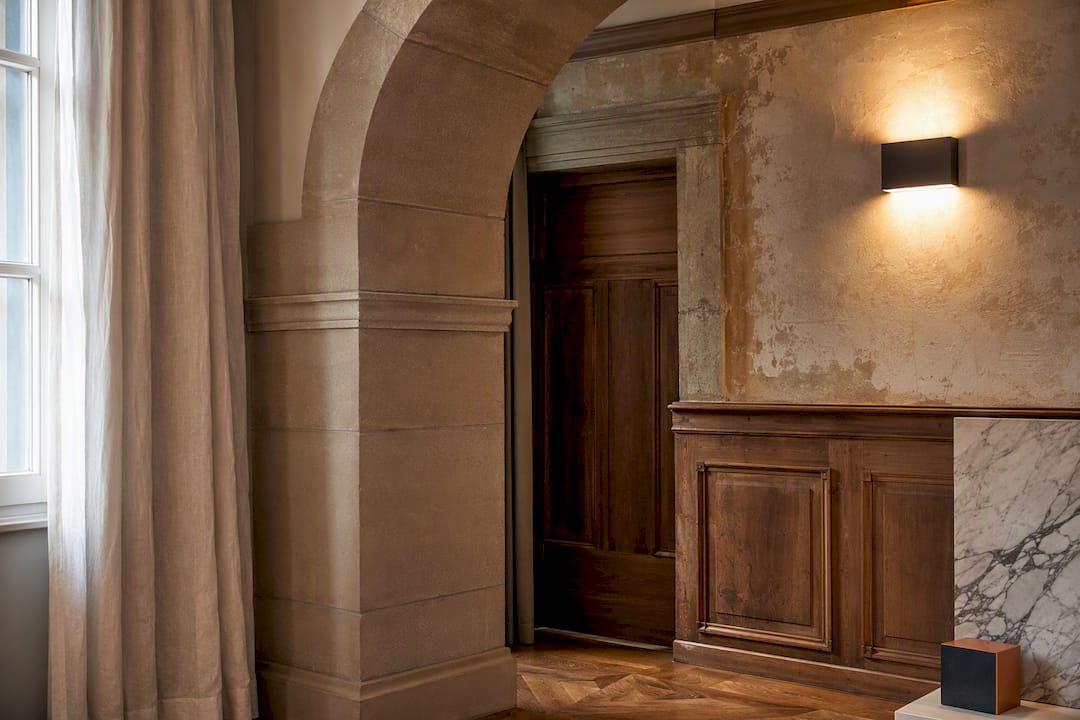
A renovation of a listed property on the Kramgasse illustrates the approach well: architects restored original panelling and staircases while renewing the building's services discreetly behind the historic fabric, following SIA partial performance standards throughout. Elsewhere in Bern's centre, the Hotel Metropole redevelopment used precise 3D modelling in coordination with heritage authorities to retain door frames, panelling and staircases while enabling entirely new interior uses.
If your property touches listed fabric, prepare for a slightly different process:
- Panelling, staircases and original door frames are usually protected and restored rather than replaced.
- Kitchens, bathrooms and mechanical services are typically hidden behind or integrated discreetly within historic surfaces.
- Early engagement with Denkmalpflege, precise measured drawings, and specifying reversible interventions all reduce delay and protect resale value later.
- A specialist consultant familiar with Bern's conservation rules should be involved from the concept stage, not brought in after problems arise.
Design process and deliverables for a luxury residential project
A well-run luxury project follows a predictable rhythm, even when the results feel bespoke at every stage.
- Briefing. You share how you live, what frustrates you about the current space, and your non-negotiables.
- Concept and moodboard. The designer translates your brief into a visual direction, covering palette, material feel and spatial intent.
- Design development. Materials, furniture and lighting get specified in detail, with decision points for you at each major choice.
- 3D visualisation. You see the finished room before a single item is ordered, which is where most late changes of heart happen (far more cheaply than after installation).
- Technical drawings and procurement. Detailed drawings guide contractors, while a vetted supplier network manages sourcing and lead times.
- Installation and sign-off. The project manager coordinates delivery and fit-out, checking quality against the original brief before handover.
Procurement and project management matter more than they sound. On a high-end scheme, a missed lead time or a mismatched finish can derail a schedule by weeks, and having one team accountable for both design and delivery removes that risk from your shoulders.
Indicative costs, timelines and return on investment
Premium interior design in Switzerland is typically priced one of two ways: a fixed design fee, or a percentage of the furnishing and procurement budget, sometimes blended with a small margin on sourced pieces. Design-only consultation packages sit at the lower end of the spectrum, key-room refurbishments (a kitchen or primary suite) occupy the middle, and full-property renovations command the highest investment and longest timelines, often stretching from several months to over a year for heritage properties.
Statistic Callout: Well-documented energy upgrades, such as improved insulation and heat pump installations, are increasingly cited as value-enhancing investments in the Swiss property market, alongside traditional aesthetic improvements.
Where should the budget concentrate for the best return?
- Kitchens and primary suites consistently deliver the strongest perceived value uplift relative to their cost.
- Lighting and finishes punch above their price point because they affect every room, not just one.
- Documented energy efficiency improvements build buyer confidence and can shorten negotiation, particularly for older Bern properties.
- Even something as overlooked as interior door quality contributes to how a home is judged on finish and craftsmanship.
Why work with a specialist premium firm
Achieving these outcomes consistently requires more than good taste. It requires a firm that has done it before, on properties with the same constraints yours might carry.
Some interior design firms work across bespoke residential and commercial projects in Switzerland and Europe, drawing on a portfolio that spans modern and heritage-sensitive briefs alike. Swiss design practice, more broadly, tends to favour functionality paired with high-quality materials as the route to long-term value, and that principle runs through every stage of a well-managed project.
What that looks like in practice:
- A portfolio of completed projects and 3D visualisations you can review before committing to a direction.
- Full project management that keeps design intent and delivery under one accountable team.
- A procurement network spanning established European furniture brands, reducing the risk of mismatched sourcing or missed lead times.
- Style guidance grounded in what actually holds value in the Swiss market, not just current trends.
Local Bern luxury interior design trends and cultural influences
Bern's design identity sits at an interesting crossroads. The city's medieval arcades, sandstone façades and centuries-old floor plans sit alongside a quietly wealthy, understated population that has never chased ostentation. That combination shapes what "luxury" actually means here.
Homeowners in Bern tend to favour restraint over spectacle. Warm neutral palettes, natural stone, and joinery that references traditional Swiss craftsmanship dominate current briefs, often paired with contemporary lighting and furniture that avoids anything too loud. It's less about a single showstopping piece and more about a considered whole, an approach the industry increasingly calls quiet luxury, and one that suits Bern's architectural temperament far better than maximalist styling would.
There's also a growing appetite for blending old and new within the same room. A sandstone fireplace surround might sit beside a sculptural Zieta metal piece, or a heritage-style ceiling might frame a contemporary Flos pendant. This layering respects the building's history while making it feel genuinely lived in today, rather than preserved behind glass.
Seasonal influence plays a role too. Bern's long winters push homeowners toward warmth: layered textiles, deeper colour palettes, and lighting schemes that compensate for shorter daylight hours. Spring and summer briefs shift toward lighter fabrics and stronger indoor-outdoor connections, particularly where a property has a courtyard or terrace to draw into the design story. A designer working in this city needs to understand that rhythm, not just the architecture.
Notable luxury interior designers and firms in Bern
Bern's luxury interior design scene is smaller and more relationship-driven than Zurich's or Geneva's, which suits a client base that values discretion over visibility. Many of the strongest projects in the city come from architecture practices that also handle interiors, particularly on heritage-sensitive briefs where structural and conservation knowledge needs to sit alongside design sensibility.
The Kramgasse renovation and Hotel Metropole redevelopment, both referenced earlier, show the calibre of technical work happening in the city: measured surveys, digital 3D modelling and close coordination with Denkmalpflege, all delivered without compromising the finished interior's warmth or usability.
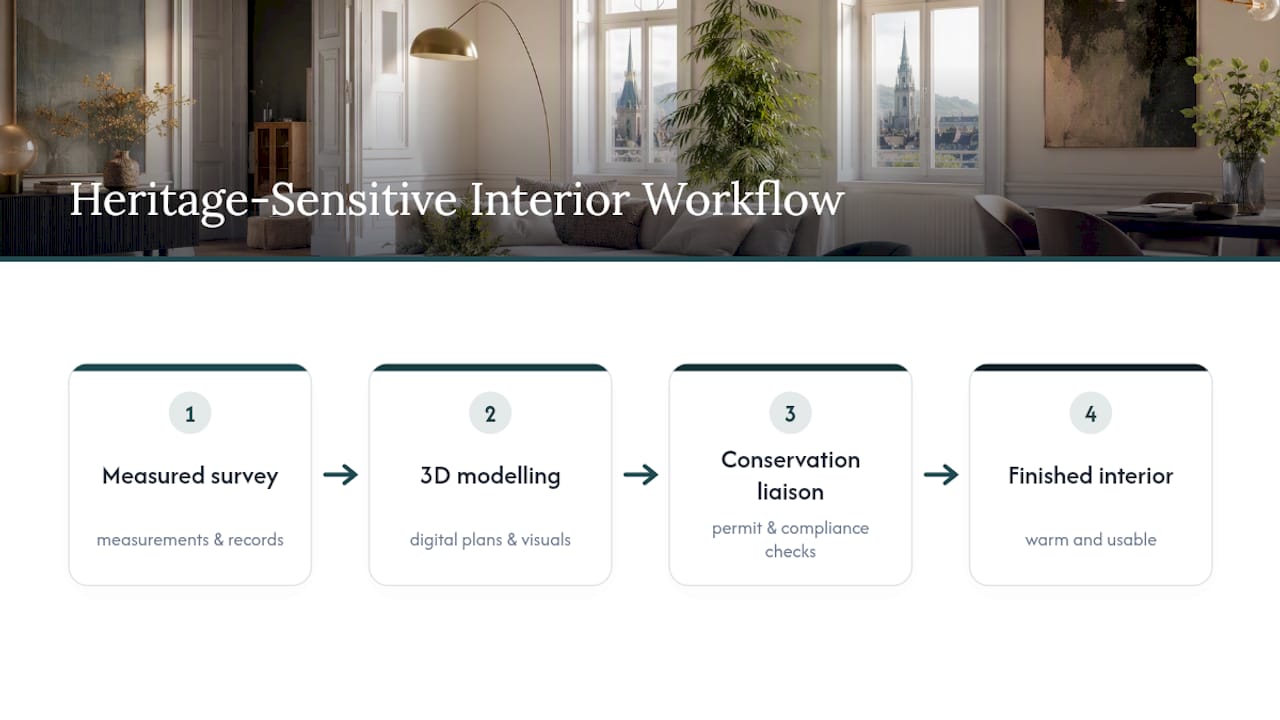
For homeowners who want that same rigour applied to a private residence, Upscale Interiors' Bern service page sets out how the firm's residential design work translates into this specific market, including how briefs are structured for properties with heritage constraints. Readers wanting broader Swiss context can also browse the firm's interior design articles for Switzerland, which cover trends and project examples beyond Bern alone.
What distinguishes a strong Bern-focused practice isn't a signature look. It's the ability to move fluidly between conservation requirements, contemporary comfort expectations and a client's personal brief, often within the same project, sometimes within the same room.
Sourcing exclusive materials and furnishings locally and internationally
Furnishing a luxury Bern property well means drawing from both ends of the supply chain: pieces with genuine craft heritage, and pieces engineered for contemporary comfort and durability. A considered scheme rarely leans entirely on one or the other.
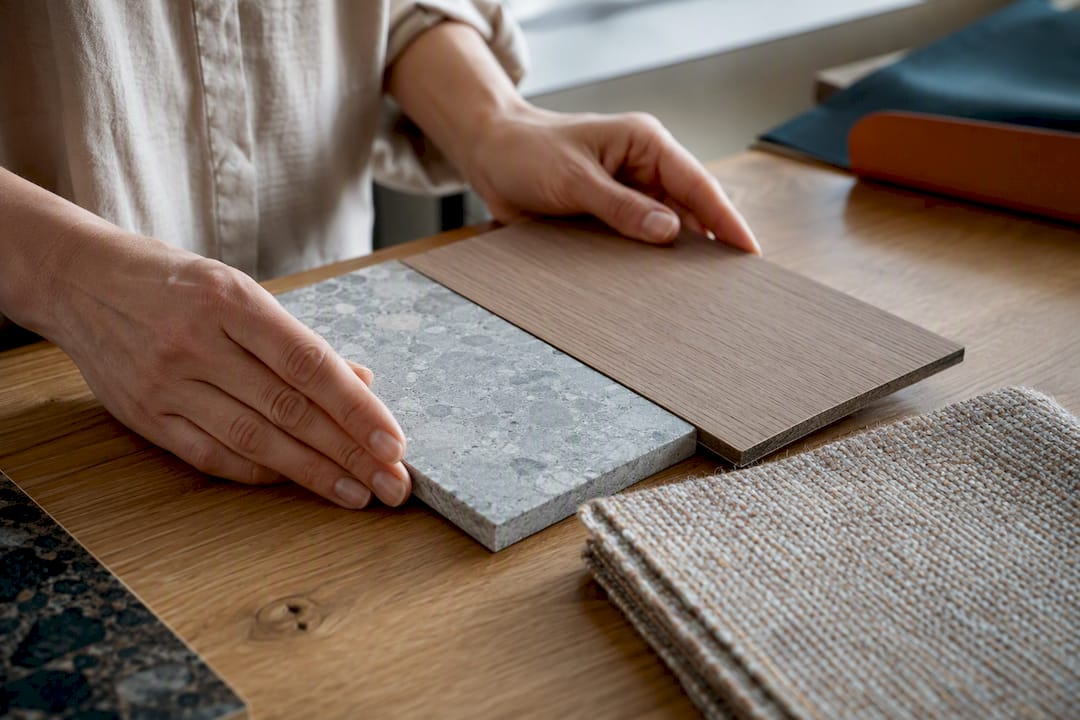
For statement seating and upholstery, names like B&B Italia, Living Divani, Moroso, Ditre Italia and Vibieffe deliver the kind of tailored comfort and construction quality that holds up over decades, not just seasons. Lighting is where much of the emotional work of a room happens, and brands such as Flos, Axolight, Terzani, Oty Light, Bert Frank and Ralph Lauring Lighting each bring a distinct character, from sculptural statement pieces to quieter, warmer ambient fittings.
For textiles and rugs underfoot, Kymo Carpets, CC-Tapis and Ege offer the tactile depth that photographs never quite capture but that guests notice the moment they step into a room. Furniture with a more sculptural or architectural edge, such as pieces from Zieta or Henge, works well as a counterpoint to Bern's traditional interior shells.
Scandinavian and contemporary European design houses, including Muuto, Menu / AUDO, String, Zuiver and HK Living, bring a lighter, more considered edge that pairs surprisingly well against sandstone and timber. For accessories and finishing touches, Eichholtz, Urban Nature Culture, Dutch Bone and Tinek Home round out a scheme without overwhelming it.
Sourcing internationally gives access to craftsmanship simply not produced at scale in Switzerland, while working with a firm that holds established relationships across these houses avoids the lead-time surprises that derail unmanaged projects.
Sustainability and eco-friendly practices in luxury design
Luxury and sustainability aren't in tension in Bern's current market, they're increasingly the same conversation. Buyers researching high-end properties now expect well-documented energy performance alongside beautiful finishes, and energy efficiency upgrades are cited as genuinely value-enhancing investments in the Swiss property market, not just a compliance checkbox.
In practice, this shows up in material choices as much as mechanical systems. Natural, responsibly sourced stone and timber age well and avoid the replacement cycles that come with lower-grade synthetic alternatives, which is itself a sustainability argument as much as an aesthetic one. Furniture brands built on durability rather than disposability, such as Emu for outdoor pieces or Sedus for considered workspace furniture, extend a room's usable life well beyond a typical renovation cycle.
Heritage properties bring their own sustainability logic. Retaining original panelling, staircases and structural fabric, as seen in the Kramgasse and Hotel Metropole projects referenced earlier, avoids the embodied carbon cost of demolition and rebuild entirely. Renewing services discreetly behind historic surfaces lets a home meet modern efficiency standards without sacrificing the character that made it worth preserving in the first place.
For homeowners, the practical takeaway is simple: ask your designer how energy documentation, material sourcing and long-term durability factor into every major decision, not just the finishes you can see.
Author perspective: balancing timelessness and comfort
Quiet luxury outlasts trend cycles because it's built on proportion and material honesty, not on this season's colour. My one practical note for Bern homeowners: audit your daylight before you touch a moodboard. Frame the views you already have, then layer artificial light around them. Discuss the specifics with your designer before committing to anything.
— Giorgia D'Amico
How Upscale Interiors can help: services and next steps
Some interior design firms offer a single team to handle the brief, 3D visualisation, and full project management, providing an alternative to piecing a project together yourself across separate architects, suppliers, and contractors, to help avoid miscommunication between vision and the finished room. Whether you need a single consultation to sharpen your direction or complete oversight of a heritage renovation, the same team stays accountable from concept through to installation and sign-off.
Every project typically starts with a briefing and, where relevant, a site inspection, since heritage constraints and structural quirks in Bern properties can shape what's possible before any materials are chosen. For those interested in design services, booking a design consultation or scheduling a call can be useful to discuss project specifics directly.
Sources
- Staging Luxury Property: The 2026 Guide to Elevating Asset Value - GuestLee
- Renovierung denkmalgeschützte Liegenschaft Kramgasse, Bern | Hebeisen + Vatter Architekten AG
- Hotel Metropole, Bern - Burckhardt
Recommended